Preface
Dissertation “Serving His Creation”
Understanding the connection between Creator and creation in the Light of Sharīʿah: “And I did not create the Jinn and mankind except to worship Me”
Ph.D. Research Dissertation “Serving His Creation”
Pebble Hills University
113 Barksdale Professional Center
City of Newark, County of New Castle, Zip Code 19711
United States of America
Ph.D. Research Candidate
Mohamed Juzoef Tangali, MBA, MA, MSc
The Netherlands
Oral Dissertation Assessment Date: 28th July 2013
Graduation Day Date: 28th July 2013
Research Supervisor
Hijaz College University, UK
Sheikh and Barrister-at-Law Allāmah Faizul Aqtāb Siddiqi Naqshbandī Hijazi
Copyright
A dissertation submitted in partial fulfilment of the requirements for the degree of
Doctor of Philosophy in Islamic Studies by Mohamed Juzoef Tangali.
Copyright © Stichting Noorani Islamic Research Institute
All rights reserved, 2013
Amsterdam, The Netherlands
About Pebble Hills University
- Pebble Hills University has obtained full accreditation from the Public Foundation Independent Accreditation Agency “Bilim-Standard” in the Kyrgyz Republic.
- Bilim-Standard is recognized by the National Accreditation Council of the Ministry of Education and Science of the Kyrgyz Republic.
- Pebble Hills University is also accredited by the Accreditation and Rating International Agency (ARIA), Uzbekistan.
ISLAMIC SCHOLARS’ COMMENTS ON THE DRAFT RESEARCH WORK
Prof. Dr. Sufyan Siregar
Head of PhD Research Department, Islamic University of Europe
Rotterdam, June 2, 2011
“This is a gold piece for the Muslims of the Netherlands. We advise you to translate this research into Dutch. Scholars can use your research effectively in their lectures on Islamic sciences. We also offer you the opportunity to conduct PhD research on Moon Sighting at our university.”
Allamah Mohammed Tahir Wagid Hosain Noorani
Lecturer in Imam Education, INHOLLAND University of Applied Sciences
Amsterdam, June 26, 2011
“Haji Sahib, you have produced wonderful research that is a valuable contribution to Islamic Studies, particularly for our Surinamese Muslims. I advise you to translate this work into Dutch.”
Allamah Muhammad Kalim Qadri al‑Azhari
Lecturer at Madrasah Noor ul Islam
Bolton, UK, May 20, 2012
“This is a very substantial research product, and it can be of great value to the Muslim community.”
Sheikh Faizul Aqtāb Siddiqi
Barrister‑at‑Law and Principal of Hijaz College Islamic University
Nuneaton, UK, July 6, 2012
“Your work is very honorable and interesting for seekers of knowledge. We should find sponsors for your research to enable free printing and distribution of 10,000 copies in England and abroad. Furthermore, you should translate it into Dutch for distribution in Dutch‑speaking areas.”
Preface
This dissertation, “Serving His Creation: Understanding the Connection between Creator and Creation in the Light of Sharīʿah,” represents the culmination of years of study, reflection, and dedication to Islamic scholarship. The work seeks to explore the profound relationship between the Creator and His creation, guided by the principles of Sharīʿah and inspired by the Qur’anic verse: “And I did not create the jinn and mankind except to worship Me” (Qur’an 51:56).
The research was motivated by a desire to contribute meaningfully to the academic and spiritual discourse surrounding Islamic Studies, particularly within the context of Muslim communities in Europe. It is my hope that this work will serve as a resource for scholars, students, and practitioners who strive to deepen their understanding of the divine purpose of creation.
I am deeply grateful to my supervisor, Sheikh and Barrister-at-Law Allāmah Faizul Aqtāb Siddiqi Naqshbandī Hijazi, for his guidance and encouragement throughout this journey. I also acknowledge the valuable comments and support offered by esteemed scholars across Europe and beyond, whose insights affirmed the relevance of this research.
Finally, I dedicate this work to the Muslim communities of the Netherlands, Suriname, and beyond, with the prayer that it may inspire reflection, dialogue, and renewed commitment to serving the Creator through service to His creation.
الذِي عَلَّمَ بِالْقَلَمِ، عَلَّمَ الْإِنسَانَ مَا لَمْ يَعْلَمْ
“(Allāh Almighty) taught by the Pen — the foundation of knowledge. He taught man what he did not know, a Divine vocation for research and the development of science, so that life may be led in the orthodox [Sunni] way and in obedience to Allāh, seeking His Pleasure.” (Al‑Qur’ān, Surah Al‑‘Alaq, 96:4–5)
Khutbah Noorani
‘Auzubillaahi minash shaytaan-ir-rajiem, Bismillaah-ir-Rahmaan-ir-Rahiem.
Alhamdulillah, nahmaduhu wa nasta’ienuhoe wa nastaghfiruh, wa nu’minu bihie, wa natawakkalu ‘alayh, wa na’uzobiellaahi min shurooree anfusinaa, wa mien sayyi-aatie a’maalina, man-yahdihillaahu falaa mudiellalah, wa man joolielhu falaa haadiyalah, wa nash hadu an laa ilaa-ha illallaah, wahdahu laa shariekalah, wa nash hadu anna sayyidinaa wa nabiyyinna, wa habeebina wa mawlaanaa Muhammad, sallallaahu Ta’alaa alayhi wa sallam ‘abdahu wa Rasooluh. Allazie ursila ilal khaliqi kaaffatan basheerawn wa nazeera, wa daa’iyan illallaahee bi iznihee wa siraajan muneerah.
Wa bash-shiriel mu’mineena bi-anna lahum minallaahi fadlan kabeera. Fahuwal habiebullazee toorjaa shafaa ‘atuhu, likulli hawleem minal ahwaali muqtahimee. Djaa ‘aklee da’wati ashjaaru saajidatan, tamshee ilaihi ‘alaa saaqeem bilaa qadamee. Yaa Rab! Yaa rabbi saalli wa salleem daa-eeman sarmada ‘alaa Habeebika Khayreel Khalqee kullihimee. Allaahumma salli ‘alaa Habeebika Sayyidina wa Mawlaanaa Muhammad, Saahibeel wajheel Anwar wal Jabieneel Azhar, salaatan wa salaaman ‘alayka yaa sayyidie yaa RasoolAllāh.
Qalallaahu ‘Azzawajalla fieshaani Habeebihie Moogbieranw Wa aamie-rah. Innallaaha wa Malaa ikatahu yusalluna ‘alan-Nabie. Yaa-ayyuhal lazeena ‘amanu sallu ‘alahyi wa sallimu tasleema. Allāhumma saalli ‘alaa Sayyidinaa wa Mawlaanaa Muhammad wa ‘alaa Aalihī wa Sahbihī wa sallam. Salaatan wa Salaaman ‘alayka Yaa Sayyidie Ya RasoolAllāh.
I. Introduction
I testify that no one and nothing has the right to be worshipped except Allāh Almighty, Who has no partner in His Attributes or Judiciary. I bear witness that the Holy Prophet Muhammad ﷺ is His servant and Last Messenger, who brought light to everything that exists, clarified what is Ḥalāl (lawful) and what is Harām (forbidden), and established the foundations of Islam by implementing them himself as a model until the religion was firmly anchored in the Muslim community. O Allāh Almighty, send blessings of peace and glory upon the Beloved and Noble Prophet Muhammad ﷺ, his family, his companions, and those who follow them, including the Ulema‑e‑Haqq.
It was a great opportunity for me to conduct two years of research at the M.Phil. level at Hijaz College Islamic University (HCIU) in Nuneaton, Warwickshire, UK, under the guidance and supervision of the Principal and Shaykh of Hijaz College Islamic University, Barrister‑at‑Law Hazrat Allāmah Maulana Faizul Aqtāb Siddiqi Naqshbandī Hijazi al‑Azhari, a highly educated and skilled scholar in Deen (Sharīʿah), Tasawwuf (mysticism), and secular sciences. The theme of the Blessed Summit 2010 was “Serving His Creation.” This theme I later adopted in commitment to Pebble Hills University for my doctoral research.
The Islamic sciences I gained through Imam Education at INHOLLAND University of Applied Sciences, the Islamic University of Europe, Durham University, TU Delft, and through self‑directed research as a PhD candidate covered diverse topics. These included the works of Ālāḥazrat, lectures of great Ulema Ahle Sunnat such as Qaid‑e‑Ahle Sunnat Allāmah Hafiz Qari Shah Ahmad Noorani Siddiqui (my spiritual Shaykh), Taajush Sharīʿah Shaykh Akhtar Raza Khan Azhari al‑Qadri (my spiritual/Sharīʿah Shaykh)(may Allāh be pleased with them.
I also benefited from lectures and training sessions by:
- Faqih‑e‑Islam Mufti‑e‑Azam Europe Allāmah Maulana Abdul Wajid Qadri
- Mufakkir‑e‑Islam Allāmah Badr al‑Qadri
- Allāmah Maulana Hafiz Qari Zainul Abideen Baghdadi Qadri
- Prof. Dr. Hafiz Marzoukh Auled Abdellah al‑Azhari Maghribi
- Prof. Dr. Humayun Abbas Dar, Director General of the Cambridge Institute of Islamic Finance
- Prof. Dr. Mehmet Asutay, Professor of Islamic Political Economy & Finance, Durham University Business School
- Hassan Yar, Dutch political scientist, and director of Ihsan Institute
- Dr. Pieter Sjoerd van Koningsveld, Professor of Arabic Philology and Islamic Studies, Leiden University
- Dr. Jan P. Hogendijk, Professor of Islamic History of Mathematics, Utrecht University
- Robert H. van Gent, Professor in the History of Astronomy, Utrecht University
These lectures led to dispensations in the regular Islamic Scholar course at the Islamic University of Europe in Rotterdam, Netherlands, allowing me to skip modules due to my prior knowledge and skills.
Additional Islamic knowledge was gained by translating Islamic works on diverse topics and publishing them on my website (www.tangali.net) and in books of Ālāḥazrat Imam Ahmad Raza Khan Qadri (raḍiyAllāhu ‘ʿanhu). In these publications—more than 170 in total—I included quotations from Qur’ānic verses and Ahadīth. Scholars in the Netherlands have acknowledged the quality of these works and expressed respect for them.
I also attended the Summer Course in Islamic Finance at Durham University, UK, and received a certificate upon completion.
As a Muslim thinker, translator, and author, I wish to complete my Islamic Scholar study for the purpose of Serving His Creation—humanity.
Fundamental Theology Research
In this scientific research method, the primary focus is on acquiring knowledge rather than applying it in practice. Fundamental research is the opposite of applied research, which emphasizes recommendations for practice. However, separation is not absolute since fundamental research often leads to practical applications.
A PhD in Islamic Studies is an advanced academic journey centered on deep, original research into religious thought, texts, traditions, and practices. It is not merely the study of religion—it is about contributing something new to the field.
What It Involves:
- Original Research: Exploring a specific theological question or theme in depth, such as the ethics of suffering, interfaith dialogue, or interpretations of sacred texts.
- Dissertation: The centerpiece is a thesis (often up to 80,000 words) presenting findings and arguments.
- Supervision: Close collaboration with a professor or academic advisor who guides the research.
- Timeframe: Typically, 3–4 years full‑time (or longer part‑time), depending on the university.
Common Research Areas:
- Holy Qur’ān studies
- Aḥādīth and Fiqh studies
- Systematic theology (doctrines and beliefs)
- Historical theology (development of ideas over time)
- Practical theology (how faith is lived out)
- Interreligious studies and ethics
Why It Matters:
PhD research in Islamic Studies often intersects with philosophy, history, sociology, and politics. It can shape how communities understand faith, justice, and identity. This program includes research training to ensure that I am equipped, Inshā’Allāh, with the necessary skills and methodological knowledge to undertake original research in Islamic Studies. It also develops generic skills relevant to both the degree program and a future career as an Islamic scholar.
Scriptural Foundations on Knowledge:
By searching the word knowledge in the Holy Qur’ān, it mentioned 175 times (Allāh and His Last Messenger know best).
- “We then appointed you to establish the correct laws; you shall follow this, and do not follow the wishes of those who do not know.” (Al‑Qur’ān, Surah al‑Jāthiyah, 45:18)
Selected Aḥādīth on Knowledge and Integrity:
- Hazrat Abu Huraira (raḍiyAllāhu ‘ʿanhu) reported that the Prophet ﷺ said: “Whosoever acquires religious knowledge with the object of gaining worldly profit, even the air of Paradise will not touch him.” (Ibn Mājah; Abū Dāwūd)
- Hazrat Ka‘ab bin Malik (raḍiyAllāhu ‘ʿanhu) reported that the Prophet ﷺ said: “Whosoever acquires knowledge to debate with scholars or divert public attention with eloquence, Allāh will throw him into Hell.” (At‑Tirmidhī)
- Hazrat Abu Huraira (raḍiyAllāhu ‘ʿanhu) reported that the Prophet ﷺ said: “Whosoever deliberately attributes falsehood to me should prepare his seat in Hellfire.” (Ṣaḥīḥ al‑Bukhārī)
- This ḥadīth is mutawātir (mass‑transmitted), underscoring the seriousness of preserving the integrity of the Prophet’s ﷺ teachings.
Additional Sources of Knowledge:
I benefited from the English translation of Qur’ānic verses in Kanzul Iman of Ālāḥazrat Imam Ahmad Raza Khan Qadri (raḍiyAllāhu ‘ʿanhu) by World Islamic Mission in Karachi, Pakistan.
This book is intended as a solid research foundation for bachelor’s and master’s students specializing in Islamic Theology and Islamic Studies and can be supplemented with more specialized studies in related fields.
II. Structure of Islamic Themes in This Dissertation
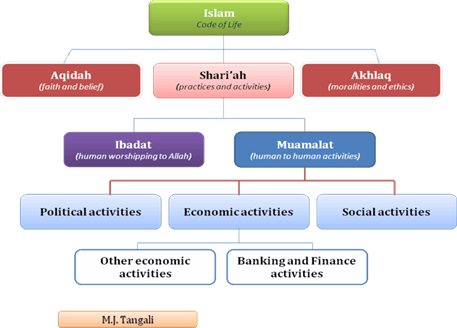
Exhibit 1 Categorization Sharīʿah Chapters
1. Foundational Theology
- Tawḥīd (Oneness of Allāh)
- Risālah (Prophethood and the Seal of Prophets ﷺ)
- ‘Ibādah (Purpose of creation and worship)
- Sharīʿah as Divine guidance for human conduct
2. Scriptural Sources
- Qur’ān Studies
- Key verses on knowledge, worship, and guidance (e.g., 51:56; 96:4–5; 45:18)
- Hermeneutics and tafsīr traditions
- Ḥadīth Studies
- Authenticity and transmission (mutawātir vs Aḥad)
- Warnings against fabricating ḥadīth
- Ethical dimensions of seeking and transmitting knowledge.
3. Systematic Theology
- Doctrines of belief (‘ʿAqīdah)
- Ethics of knowledge and responsibility
- Theological perspectives on suffering, justice, and mercy
- Relationship between Creator and creation
4. Historical Theology
- Development of Islamic thought across centuries
- Contributions of classical Sunni scholars (e.g., Ālāḥazrat Imam Ahmad Raza Khan Qadri, Shah Ahmad Noorani Siddiqui)
- Influence of Sufi traditions (Tasawwuf) on theological discourse
5. Practical Theology
- Application of Sharīʿah in daily life
- Role of scholars (‘Ulamā) in guiding communities
- Contemporary challenges: interfaith dialogue, social integration, Islamic finance
- Case studies: Muslim communities in the Netherlands, Suriname, and Europe
6. Interdisciplinary Dimensions
- Intersection with philosophy, sociology, and politics
- Islamic moral economy and finance (Durham University Summer School, Cambridge Institute of Islamic Finance)
- Astronomy and science in Islamic civilization (TU Delft, Utrecht University contributions)
7. Ethics of Knowledge
- Qur’ānic emphasis on knowledge as Divine vocation
- Ḥadīth warnings against misuse of knowledge for worldly gain
- Integrity in scholarship and transmission
- The role of humility and sincerity in Islamic research
8. Conclusion
- Serving His Creation as the overarching theme
- Integration of fundamental theology with practical applications
- Contribution to Islamic Studies as a discipline
- Relevance for future scholars, students, and communities
III. Summary of the Blessed Summit
In the summer of 2009, I spent many months searching for a suitable Ahl al‑Sunnat university to complete the final phase of my academic career in Islamic Studies. Despite my efforts, I could not find an institution in Europe that truly resonated with my heart.
In April 2010, I visited Hijaz College for the first time and met the Rector. This encounter was a special experience. The Hijaz campus is vast and tranquil, offering ample space for spiritual practice. I met many students and staff, including descendants of Surinamese parents, and found myself in a very pleasant environment.
At Hijaz College, the Rector offered me the opportunity to conduct research on the theme of the upcoming Blessed Summit 2010: “Serving His Creation.” This theme was a perfect match for me, as I had studied similar subjects’ years earlier during the Imam course at Inholland University and through independent research. Much of my prior work was integrated into this thesis.
In the summer of 2010, I spent ten days at Hijaz College to meet scholars, conduct interviews, and attend the three‑day Blessed Summit. During the Summit, scholars presented lectures from an Islamic perspective, and followers of spiritual leaders and judges also participated. Guests from across Europe and beyond were welcomed with free food and drink. NOOR TV was present and recited beautiful Naat.
The graduation ceremony was the climax of the event. All graduates of Hijaz College Islamic University received their awards: an Amama (turban), spiritual dress, and diploma. After the ceremony, graduates delivered lectures in English, while scholars provided examples and introductory knowledge on the theme “Serving His Creation.”
Following the event, I met with the Rector, who asked if I was ready to complete my research journey. What follows in this dissertation is my humble contribution.
Personal Statement
I have chosen Hijaz College Islamic University (HCIU) because it follows the Hanafi School and is firmly rooted in the Ahl al‑Sunnat tradition. I am deeply grateful to the Principal of Hijaz College, who serves as my supervisor.
All credits go directly to my wonderful parents, who have passed away. They provided me with an excellent education in both Dīn and Dunyā, inspiring in me an intense love for the Holy Prophet Muhammad ﷺ and a lifelong commitment to serving the Muslim community. May Allāh bless them with the Beautiful Garden of Paradise. Āmīn.
Prior Studies
Before beginning this Ph.D. program, I successfully completed examinations in the following areas of Islamic knowledge:
- ‘Uloom al‑Qur’ān – Sciences of the Qur’ān
- Uṣūl al‑Tafsīr al‑Qur’ān – Principles of Qur’ānic Exegesis
- ‘Uloom al‑Ḥadīth – Sciences of Ḥadīth
- Uṣūl al‑Fiqh – Methodology of Jurisprudence
- Sīrah – Life of the Holy Prophet Muhammad ﷺ
- Tārīkh al‑Islām – History of Islam
- Sulūk – Islamic Sociology and Psychology
- Tajwīd – Rules of Qur’ānic Recitation
- Arabic Language
- ‘ʿAqīdah – Islamic Creed
- Major Religions – Christianity, Judaism, Hinduism, and Sikhism
- Fiqh – Rituals and Liturgies
- Agogics – Methodical Approach to Education
- Islamic Philosophy, Ethics, and Manṭiq (Logic)
- Taṣawwuf – Phenomenology of Mysticism
- Islamic Finance and Banking (Fiqh al‑Muʿāmalāt)
- Islamic Sociology
In addition to these Islamic sciences, Allāh Ta‘ālā has bestowed upon me, as a humble Sunni Muslim, the opportunity to complete more than 70 secular sciences at the master’s degree level, all of which I successfully passed through formal examinations.
The Blessed Summit as Spiritual Reflection
The Blessed Summit is a time for contemplation, review, and realization. It provides a peaceful environment for participants to reflect on their relationship with Allāh and His Prophet Muhammad ﷺ.
Hijaz College has continued to develop as a site of great spirituality since its inception over 15 years ago. The vision of its founder, Hazrat Muhammad Abdul Wahab Siddiqi (alayhir Raḥmah), continues to flourish and expand into new horizons.
The Hijaz Community
The Hijaz Community has grown significantly in recent years, welcoming many unknown faces devoted to self‑improvement, service to others, and commitment to their communities. What distinguishes the Hijaz Community is its focus on meeting the needs of individuals rather than prioritizing organizational structures.
The Hijazi model of spiritual development follows a three‑step process:
- Realization – questioning oneself about identity, purpose, faith, and relationship with society.
- Purification – physical and spiritual preparation for deeper connection.
- Connection – establishing a spiritual bond with Allāh (Subḥānahu wa Ta‘ālā).
The headquarters of the Hijaz Community are in Nuneaton, UK.
Hijaz College as a Center of Excellence
Hijaz College offers Muslims worldwide the opportunity to pursue the highest level of education within an Islamic intellectual framework. Independent of government organizations, the College relies on the quality of its graduates for success. This independence provides flexibility in operations and planning for the betterment of the Ummah.
Hijaz College aims to balance spirituality with modernity, preparing students to live in the contemporary world without compromising Islamic principles. Its graduates are ambassadors of Islam in the 21st century, distinguished from other university graduates by their spiritual awareness, which equips them to face challenges with resilience and faith.
IV. Methodology and Techniques of Research
Educational Aims
The educational program aims to enable me, as a student, to:
- Develop the practice of analytical enquiry.
- Achieve a prominent level of competence in the field of Islamic Studies.
- Attain competence in textual and historical analysis of texts in their original languages.
- Gain wide‑ranging critical knowledge of relevant research tools, secondary literature, and current developments in the field.
- Reflect on relevant methodological issues.
- Develop skills in written and oral communication, including sustained argument, independent thought, and clear structure.
- Identify, understand, and apply key concepts and principles.
Program Outcomes
1. Knowledge and Understanding
On completion of the course, I will have:
- Acquired relevant linguistic and textual knowledge.
- Gained specialist knowledge of primary and secondary literature.
- Developed advanced understanding of how primary evidence is employed in philological, textual, historical, and literary analysis.
2. Teaching and Learning Methods
The main learning strategy involves practicing relevant skills under close supervision, receiving regular feedback, and observing acknowledged experts whose methods can be emulated. Methods include:
- Language and text‑reading classes (with preparation required).
- Lectures.
- Seminars with peers and senior academics.
- Tutorials, for which I prepare substantial written work for discussion with my supervisor.
For this learning, I joined the Islamic University of Europe in Rotterdam, Netherlands. My lecturers included:
- Prof. Dr. S. Koningsveld (Islamic History).
- Prof. Dr. A. Wessels (Torah, Bible, and Qur’ān).
- Dr. Mehmet Refii Kileci (Art of Arabic Calligraphy and Arabic Language).
Assessment
Formative assessment is provided through supervisor feedback, discussion of prepared work, and termly reports, which are reviewed with me at Hijaz College.
Skills and Attributes
Intellectual Skills
- Exercise critical judgment and undertake sophisticated analysis.
- Argue clearly, relevantly, and persuasively.
- Approach problems with creativity and imagination.
- Develop independence of mind and readiness to challenge accepted opinion.
Transferable Skills
- Locate, organize, and critically use information.
- Solve complex problems with sensitivity to diverse traditions.
- Work independently at a distance from Hijaz College and my supervisor, while also cooperating constructively.
- Communicate ideas effectively in written and oral formats.
Study Program Structure and Features
My academic journey progressed through:
- One year bachelor course Theology at Islamic University of Europe, NL
- One year Imam Education research at INHOLLAND University of Applied Sciences, NL.
- Thirty months of research at Hijaz College, UK (M.Phil. level).
- Eighteen months of Ph.D. research at Pebble Hills University, USA.
Languages used in research include Arabic, Urdu, Dutch, English, and German.
Research Strategy
The research strategy is based on analysis of literature, textbooks, biographies, observations, and interviews. The chosen method is empirical research, involving tests and observations to verify ideas. Information collected is assessed against Sharīʿah principles.
Approach:
- Desk research (books, journals, CDs, DVDs, academic magazines).
- Fieldwork (conferences, workshops, lectures in the UK and Netherlands).
- Field experiments (observing human behavior).
- Laboratory experiments (debates with supervisors and scholars).
- Psychological tests (pattern recognition, personality analysis).
- Simulations (observing behavior in imitated situations).
- Structured interviews with individuals and groups.
Scientific Requirements:
- Verifiability (not fabricated).
- Accountability (objectivity, transparency, precision, standardization).
- Reliability (consistent observation, peer review).
- Validity (face validity, ecological validity).
The research is qualitative rather than quantitative, focusing on exploratory questions, small random checks, and deep insights into issues, behaviors, and social phenomena.
Benefits of Empirical Research
- Understanding and responding to contextual dynamics.
- Respecting differences across contexts.
- Building upon established knowledge.
- Meeting accepted professional standards of research.
Research Questions
- Understanding the connection between Creator and creation.
- Connecting to the Creator by serving His creation.
Theological Framework
Analysis of the theme “Serving His Creation” revealed three perspectives:
- Allāh Almighty Himself serves His creation through air, sustenance (rizq), knowledge, food, etc.
- Allāh Almighty uses His creation to serve other creations (humans, animals, the earth for agriculture, etc.).
- Humanity serves Allāhs creation to attain closeness (qurb) to Him, through Sharīʿah (Qur’ān and Sunnah), Tasawwuf, and Ṭarīqah. Secular sciences such as sociology, chemistry, physics, philosophy, and communication are also derived directly or indirectly from Islamic sciences.
As Sheikh Abdul Qādir Jilānī (raḍiyAllāhu ‘ʿanhu) wrote in Sirr al‑Asrār wa Mazhar al‑Anwār: “Wisdom (Islamic Studies) is like a pearl in a seashell, and its brightness is the secular sciences.”
Ālāḥazrat Imam Ahmad Raza Khan Qadri (raḍiyAllāhu ‘ʿanhu) emphasized in Fatāwā Razviyya (vol. 23, p. 683) that possessing a certificate does not determine knowledge. True scholarship is measured by knowledge itself, not by formal credentials.
Conclusion
In summary, Serving His Creation means drawing closer to Allāh Ta’ala, the Creator through the path of Sharīʿah, followed by the path of Sufism.
Abbreviations
- ﷺ — Sallallāhu ‘alayhi wa sallam (peace be upon him), used after the name of the Holy Prophet.