Table of Contents
- Summary
- Introduction
- Exclusivity/Tribalism and Servitude (Do I really have to serve Non-Muslims? Non-Pakistanis, -Sarnamis, -Dutch?
- Materialism – obsession with attaining material wealth for oneself
- Misguided Servitude – servants of our job, mortgage, vanity, insecurities
- Serving our Country/The Ideal British Citizen/Serving Britain
- Conclusion
Summary
From an Islamic point of view, the only way for humankind to emerge from its current predicament is to overcome self‑centeredness and sincerely worship Allāh. A person consumed by material desires—whose efforts revolve around acquiring better food, finer clothing, newer cars, larger houses, and other worldly comforts—and who constantly pursues luxury, can never truly be a free human being.
Objectives of this part
After studying this part, the reader will gain an essential view on the following topics:
- Tribalism and Servitude
- Misguided Servitude – becoming servants of our job, mortgage, vanity, and insecurities.
Introduction
Today, the Muslim community is preoccupied with personal habits, materialism, and even harmful practices such as black magic aimed at destroying others. Many strive to surpass their fellow citizens in material possessions, employment, and knowledge, rather than focusing on spiritual growth and collective well‑being.
Exclusivity, Tribalism and Servitude
(Do I really have to serve Non‑Muslims? Non‑Pakistanis, Sarnamis, Dutch?)
Public awareness is essential: the Muslim community should be conscious of what is happening around them. Muslims should not live in a vacuum within society. We must overcome our cultural and linguistic barriers. If we have chosen the UK or Europe as our home, then we should treat it as such. Too many Muslims continue to think of “back home” as Pakistan, Syria, Bangladesh, Morocco, or Surinam. If we truly consider the UK our home, we will behave in a way that integrates and contributes positively, making it a place where Islamic values can flourish. However, if we continue to think of somewhere else as “home,” then we will live as strangers in this land and die as strangers here (Ramadan, Western Muslims, and the Future of Islam, 2004, pp. 45–47).
Example from the Battle of Badr
At the time of the Battle of Badr, the loss on the side of the Muslims was not more than fourteen martyrs. On the side of the Quraysh, seven men were slain and as many captured. These prisoners were transferred to Medina, where they were treated kindly. The Muslims gave them better food than they themselves ate. Eventually, the prisoners were released under ransom payments.
ʿAbbās, the uncle of the Holy Prophet ﷺ, was also among the prisoners of war. Some companions suggested that ʿAbbās should be set free without paying ransom. The Prophet ﷺ replied: “No, no. ʿAbbās is a wealthy man. He will have to pay twice as much for his freedom.”
(al‑Ṭabarī, Tārīkh al‑Rusul wa’l‑Mulk, Vol. 3, pp. 220–222). The literate prisoners were released if they agreed to educate ten Muslims in reading and writing.
Historical Significance
The Battle of Badr may have seemed a small matter, fought in an obscure corner of the world. Yet its outcome shaped the course of future history. The Prophet ﷺ had made clear that a defeat of the Muslims would mean the end of Islam and of a decent life. Victory at Badr was a powerful turning point: it instilled fear in the unbelievers and secured respect for Muslims among their enemies. From that moment, Islam became a global power, entrusted with the care of people, their souls, and their worldly interests. The Prophet ﷺ, already the head of faith, was also appointed as the Head of State (Ibn Kathīr, al‑Bidāyah wa’l‑Nihāyah, Vol. 7, pp. 180–182).
Materialism – Obsession with Attaining Material Wealth for Oneself
(Misguided Servitude – servants of our job, mortgage, vanity, insecurities)
The reality of creation, as discussed in Part I, has been ignored or denied since the earliest times by a particular philosophical point of view known as materialism. This philosophy, originally formulated among the ancient Greeks, has appeared in other cultures and been advanced by individuals throughout history. It holds that matter alone exists and that it has done so eternally. From this belief system, materialists claim that the universe has always existed and was not created. They further assert that the universe has no purpose or aim, and that the stability, harmony, and order we observe are merely the product of accident (Russell, History of Western Philosophy, 1946, pp. 55–57).
Islamic Perspective
From the Islamic point of view, the only way for humankind to escape its present predicament is to overcome self‑centeredness and sincerely worship Allāh. A man who thinks only of material desires—whose efforts are concentrated on acquiring better food, clothing, cars, houses, and other luxuries—can never be free.
Allāhs worshippers are those who seek His pleasure more than anything else. They keep their passions under control, satisfy their desires with moderation, and avoid becoming slaves of luxury. Such a person can surrender his desires, if necessary, to gain the pleasure of Allāh, which is more valuable than everything else. Allāh will compensate him for his sacrifice in a better and purer way in the eternal world (Nasr, Science and Civilization in Islam, 1968, pp. 145–147).
Modern Age and Material Obsession
In our age, automatic machines and electronic equipment have made many conveniences readily available: water, air, heat, cold, food, and clothing. Scientific and industrial discoveries have expanded so greatly that it is difficult to enumerate them. These advances have solved many problems of human life and given man dazzling power to control nature.
Yet, this progress has also fueled a philosophy of excessive consumption, turning man into a greedy creature, obsessed with production and consumption. Materialism and excessive concern with economic affairs have converted man into a machine. There was a time when man valued his freedom most and even sacrificed his life for the sake of Allāh. In today’s material society, higher human values have been set aside—even missionary work is often performed in exchange for financial remuneration (Hodgson, The Venture of Islam, Vol. 2, 1974, pp. 112–115).
Day and night, man is told he is no more than an economic animal, with wealth and prosperity as the sole criterion of success. In these circumstances, it is not surprising that many have turned into greedy beings, bent upon acquiring money from any source and spending it for pleasure. Correct foresight requires that efforts be redirected so that humanity does not face such a fate.
Qur’ānic Guidance
The Qurʾān emphasizes that all pomp and show of life is meaningless if devoid of faith and spirituality: “Know that the life of the world is not but a sport and amusement and an adornment and a source of boasting among yourselves and desiring multiplication in riches and children against one another. It is like the rain whose vegetation pleased the tillers, then it dried up that you see it yellow, then it was trampled into pieces. And in the Hereafter, there is severe torment and forgiveness from Allāh and His pleasure. And the life of the world is nothing but a deceitful wealth.” (Surah al‑Ḥadīd, 57:20, Al‑Qurʾān, Part 27, p. 540).
“Whoever desires the life of the world and its adornment; We will give their full fruit in it and will not lessen anything therein. These are they for whom there is nothing in the Hereafter but Fire. And whatever they used to do there, is destroyed and all their works became void.” (Surah Hūd, 11:15–16, Al‑Qurʾān, Part 12, pp. 220–221).
Western Materialism and Islamic Concerns
Prince Charles of Wales once remarked: “We in the West need also to understand the Islamic world’s view of us. There is nothing to be gained, and much harm to be done, by refusing to comprehend the extent to which many people in the Islamic world genuinely fear our own Western materialism and mass culture as a deadly challenge to their Islamic culture and way of life… The fact is that our form of materialism can be offensive to devout Muslims—and I do not just mean the extremists among them.” (Charles, Islam and the West Lecture, 1993, pp. 12–14).
Serving Our Country / The Ideal British Citizen / Serving Britain
Prince Charles of Wales once remarked in a lecture: “This, I believe, would help us understand what we have commonly come to see as the threat of Islamic fundamentalism. We need to be careful of that emotive label, ‘fundamentalism’, and distinguish, as Muslims do, between revivalists, who choose to take the practice of their religion most devoutly, and fanatics or extremists who use this devotion for their political ends. Among the many religious, social, and political causes of what we might more accurately call the Islamic revival is a powerful feeling of disenchantment, of the realization that Western technology and material things are insufficient, and that a deeper meaning to life lies elsewhere in the essence of Islamic belief.”
(Charles, Islam and the West Lecture, 1993, pp. 18–20).
Contextual Reflection
This statement highlights the importance of distinguishing between devout religious practice and extremism. For Muslims living in Britain or Europe, serving their country does not mean abandoning their faith. Rather, it means embodying the values of justice, honesty, and community service that Islam itself promotes, while contributing positively to the society they live in. The ideal British citizen, from an Islamic perspective, is one who:
- Lives faithfully according to Islamic principles while respecting the laws of the land.
- Contributes to the welfare of society through work, service, and civic responsibility.
- Rejects materialism as the sole measure of success, recognizing that deeper meaning lies in spirituality and moral values.
- Acts as a bridge between cultures, showing that Islamic devotion can coexist with loyalty to one’s country.
Conclusion
Try not to become slaves of materialism. Avoid it as much as possible and gradually reduce its hold onto your life. Whenever you have a choice, seek natural ways. Live your life in harmony with nature. Do not run away from it, for if you do, everything that is against nature will follow you, destroy you, and consume you. The best way is to live as Allāh commands: with simplicity. Be free. Do not allow anyone to force you or employ you as their servant. Free yourself from unnecessary dependence on technology. Everything Allāh has created is excellent and perfect.
When your thoughts are pure, you will be cleansed of harmful. If your mind is corrupted, you cannot attain true cleanliness, which means there will be no rest for you—neither physically nor spiritually. Today, people are losing their spiritual balance, and as a result, they decline both spiritually and physically.
Therefore, beware and maintain good behavior before Allāh. Whatever Allāh declares to be right is indeed right. Whatever He declares to be wrong is wrong.
Wrap‑Up: Lessons Learned from Islamic Studies: Servitude, Leadership, Sharīʿah, Civilization, and Modern Challenges
Introduction
The study of Islamic thought and history reveals a holistic worldview in which servitude to Allāh, Sharīʿah law, leadership, knowledge, and culture are inseparably linked. From the lives of the Rightly Guided Caliphs to the Abbasid Golden Age, from Qur’ānic warnings against materialism to the moral lessons of Karbalāʾ, and from Islamic art to modern challenges of integration, the texts show that Islam is not merely a religion but a comprehensive system of life.
Servitude and Sharīʿah: The Foundation of Freedom
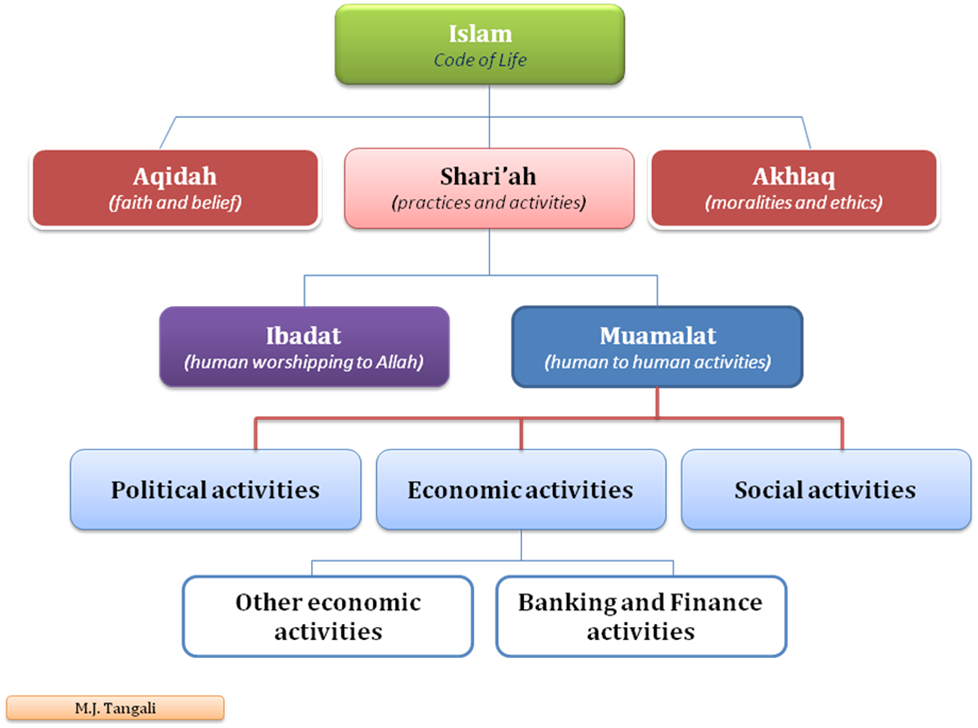
The essence of Islamic servitude is submission to Allāh alone. This submission is expressed through Sharīʿah, the divine law that governs worship, morality, social justice, and political order.
- Sharīʿah as guidance: It is not merely a set of prohibitions but a framework for human flourishing. It regulates contracts, trade, family life, and governance, ensuring justice and balance.
- Servitude vs. materialism: A person enslaved by wealth, vanity, or insecurity cannot be free. True freedom lies in obeying Allāhs commands, which liberate man from worldly chains.
- Sharīʿah and moderation: Worshippers of Allāh keep their passions under control, satisfying desires with moderation. Sharīʿah provides the boundaries within which human dignity and balance are preserved.
Thus, servitude and Sharīʿah together form the axis of Islamic civilization: one is the inner devotion, the other the outer framework.
Leadership and the Implementation of Sharīʿah
The Rightly Guided Caliphs embodied leadership as service, and their greatest responsibility was the execution of Sharīʿah.
- Abū Bakr al‑Ṣiddīq: Stabilized Islam, crushed rebellions, and upheld Sharīʿah in contracts and loyalty pledges.
- ʿUmar al‑Fārūq: Expanded Islam into a world power, introduced police, stipends, and new cities, and enforced Sharīʿah as the code of the international Islamic state. His reforms show Sharīʿah adaptability to new contexts.
- ʿUthmān al‑Ghanī: Preserved the Qurʾān, the primary source of Sharīʿah, ensuring unity of law and worship.
- ʿAlī al‑Murtazā: Embodied justice and honesty, refusing favoritism. His rulings reflected Sharīʿah insistence on equality before the law.
The Prophet ﷺ himself was both head of faith and head of state, showing that Sharīʿah integrates spiritual and political authority.
The Ahl al‑Bayt and the Moral Dimension of Sharīʿah
Imām Ḥasan and Imām Ḥusain highlight the moral courage required to uphold Sharīʿah.
- Ḥasan abdicated for unity, showing that Sharīʿah values peace and collective welfare.
- Ḥusain resisted Yazid’s tyranny, sacrificing his life at Karbalāʾ. His martyrdom was not only political but a defense of Sharīʿah against corruption.
Karbalāʾ teaches that Sharīʿah is not negotiable when truth and justice are at stake.
The Abbasid Golden Age: Sharīʿah and Civilization
The Abbasids flourished by combining Sharīʿah governance with cultural and scientific advancement.
- Baghdad’s Bayt al‑Ḥikmah translated and expanded knowledge, but always within the framework of Sharīʿah ethics.
- Trade and agriculture were regulated by Sharīʿah contracts, ensuring fairness.
- Scholars like al‑Ghazālī and Ibn Rushd debated philosophy, but always in relation to Sharīʿah principles.
The Abbasids show that Sharīʿah is not a barrier to progress but a moral compass guiding civilization.
Islamic Art and Sharīʿah
Sharīʿah shaped Islamic art by prohibiting idolatry and figural representation in mosques. This limitation inspired creativity in geometry, arabesques, and calligraphy.
- Calligraphy became the supreme art form, embodying the Qur’an’s words.
- Architecture reflected Sharīʿah values of community and worship, with mosques as centers of both prayer and social justice.
Thus, Sharīʿah influenced aesthetics, ensuring that art remained a manifestation of divine beauty rather than vanity.
Materialism vs. Sharīʿah Guidance
Materialism denies creation and purpose, reducing man to an economic animal. Sharīʿah counters this by reminding humanity of accountability.
The Qurʾān warns: “Know that the life of this world is but play and amusement, adornment and boasting among you, and rivalry in wealth and children…” (Surah al‑Ḥadīd, 57:20).
Sharīʿah teaches moderation, charity, and justice in economic affairs. It prohibits exploitation, interest (ribā), and greed, ensuring that wealth serves society rather than enslaves individuals.
Tribalism, Integration, and Sharīʿah in Society
Sharīʿah also addresses social relations. Muslims must overcome tribalism and exclusivity, treating their adopted countries as home while upholding Islamic values.
The Prophet’s ﷺ example at Badr, where prisoners were treated kindly and released in exchange for literacy, shows Sharīʿah emphasis on justice, compassion, and education—even toward non‑Muslims.
Serving one’s country is not contradictory to Sharīʿah. The ideal citizen is one who contributes to society while remaining faithful to Allāhs law.
Modern Lessons: Sharīʿah and Materialism
Prince Charles of Wales noted that Western materialism can be offensive to devout Muslims. Sharīʿah provides the antidote: it defines right and wrong, balances spirituality with worldly needs, and protects communities from cultural arrogance.
Thus, Muslims must resist materialism, live simply, and preserve spiritual balance through Sharīʿah.
Final Reflections
Across all texts, the unifying theme is that Sharīʿah integrates worship, knowledge, leadership, art, and social responsibility into a coherent vision of human life.
- Servitude to Allāh is the foundation of freedom.
- Sharīʿah is the framework that ensures justice, balance, and accountability.
- Leadership must enforce Sharīʿah with humility and service.
- Sacrifice, as exemplified by Karbalāʾ, defends Sharīʿah against corruption.
- Civilization thrives when Sharīʿah guides knowledge, trade, and culture.
- Art reflects Sharīʿah spiritual aesthetics.
- Materialism is a trap; Sharīʿah restores balance.
- Integration and service to society are Sharīʿah duties, not compromises.
Conclusion
What I have learned is that Islam offers a holistic worldview rooted in Sharīʿah. It integrates worship, law, leadership, art, and social responsibility into a coherent system. The examples of the Khulafāʾ, the Abbasids, the Ahl al‑Bayt, and the scholars of the Golden Age remind us that greatness lies not in wealth or power but in servitude, justice, and devotion to Allāhs law.
In today’s world of materialism, tribalism, and cultural confusion, these lessons are more relevant than ever. They challenge us to live simply, serve faithfully, resist injustice, and contribute positively to society. They remind us that the meaning of life is not found in possessions but in faith, Sharīʿah, sacrifice, and service.
Closing Research: Understanding Serving His Creation
The Legacy of the Early Fuqahāʾ
The early fuqahāʾ (jurists of fiqh) had no other objective than to seek the pleasure of Allāh. Their lives were marked not only by mastery of the science of fiqh but also by the science of the heart. The Companions of the Prophet ﷺ did not publish books on fiqh, nor did the great Imams compile volumes themselves, yet they were experts in jurisprudence and lived ascetic, devout lives.
Imām Abū Ḥanīfa, Imām Mālik, Imām al‑Shāfiʿī, and Imām Aḥmad ibn Ḥanbal (raḍiyAllāhu ʿanhum) were not merely law‑givers; they were seekers of Allāhs pleasure through serving His creation via fiqh. Each possessed unique qualities, but all shared devotion, humility, and sincerity. In contrast, many modern jurists have become entangled in materialism and superficiality, losing sight of the spiritual essence of fiqh.
Serving Creation Through Knowledge
Philosophy in Islam is not a single branch but a composite of sciences, each with its own role in serving creation:
- Geometry and Arithmetic – permissible for those firm in faith, as they aid practical life.
- Mantiq (Logic) – the science of reasoning, proof, and cause; part of theology, helping us understand how to serve creation through Sharīʿah.
- Tasawwuf (Mysticism) – the science of Allāhs being and attributes; part of theology, guiding us to serve creation through spiritual refinement (Ruhani).
- Physics – while useful in parts, certain interpretations contradict Sharīʿah and true religion and must be approached with caution.
This framework shows that knowledge is not neutral; it must be aligned with Sharīʿah and spirituality to truly serve humanity.
Advice to the Reader
Dear brother and sister, never doubt your effort on the path of Islam. You will be rewarded at the right time. Stay firm on the path that leads to Jannah. Do not think that only ṣalāt, ṣawm, zakāt, and ḥajj are acts of worship. Beyond the pillars, there are countless activities of service, kindness, and sincerity—that elevate one to higher levels of understanding.
Beware of those who appear in wolves’ clothing: fluent in speech but empty in soul. Allāh has given your eyes, ears, and hearts to discern truth from illusion. Use them wisely. Seek guidance from a righteous shaykh if you have one, or search for a rightly guided teacher. In these final stages of the world, deceivers multiply, and fewer people truly serve creation while destroying it.
Qur’ānic Guidance
Allāh warns: “Undoubtedly, We have created for Hell many jinn and men. They have hearts but do not understand, eyes but do not see, and ears but do not hear. They are like cattle—nay, even more misguided. They are indeed heedless.” (Surah al‑Aʿrāf, 7:179). And He reminds us: “And our duty is only to convey the message clearly.” (Surah Yāsīn, 36:17)
Final Reflection
This research has been reviewed and recognized as a humble introduction to the broad fields of Serving His Creation. It emphasizes that fiqh, Sharīʿah, tasawwuf, and philosophy are not ends in themselves but means to fulfill the higher purpose of life: to worship Allāh and serve His creation with sincerity.
May Allāh grant us strength, through the blessings of the Holy Prophet Muḥammad ﷺ, to remain firm on the path of Ahl al‑Sunnah wa’l‑Jamāʿah, resisting materialism and deception, and striving always to serve His creation.