Table of Contents
- Summary
- Introduction
- Who benefits?
- Societal benefits of charity
- Constant, consistent, positive evolving society
- Actualize human potential, individually and as a whole society.
- Time of a Khalifah when Zakat money was to be distributed and the distributors could not find anyone who needed it – removed poverty.
- Conclusion
Summary
Social benefits are so-called because they represent collective charity and happiness for all members of society. Economists do not view society as an independent actor capable of gaining benefits or suffering losses.
Objectives of this part:
- Understanding religious sociology.
- Understanding social perception shaped by love for the Prophet ﷺ.
Introduction
The Qur’ān does not use the term sociology in the modern academic sense, but it offers profound insights into social structures, justice, community, and human behavior—core themes of sociology.
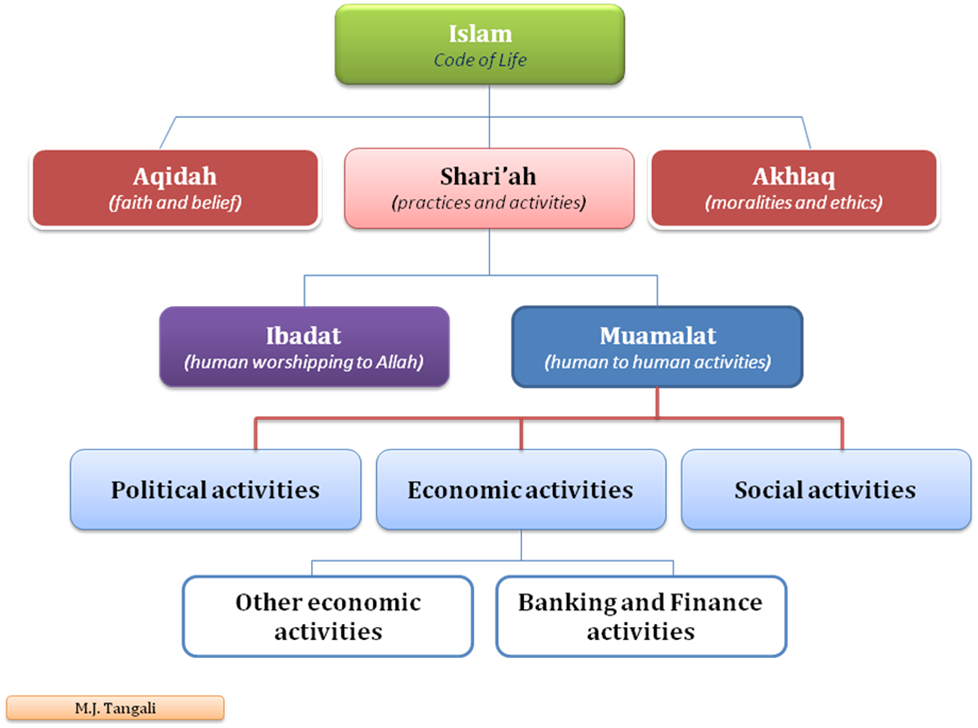
Islamic religious sociology explores how Islamic beliefs, practices, and institutions interact with society, shaping and being shaped by social structures, politics, and culture.
At its core, Islamic sociology examines:
- Religion in social organization: How Islamic teachings influence family life, gender roles, education, and law.
- The concept of the Ummah: The global Muslim community as a sociological construct transcending national and ethnic boundaries.
- Social justice and ethics: Principles such as zakāt (charity), shūrā (consultation), and ʿadl (justice) as foundations of social responsibility and governance.
- Modernity and change: How Muslim societies adapt to or resist globalization, secularism, and technological change while maintaining religious identity.
- Minority and diaspora experiences: How Muslims navigate identity, integration, and discrimination in non-Muslim-majority societies.
Sociology itself is the scientific study of human society and its phenomena. It addresses fundamental social problems: who belongs to whom, who governs whom, who does what, and who receives what. It focuses on organization, change, conflicts, and the dynamics of human interaction.
Within the sociology of religion, discipline examines the relationship between religion and its influence on society.
Emergence of Sociology
Sociology as a science emerged in the 18th century, shaped by:
- Industrial revolution and urbanization: Creation of the urban proletariat, centralization, bureaucratization, and decline of feudal structures.
- Loss of self-evident social order: Leading to new questions about the nature and change of society.
- Discovery of civil society: Recognition of autonomous social reality.
- Belief in science: Encouragement of scientific progress and engineered society.
Intellectual Context in Europe
- Renaissance (15th–16th centuries): Demythologizing the cosmos, shifting from metaphysical to empirical explanations.
- Reformation (16th century): Calvinist emphasis on rational self-control, frugality, discipline, and calculation.
- Enlightenment (17th–18th centuries): Focus on eliminating superstition and prejudice, promoting rational inquiry.
Islamic Golden Age (8th–13th centuries)
While Europe was undergoing its Renaissance, the Islamic world had already experienced an intellectual transformation century earlier:
- Transmission of Knowledge: Scholars such as Ibn Sīnā (Avicenna), Ibn al‑Haytham, and Ibn Rushd (Averroes) challenged mythic and Aristotelian views of nature. Their works on optics, motion, and metaphysics were translated into Latin and became foundational for European thinkers.
- Philosophical Rationalism: Thinkers like Abū Sulaymān al‑Sijistānī emphasized reason and empirical observation, laying groundwork for rational approaches to natural philosophy.
- Influence on European Renaissance: Copernicus, Galileo, and Kepler built upon astronomical data preserved and refined by Muslim astronomers. The heliocentric model, for example, was indebted to Islamic scientific traditions.
Thus, while the Islamic world was not undergoing a Renaissance in the European sense, its earlier intellectual revolution had already “disenchanted” the cosmos. This legacy was crucial to Europe’s own scientific awakening.
Who Benefits?
A basic principle of Islamic sociology is that Islam provides perfect harmony between the individual and society. A unique feature of Islam is that it suggests a balance between individualism and collectivism. Islam recognizes the personal identity of man and holds every individual personally accountable to Allāh. It guarantees fundamental human rights and does not permit their violation. Promoting the development of human personality is considered one of the main objectives of education. Islam does not require that man lose his individuality in society, but at the same time it instills an intense sense of social responsibility and encourages the individual to contribute to social welfare.
Societal Benefits of Charity
Social benefits are so-called because they represent the collective well-being and prosperity of everyone in society. Economists do not view society as an independent actor that can receive benefits or suffer losses. Instead, social benefits refer to the total advantages provided to individuals within a society, regardless of whether these benefits are funded by the same individuals who make decisions about them.
In this context, social benefits encompass all forms of support extended to people, irrespective of whether the beneficiaries determine how much support they receive. Such benefits help fund vital programs that promote the social and economic empowerment of men, women, and children in need.
Constant, Consistent, Positive Evolving Society
Another core principle of Islamic sociology is that Islam maintains the balance between individualism and collectivism. It affirms the unique personality of each person and holds everyone personally accountable to Allāh. It guarantees fundamental human rights and does not allow their violation.
At the same time, Islam places strong emphasis on social responsibility, encouraging individuals to contribute to the common good within organized religious communities and the state.
Religious organizations are broadly defined as: “All organizations, groups and movements which are a form of religion, or all units of people based on religion or grouped around it” (Dekker, 1995, p. 49).
Religious institutions are therefore organizations whose primary purpose is to facilitate religious community life (study, worship, etc.) and, where necessary, provide social welfare assistance.
Case Study: Surinamese Muslim Community
The Surinamese Muslim community has its roots in India. More than 130 years ago, the ancestors of the current population were brought to Suriname by English settlers as agricultural laborers. Although it was claimed that the journey and work would last only three months, the one-way journey alone took more than six months.
Many Muslims who arrived in Suriname and completed their contracts did not return to India, as the opportunities for a better life in the host country proved more promising. Nevertheless, a portion of the migrant population did return.
In the 1950s, Hazrat Abdul Aleem Siddiqui (ʿalayhis al‑Raḥmah), an envoy of Imam‑e‑Ahle Sunnat Hazrat Shah Ahmed Raza Khan Bareilly (raḍiyAllāhu ʿanhu), visited Suriname together with his son Shah Ahmed Noorani Siddiqui (ʿalayhis al‑Raḥmah). Maulana Noorani remained actively engaged with the Muslim community, and under his leadership the largest mosque in the Caribbean was built.
During the emigration of Muslims to the Netherlands (1973–1974), there was also a need for mosques. Initially, prayer spaces were established in warehouses, homes, and other improvised locations. In 1973, in Amsterdam, the Netherlands Islamic Society (NIS) Ahle Sunnat, also known as the Noori Mosque, was founded. The organization’s primary goal was to build a mosque with minarets in the Venserpolder district of Amsterdam. Although the city of Amsterdam had allocated a plot for construction, communication problems with financiers and later internal disagreements prevented the project from being realized.
Actualize Human Potential, Individually and as a Whole Society
In some areas, Islamic societies are often patriarchal, meaning that women tend to be dominated by men. Women are expected to bear children, and those who are unable to do so often live in fear that their husbands may seek another wife. A woman who gives birth only to girls may turn to religious or even medical help. However, many men are unaware that it is Allāh who determines whether a child will be male or female (Al‑Qur’ān, 42:49, Part 25, p. 482).
The love for the Prophet Muhammad ﷺ profoundly shapes social perception in Muslim communities, influencing how individuals relate to one another, form identities, and build moral frameworks, as seen in the following ways:
- Moral Imitation: The Prophet ﷺ is seen as the ideal human being. His character—marked by compassion, justice, humility, and truthfulness—becomes a social model. People strive to emulate him, fostering shared values and behaviors across diverse cultures.
- Community Bonding: Love for the Prophet ﷺ creates a deep sense of unity and belonging. It transcends ethnic, linguistic, and national boundaries, forming the basis of the Ummah, a global community bound by shared reverence.
- Social Hierarchies Reimagined: The Prophet’s ﷺ teachings emphasized equality, especially in a society once divided by tribalism and class. His care for the poor, orphans, and marginalized reshaped how Muslims perceive status and human dignity.
- Civic Responsibility: His example encourages service to others—visiting the sick, feeding the hungry, and standing up for justice. These acts are not merely moral duties but heartfelt expressions of love for him.
- Cultural Expressions: From poetry and art to public celebrations like Mawlid (his birthday), love for the Prophet ﷺ becomes a cultural force that shapes identity and strengthens collective memory.
Religious Organizations and Institutionalization
Religiosity includes all units of people (organizations, groups, and movements) that are based on religion or grouped around it.
The formation of religious organizations can be seen as the institutionalization of religion. This is the process whereby certain behaviors become widespread. The fixed patterns that emerge in the interaction between people are called institutions. Religious organizations share the same characteristics and mechanisms as all organizations: they are targeted alliances.
McGuire’s classification of religious organizations (2002, p. 98):
- Church: Exclusive truth claims and a positive outlook toward the dominant society (e.g., the Catholic Church).
- Sect: Exclusive truth claims and a negative outlook toward society (e.g., Quakers, Mormons).
- Denomination: No exclusive truth claims, positive outlook toward society (e.g., most churches in America).
- Cult: No exclusive truth claims, negative outlook toward society (e.g., movements around Jomanda).
Religious Movements
Religious movements are collective efforts based on religious beliefs to bring change (innovation, revitalization, recovery) to individuals, churches, mosques, and society.
Factors influencing their origin:
- Social conditions (crisis, economic turmoil, poverty).
- Charismatic leadership.
- Attraction of followers (e.g., relative deprivation).
O’Dea (1966, pp. 45–47) distinguishes three levels of institutionalization:
- Intellectual.
- Cultural.
- Organizational.
Stark (1996, pp. 112–115) identifies conditions for success:
- New insights and practices, but not too divergent from existing forms.
- Moderate tension with the environment.
- Strong leadership.
- High involvement of members.
- Effective recruitment methods.
- Construction of a close-knit social network, not isolated from the outside world.
Leadership in Religious Organizations
Leadership is a crucial aspect of religious organizations and movements. Four types of authority are distinguished (Weber, 1978, Vol. 1, pp. 212–215):
- Legal: Based on belief in impersonal norms and rules.
- Traditional: Based on belief in the sanctity and inviolability of traditional norms and rules (e.g., priestly caste).
- Charismatic: Based on belief in the exceptional qualities of a person (e.g., prophetic movements, Bhagwan).
- Functional or Professional: Based on belief in the specific skills of certain individuals.
Time of a Khalifah When Zakāt Money Was to Be Distributed and No One Needed It – Poverty Removed
The Caliphate signifies supreme social and religious leadership. It also implies succession to the Holy Prophet ﷺ. A caliph is a person who, as a successor to the Prophet ﷺ, assumes leadership of the Muslims in both secular and religious affairs.
That remarkable moment is often attributed to the reign of Caliph ʿUmar ibn ʿAbd al‑ʿAzīz (r. 717–720 CE), a ruler from the Umayyad dynasty renowned for his justice, piety, and sweeping reforms. During his short but impactful rule, it is reported that poverty was so thoroughly addressed that when zakāt (obligatory almsgiving) was collected and prepared for distribution, officials could not find anyone eligible to receive it. The poor had been uplifted, debts paid off, and needs met to such an extent that zakāt funds remained unused—a powerful testament to effective governance and ethical leadership.
ʿUmar ibn ʿAbd al‑ʿAzīz restructured the economy, cracked down on corruption, and ensured that wealth was redistributed fairly. His policies emphasized:
- Strict accountability of public officials.
- Revival of the Bayt al‑Māl (public treasury) for social welfare.
- Equitable land and tax reforms.
- Prioritizing the needs of the poor, orphans, and widows.
This era is often cited as a golden example of how Islamic economic principles, when applied with sincerity and justice, can lead to social equity and the eradication of poverty.
The rulers who came to power after the demise of the Holy Prophet ﷺ invariably called themselves caliphs, or successors to the Prophet, irrespective of whether they were good or bad. The designation of Caliph continued until the downfall of the Ottoman Government in 1922.
Conclusion
Those who fear Allāh and love the Prophet ﷺ do not concern themselves with being poor or rich. They strive to be of benefit to humanity in all circumstances.
In conclusion, the Caliphate represents the highest form of spiritual and temporal leadership in Islam, rooted in the responsibility of succeeding the Prophet Muhammad ﷺ in guiding the Muslim community. The caliph’s role encompasses not only religious authority but also the governance of societal affairs, embodying the principles of justice, welfare, and accountability.
The Caliphate historically functioned as both a religious and political institution, ensuring that Islamic values were upheld in governance. Its emphasis on justice (ʿadl), social welfare (zakāt, Bayt al‑Māl), and accountability (muḥāsabah) demonstrates how leadership in Islam is inseparable from ethical responsibility.