Table of Contents
- Summary
- Introduction
- What is connection?
- How does serving establish this connection?
- Connecting to Universal Mercy through Servitude
- Conclusion
Summary
Islam regards this planet, with all its greatness, immensity, miracles, and interconnections between phenomena, as a homogeneous reality dependent upon another Reality, Sovereign and Supreme—Allāh. Like other invisible realities, He is recognized through His observable Signs. These Signs provide valuable and fruitful understanding of Him.
Objectives of this part:
- Understanding the tools of how to connect simply to the Creator
- Understanding universal Mercy through servitude
- Understanding how serving establishes this connection.
Introduction
Serving creation is indirectly serving the Khāliq (Creator). The world is a truth that can be felt, observed, and perceived. It is not fantasy or the product of human conception. Regardless of human acknowledgment or use, it remains an absolute and indisputable reality.
What Is Connection?
The Qur’ān, the primary source of Islamic worldview, repeatedly mentions the Signs of Allāh. For some, reflection upon these Signs naturally affirms His existence. They perceive Him not with their eyes but with inner insight. Human experience shows that whenever man encounters an event, his mind seeks a cause, believing that everything has an origin.
Islamic connection is twofold:
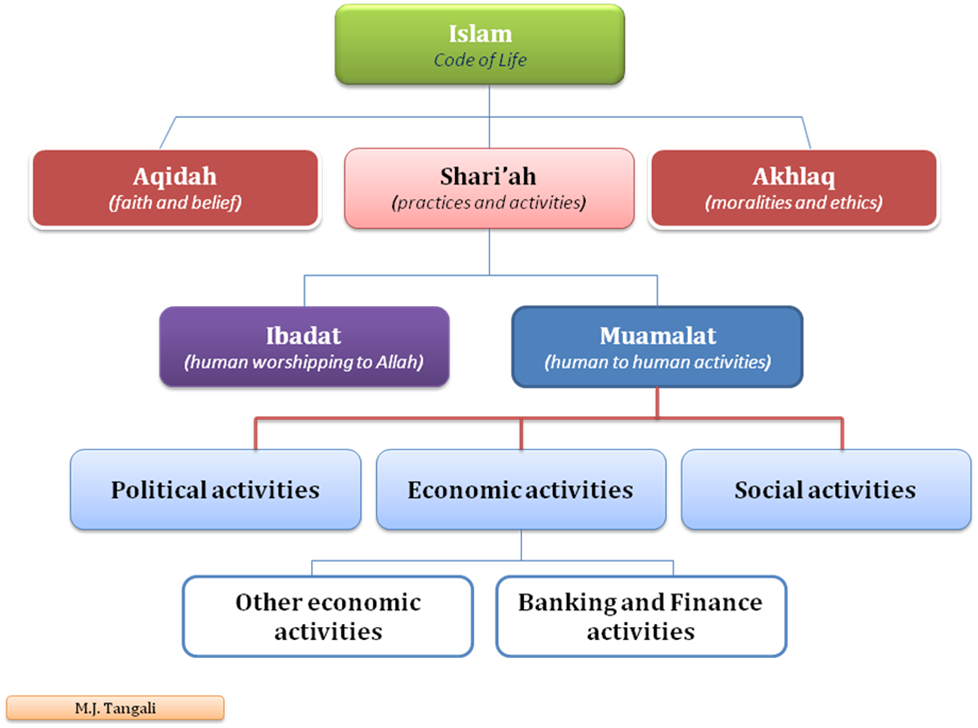
- Connection with Allāh: obedience to His commands (prayer, fasting, zakāt, etc.).
- Connection with humanity: protecting and supporting one another.
The Prophet Muhammad ﷺ said: “A true Muslim is one who does not harm others with his tongue or hands, and a true migrant is one who abandons what Allāh has forbidden.” (Ṣaḥīḥ al‑Bukhārī, Vol. 1, p. 45).
Mufti Ahmad Yār Khan (ʿalayhis al‑Raḥmah) commented: “A true Muslim is one who is Muslim not only in name but in practice—avoiding backbiting, swearing, ridicule, tale‑bearing, and fighting. A true migrant is one who abandons sins as well as his homeland, and this migration continues forever.” (Mirʾāt al‑Manājīḥ, Vol. VI, p. 29).
How Does Serving Establish This Connection?
Psychologists and sociologists seek causes for events because they cannot accept that phenomena occur without intervention. Religion provides the framework for understanding existence as purposeful.
- Dr. Dekker: Sociology of religion studies the relationship between religion and ways of living, examining its impact on people.
- Prof. Dr. Nico Wilterdink: In industrialized societies, religion’s role has diminished compared to agrarian societies due to secularization.
This trend is visible in Muslim societies, where youth spend more time on social media, sharing religious content but practicing little. Online identity often emphasizes networks rather than genuine spiritual connection.
Imam Shah Ahmad Noorani Siddiqui (ʿalayhis al‑Raḥmah) stated in a 1992 lecture: Muslims have a realistic goal in life, rooted in the divine message delivered by the Prophet Muhammad ﷺ. The Qur’ān outlines this goal as excellent leadership in life.
Allāh reveals:
قُلْ إِنَّ صَلاَتِي وَنُسُكِي وَمَحْيَايَ وَمَمَاتِي لِلَّهِ رَبِّ ٱلْعَالَمِينَ
“Say: Indeed, my prayer, my sacrifice, my living, and my dying are all for Allāh, Lord of the Worlds.” (Al‑Qur’ān, 6:162, Part 7, p. 134).
Al‑Jalālayn explains: “My prayer, rituals, devotions, life, and death are all for Allāh, the Lord of the Worlds.” (Tafsīr al‑Jalālayn, Vol. 2, p. 145). This verse emphasizes that life is temporary and belongs entirely to Allāh. The believer must live as a Muslim, manifesting faith, and unity within the Ummah. All Muslims are brothers, without discrimination, as Allāh says: “Innamā al‑muʾminūna ikhwa” (Indeed, the believers are brothers). Serving others is thus a quality of unity, establishing communication with Allāh and strengthening connection with creation.
Sociological Perspective
In sociology, integration involves combining diverse factors into a unified whole. Group behavior is studied through functional differentiation and integration:
- Functional differentiation: individuals or groups assume specific roles.
- System differentiation: institutions and structures develop distinct functions.
As differentiation increases, dependence among individuals grows, leading to greater integration into significant social units. This reflects the Qur’ānic principle of unity and interdependence within the Muslim community.
Supporting Allāhs Religion (in tanṣurullāh)
Allāh reveals:
يٰأَيُّهَا ٱلَّذِينَ آمَنُوۤاْ إِن تَنصُرُواْ ٱللَّهَ يَنصُرْكُمْ وَيُثَبِّتْ أَقْدَامَكُمْ
“O believers! If you help the religion of Allāh, Allāh will help you and will make your feet firm.” (Al‑Qur’ān, 47:7, Part 26, p. 498).
Tafsīr al‑Jalālayn: “If you help Allāh—that is, His religion and His Messenger—He will help you against your enemy and make your foothold firm on the battlefield.” Thus, supporting Islam means Allāh supports you; protecting His religion means Allāh protects you.
Trust in Allāhs Protection
Allāh reveals:
فَٱللَّهُ خَيْرٌ حَافِظاً وَهُوَ أَرْحَمُ ٱلرَّاحِمِينَ
“Allāh is the best Guardian, and He is the Most Merciful of the merciful.” (Al‑Qur’ān, 12:64, Part 12, p. 223).
Tafsīr Ibn ʿAbbās: Jacob (Yaʿqūb) said: “Can I entrust Benjamin to you as I entrusted Joseph before? Allāh is better at guarding than you are, and He is more merciful towards him than his parents or brothers.”
Prophethood and Signs
Prophets declare contact with the immaterial source through revelation. Some people, despite acknowledging their honesty and wisdom, demand extraordinary signs (muʿjizah) to prove prophethood. They expect miracles beyond natural explanation. Yet the Qur’ān emphasizes that the true sign is the message itself and its transformative power.
Calling to Allāh
Allāh reveals:
وَمَنْ أَحْسَنُ قَوْلاً مِّمَّن دَعَآ إِلَى ٱللَّهِ وَعَمِلَ صَالِحاً وَقَالَ إِنَّنِي مِنَ ٱلْمُسْلِمِينَ
“And who is better in speech than one who calls to Allāh, does righteousness, and says, ‘I am Muslim.’” (Al‑Qur’ān, 41:33, Part 24, p. 455).
Tafsīr al‑Jalālayn: “No one speaks better than he who summons others to Allāh by affirming His Oneness, acts righteously, and declares: ‘Indeed I am one of those who submit.’”
This verse reminds Muslims to affirm their identity as Muslims, beyond tribal or national pride.
Unity of Humanity
Allāh reveals:
يٰأَيُّهَا ٱلنَّاسُ إِنَّا خَلَقْنَاكُم مِّن ذَكَرٍ وَأُنْثَىٰ وَجَعَلْنَاكُمْ شُعُوباً وَقَبَآئِلَ لِتَعَارَفُوۤاْ إِنَّ أَكْرَمَكُمْ عَندَ ٱللَّهِ أَتْقَاكُمْ
“O people! We created you from one man and one woman and made you into nations and tribes so that you may recognize one another. Indeed, the most honored among you in the sight of Allāh is the most pious. Verily, Allāh is Knowing, Aware.” (Al‑Qur’ān, 49:13, Part 26, p. 512). This verse emphasizes unity and piety as the true measure of honor, not nationality or lineage.
Cultural Integration and Imitation
In Western societies, Muslims often face cultural integration with non‑Muslims. Some adopt non‑Islamic festivities such as Christmas, Valentine’s Day, or Mother’s/Father’s Day. Scholars caution that imitating non‑Muslim religious or social practices is prohibited.
The Prophet Muhammad ﷺ said: “Whoever imitates a people belongs to them.” (Abū Dāwūd, Sunan, Vol. 4, p. 112). This hadith is interpreted to mean that Muslims should avoid adopting religious or social customs exclusive to non‑Muslims, as Islam provides its own comprehensive ethical framework.
Knowledge, Truth, and Submission to Allāh
The Qur’ān guides people to Allāh by encouraging them to learn, reflect, investigate, and contemplate. It proclaims that material phenomena are governed by a well‑planned system. Everything has its own law, and it is the duty of humankind to study nature and discover the causes of events. In this way, belief in Allāh is inculcated in the heart. Submission to Allāh is the outcome of knowledge, not ignorance.
Allāh reveals:
مَا خَلَقْنَاهُمَآ إِلاَّ بِٱلْحَقِّ وَلَـٰكِنَّ أَكْثَرَهُمْ لاَ يَعْلَمُونَ
“We made not them but with truth, but most of them know not.” (Al‑Qur’ān, 44:39, Part 25, p. 472).
إِنَّ يَوْمَ ٱلْفَصْلِ مِيقَاتُهُمْ أَجْمَعِينَ
“Undoubtedly, the Day of Judgement is the term appointed for all of them.” (Al‑Qur’ān, 44:40, Part 25, p. 472).
Creating Peace and Harmony
Creating reconciliation and harmony among people is a great task, more pleasing to Allāh than voluntary prayer, fasting, or charity. Hazrat Abū Dardāʾ (raḍiyAllāhu ʿanhu) narrated that the Prophet ﷺ said: “Shall I not tell you an act better than ṣalāh, fasting, and charity? It is reconciliation. To cause mischief destroys religion.” (Musnad Aḥmad, Vol. 5, p. 321).
Servitude Through Funeral Rites
Participation in the funeral of a Muslim clears minor sins. Death can come at any time, so every Muslim must know the rules of ghusl, kafan, and burial.
- Talking of worldly matters in the funeral house is discouraged; instead, engage in Qur’ān recitation, dhikr, and Yāsīn Sharīf.
- Loud crying, chest‑beating, or pulling hair is prohibited. Mourning silently or crying softly is acceptable.
- Burials should not be delayed unnecessarily.
- During the funeral procession, recite durūd and kalima Ṭayyibah.
- After janāzah ṣalāh, recite Fātiḥah, send reward (ṣawāb) to the deceased, and make abundant duʿāʾ.
- Giving adhān at the head‑side after burial is recommended to ease the questioning in the grave.
Allama Muhammad Umar Icharvi (ʿalayhis al‑Raḥmah) in Miqyās‑e‑Ḥanafiyya emphasized that virtuous deeds such as funeral prayer and supplication bring Allāhs mercy, while neglecting them as “innovation” ignores divine command. It is Sunnah to cook food for the bereaved family and their close relatives, not to expect them to feed everyone. If food is prepared, it should be for the poor and needy.
Connecting to Universal Mercy Through Servitude
In times of ease, people often forget Allāh, but in hardship they reconnect with Him for mercy. One of the most powerful tools for reconnecting is duʿāʾ (supplication).
Allāh reveals:
وَقَالَ رَبُّكُـمُ ٱدْعُونِيۤ أَسْتَجِبْ لَكُمْ إِنَّ ٱلَّذِينَ يَسْتَكْبِرُونَ عَنْ عِبَادَتِي سَيَدْخُلُونَ جَهَنَّمَ دَاخِرِينَ
“And your Lord said: Pray to Me, I shall acknowledge your call. Undoubtedly those who are too proud to worship Me will soon enter Hell despised.” (Al‑Qur’ān, 40:60, Part 24, p. 455).
Tafsīr Ibn Kathīr
Allāh encourages His servants to call upon Him and guarantees a response. Sufyān al‑Thawrī said: “O You Who love most those who ask of You, and O You Who hate most those who do not ask of You—there is none like You, O Lord.” Ibn Abī Ḥātim recorded this. Qatādah narrated that Kaʿb al‑Aḥbār said: “This Ummah has been given three things not given to any nation before, except Prophets: (1) Witnesses over humankind, (2) No hardship in religion, (3) The command: ‘Call upon Me, I will answer you.’” Imām Aḥmad recorded from al‑Nuʿmān ibn Bashīr that the Prophet ﷺ said: “Supplication is worship.” Then he recited this verse.
Modern Forms of Servitude
Universal outreach today includes digital broadcasts: radio programs, television (e.g., NOOR TV), websites (e.g., tangali.net), and community initiatives such as the Naqshbandī Hijazi Sufi Order, WIM Youth Circle, and Blessed Summit meetings. These often use English, enabling both Muslim youth and non‑Muslims to learn about Islamic culture and ethics.
Drawing Nearer to Allāh
A Muslim should desire to draw nearer and closer to Allāh, the Most Compassionate and the Most Merciful. By doing so, we gain His help in every aspect of our lives in this world, and we hope for His mercy in the Hereafter so that we may enter Jannah.
As Ibn Kathīr states in his Tafsīr, when we call upon Allāh, He answers our calls. When we ask Him for anything, He grants it. When we draw nearer to Him, our sincerity and intentions enable us to become closer to Him.
Steps to Draw Closer to Allāh
- Fulfilling Obligatory Duties and Abstaining from Prohibited Matters
- Performing the five daily prayers, fasting in Ramaḍān, giving zakāt, and fulfilling other obligations.
- Avoiding sins and prohibitions that distance us from Allāh.
- Nawāfil Prayers (Voluntary Acts of Worship)
- Offering extra prayers and fasting beyond the obligatory ones.
- These voluntary acts bring additional closeness and divine love.
- Dhikr (Remembrance of Allāh) and Praise
- Reciting SubḥānAllāh, Alhamdulillāh, Allāhu Akbar, and other praises.
- Constant remembrance purifies the heart and strengthens faith.
- Duʿā (Supplication)
- Calling upon Allāh sincerely in times of need and gratitude.
- Duʿā is described by the Prophet ﷺ as “the essence of worship.”
- Relationship with the Holy Qur’ān
- Reciting frequently, reflecting upon its meanings, and applying its guidance.
- The Qur’ān is the direct speech of Allāh and a light for the believer.
- Good Company, Manners, and Humility
- Surrounding oneself with righteous companions.
- Displaying good character, humility, and kindness in all interactions.
- Fear and Hope in Allāh
- Balancing khawf (fear of displeasing Allāh) with rajāʾ (hope in His mercy).
- This balance keeps the believer steadfast and sincere.
Supporting Qur’ānic Guidance
Allāh reveals:
وَقَالَ رَبُّكُـمُ ٱدْعُونِيۤ أَسْتَجِبْ لَكُمْ
“And your Lord said: Call upon Me, I will answer you.” (Al‑Qur’ān, 40:60, Part 24, p. 455). This verse affirms that supplication and sincerity are direct means of drawing closer to Allāh.
Conclusion
Allāh does not need our support, for He is Mālik‑ul‑Mulk Lā Sharīka Lahu (the Ruler of the Kingdom, without partner). Rather, it is we who are in constant need of His support, guidance, and mercy. Our role is not to strengthen Him, but to strengthen ourselves by obeying His commands, serving His creation, and upholding His religion. Supporting Islam is supporting our own souls, for through it Allāh grants us firmness, protection, and honor. Recognizing His absolute sovereignty should inspire humility, gratitude, and dedication, so that our lives become a testimony of servitude to Him alone.