Table of Contents
- Summary
- Introduction
- Islam, Sharīʿah, Ibādat, Tasawwuf and Muʿāmalāt
- Islam
- Sharīʿah (Al‑Qur’ān and Sunnah)
- Ibādat (Īmān, Ṣalāt, Ṣaum, Zakāt, Ḥajj)
- Tasawwuf
- Fiqh
- Theory of Islamic family law and jurisprudence
- Theory of Islamic inheritance law and jurisprudence
- Theory of Islamic contract law
- Theory of Islamic criminal law and jurisprudence
- Communication
- Connecting
- Creations
- Islam
- Are my sacrifices enough?
- Self‑centered attitude (believing that our dunyā sacrifices are great: time/effort/hobbies forsaken for career/family/other ends)
- Knowledge/realization link to relationship with Allāh
- What is mine is mine?
- With the concept of ownership, believing a person has earned their possession (worked hard for it) so no one else is entitled to it.
- Selfishness – money/property
- The Rights of Creation to be served / Obligation to Serving Them
- Conclusion
Summary
As Muslims, we must reflect deeply on our relationship with Allāh. We must realize that being few in European countries does not mean weakness. On the contrary, belief in Allāh transforms a weak individual into a powerful human being. This is exemplified by Sayyidunā Bilāl (raḍiyAllāhu ʿanhu), who endured severe punishment and torture at the hands of the Quraysh. He was dragged across burning sand with a heavy rock placed upon his chest, yet the manifestation of his īmān (faith in Allāh) was his unwavering utterance: “Ahad, Ahad” — “Allāh is One, Allāh is One” (Ibn Isḥāq, 1955; Ibn Kathīr, n.d.). His belief in Allāh was so strong that he refused to yield to the demands of the Quraysh, regardless of the intensity of their torture.
Objectives of this chapter
After studying this section, the reader will gain:
- An understanding of the concept of wisdom (Sharīʿah and ḥikmah)
- An overview of the different topics of fiqh
- An understanding of communication as a means of connecting.
- An appreciation of the meaning of His creations
- A deeper awareness of the connection between the Creator and creation.
Introduction
In this part of the dissertation, an introductory overview of different topics in Islam is presented. Before examining them in detail, it is important to reflect on the emergence of Islam, the foundations of faith, the obligatory prayers, and the legal aspects of the religion. In the subsequent sections, issues relevant to cultivating a good relationship with Allāh in the contemporary era will be explored (Al‑Qur’ān, 3:19; Al‑Qur’ān, 5:3). Allāh wants humanity to understand the implications of the title Khairu Khalqih (Best of His Creation). Allāh created three essential faculties in human beings: ʿaql (intellect), qalb (spiritual heart), and nafs (soul). Although these qualities are unseen, their existence can be recognized through observation, inner experience, and religious guidance (Al‑Ghazālī, n.d.).
The ʿaql seeks to comprehend and convey the qualities of Islam. It recognizes the Divine Law (Sharīʿah) and inclines toward obedience, though Iblīs misleads many humans away from it. Those with deficient ʿaql are described as unstable or heedless, unable to achieve spiritual progress. The qalb provides impulses to the brain, directing the body into action. When the heart is purified, it inspires obedience to Allāh and His Messenger ﷺ, leading to progress in both secular and spiritual life. Conversely, when the heart is corrupted, it produces evil deeds, which manifest as akhlāq (ethics).
By protecting the heart from worldly distractions, one can receive fayz (spiritual light) from the heart of a perfected Sufi master. This fayz flows through the shajrah mubārak (blessed spiritual lineage tree) of scholars such as Imām Ahmad Raza Khan (raḍiyAllāhu ʿanhu) and Shah Ahmad Noorani (ʿalayhir Raḥmah), from the Murshid al‑Kāmil (perfect spiritual guide) into the heart of the murīd (disciple). Such perfection is found among the scholars and Sufis of Ahl al‑Sunnah (Siddiqi, 2007).
When Muslims affirm that Prophet Muhammad ﷺ is the Best of Creation, they must realize that no creation of Allāh surpasses him in any aspect of life. For example, Prophet Luqmān (ʿalayhis al‑salām) is described as ḥākim (wise), yet the Prophet ﷺ possesses greater wisdom. Prophet Yūsuf (ʿalayhis al‑salām) is renowned for his beauty, but the Prophet ﷺ is more beautiful. Prophet Ibrāhīm (ʿalayhis al‑salām) is honored as Khalīlullāh (the intimate friend of Allāh), but Prophet Muhammad ﷺ is Ḥabībullāh (the beloved of Allāh). Scholars unanimously affirm that the rank of Ḥabībullāh is higher than that of Khalīlullāh (Ibn Kathīr, n.d.; Al‑Suyūṭī, n.d.).
Communication and Connection Between the Creator and Creation
The topics outlined in Chapter 1 form the foundation for the subsequent parts of this dissertation. In this section, we explain the meaning of communication and connection between the Creator and His creation. We also address the query: “Why is it so important to understand the key to servitude?” through research findings and testimonies of Islamic scholars and other influential figures.
Connecting with Allāh does not mean that one must physically see Him to establish a link. Prophet Mūsā (ʿalayhis al‑salām) asked Allāh: “What is the difference between Ḥabībullāh and Kalīmullāh?” Allāh replied: “Ḥabībullāh is he to whom I go for communication, and Kalīmullāh is he who comes to Me for communication.” (Ibn Kathīr, n.d.).
Wisdom (ḥikmah) is the quality of a believer who can identify the subtle signs of Allāh in everything He has created, enabling humans to understand the world around them. However, any effort that relies solely on the brain’s ability to calculate causes and effects results in a mechanistic and narrow perception of reality. Intelligence (ʿaql) is the quality of a believer who has firm faith in Allāh and lives in accordance with the teachings found in the verses of the Qur’ān (Al‑Qur’ān, 2:269).
Maryam Jameelah (1989) states in her book that, in contrast to earlier scriptures, the language of the Holy Qur’ān is a living language, spoken and understood by millions of people worldwide. It explicitly addresses humankind with a universal code embracing life in its entirety. Even those who cannot read Arabic can easily find someone to explain the verses in accessible terms. Intelligence is a physical characteristic possessed by all individuals in varying degrees, but wisdom is a quality that belongs only to believers. Those without faith lack the true value of wisdom. Wisdom allows a believer to employ mental abilities, judgment, and logic properly, thereby making the best use of his virtues. This wisdom was exemplified by Muslims of the Golden Age, who laid the foundations for many of the sciences known today (Nasr, 1968). In Part XII, we will provide a broader outlook on this wisdom.
Islam, Sharīʿah, Tasawwuf and Muʿāmalāt
Before we take a viewpoint on the topics of this dissertation, it is necessary to introduce Sharīʿah—the Law of Islam, which encompasses the Holy Qur’ān and the Sunnah of the Holy Prophet Muhammad ﷺ. In this session, you will learn about Islam as a religion, the five pillars of Islam, fiqh al‑Muʿāmalāt (jurisprudence of transactions), and Tasawwuf (Islamic spirituality).
Islam
Islam means “submission” to the Will of Allāh, the only Higher Power worthy of worship. It is a world religion originating in Arabia and is the faith of the Holy Prophet Muhammad ﷺ. The confession of faith in the Almighty Allāh and His Prophet—the Messenger to whom Allāh revealed guidance through the Qur’ān—unites all Muslims across the globe. This message is witnessed in the Holy Qur’ān. The crown of Islam is the Holy Prophet Muhammad ﷺ, who is the final Messenger of Allāh (Al‑Qur’ān, 33:40).
Allāh reveals guidance through the Qur’ān:
مَّا كَانَ مُحَمَّدٌ أَبَآ أَحَدٍ مِّن رِّجَالِكُمْ وَلَـٰكِن رَّسُولَ ٱللَّهِ وَخَاتَمَ ٱلنَّبِيِّينَ وَكَانَ ٱللَّهُ بِكُلِّ شَيْءٍ عَلِيماً
“Muhammad is not the father of any of your men; rather, he is the Messenger of Allāh and the Seal of the Prophets. And Allāh has full knowledge of all things.” (Al‑Qur’ān, 33:40). This belief and Word of Allāh are not only found in the Qur’ān but were also anticipated centuries before the birth of the Prophet Muhammad ﷺ. For example, references to the coming of the Last Messenger are found in non‑Islamic texts. The Bhavishya Purana, a Hindu scripture, states in Prati Sarg Parv III, verse 5: “…His name will be Mahamad… Mahadev Arab… O Ye! The pride of humankind, the dweller in Arabia.” (Bhavishya Purana, n.d.).
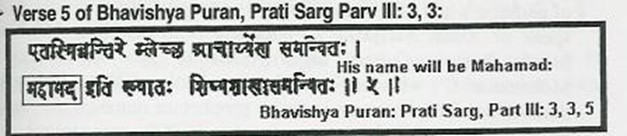
Exhibit 4: verse 5 of Bhavishya Puran (Source: Madina Masjid, Houston, Texas)
Even so, we find in Sama Veda, II, 6, 8: “Ahmad acquired religious law from his Lord.
This law of religion is full of wisdom.”

Exhibit 5: Sama Veda, II, 6, 8 (Source: Madina Masjid, Houston, Texas)
Recognition of the Prophet Muhammad ﷺ and the Global Presence of Islam
Although proofs of the coming of the Prophet Muhammad ﷺ are found in earlier scriptures, many of the people of these Books ignored their own texts and failed to recognize him (Al‑Qur’ān, 7:157). Allāh says in the Qur’ān:
وَمَآ أَرْسَلْنَاكَ إِلاَّ رَحْمَةً لِّلْعَالَمِينَ
“And We sent not you (Muhammad), but as a mercy for all worlds (nations).” (Al‑Qur’ān, 21:107).
Adherence to the five pillars of Islam and the use of Arabic in religious practice create a unifying relationship among Muslim communities across different countries. Islam is the consciousness of Allāh, in Whom believers place their trust. They rely on His mercy because they know He is righteous and good (Al‑Qur’ān, 2:286).
Through the bond of a common religion, local, cultural, and ethnic particularities developed early in Islamic history. Today, the Muslim population worldwide exceeds one billion, spread across diverse climates, cultures, and ethnicities (Pew Research Center, 2017). The largest ethnic groups within the Muslim community include Arabs in North Africa and the Middle East, as well as Muslims in Türkiye, Russia, Central Asia, Iran, Afghanistan, Pakistan, India, Bangladesh, Southeast Asia (Malaysia, Indonesia, the Philippines), and a small part of China.
In Europe, Islam is the second largest religion after Christianity (Pew Research Center). This presence keeps Islamic culture alive and dynamic, making Islam an increasingly important force among the religions and cultures of the world.
World Population Growth based on Last 50 Years* (numbers of x million)
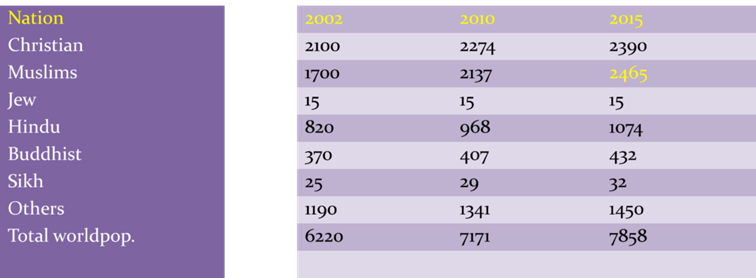
Table 2 Population
Islam is not only a spiritual attitude of mind or a code of sublime precepts, but it is also a self-sufficing track of culture and a social system of well-defined features. The Holy Qur’ān not only prescribes beliefs and defines the metaphysical relations between man and his Creator but also lays down rules of personal conduct and social behavior. Belief is the basis of the Code of Laws, and the Code of Laws is the result of belief. For legislation, without belief is a building without a foundation and belief without the Code of Laws to put into effect would be merely theoretical and ineffective. It offers complete coordination of the spiritual and material aspects of life and lays down a simple and practical code and demands righteousness well within the realm of practicability. Its concept of life does not exclude notions of happiness in the shape of material welfare. It demands no rejection of the world, nor does it prescribe asceticism for spiritual purification.
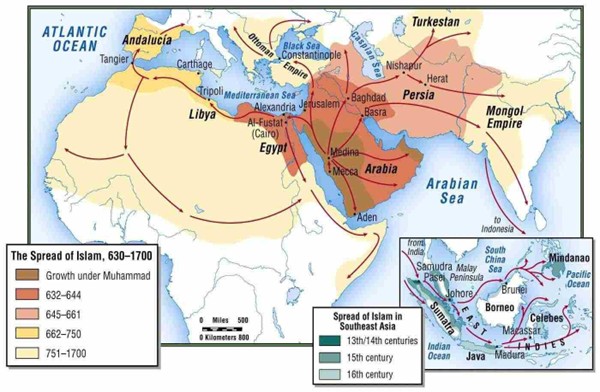
Exhibit 6: A map showing the spread of Islam from the beginning until 1700 (Source: www.edocfind.com)
The Five Pillars of Islam and the Reverence for the Qur’ān
Islam has five pillars: Shahāda (faith), Ṣalāh (prayer), Zakāt (alms), Ṣawm (fasting in Ramadan), and Ḥajj (pilgrimage). One who practices Islam is called a Muslim. According to the Holy Qur’ān, Islam is the original and universal religion; even nature itself is “Muslim” because it is subject to the Laws of Allāh ingrained within creation (Al‑Qur’ān, 3:19). For the person who governs his own will, Islam means practice and willing submission to Allāh. A Muslim is a follower of Revelation—the Holy Qur’ān, which Allāh sent upon the heart of the Prophet Muhammad ﷺ—and a member of the Islamic community. The Qur’ān explicitly names the followers of the Prophet Muhammad ﷺ as “Muslims” (Al‑Qur’ān, 22:78).
Islam teaches the purest form of monotheism and regards polytheism (shirk) as the gravest sin. In Surah, al‑Ikhlāṣ (112), Allāh reveals that He is One, indivisible in Person, without partner, spouse, son, or daughter. He is matchless, without likeness. He neither begets nor is begotten. He is the First and the Last, the Eternal, the Infinite, the Almighty, the Omniscient, and the Omnipresent. He is the Creator, Nourisher, and Cherisher of all things. He is the All‑Just, the Avenger of wrongs done to the weak and oppressed, the Compassionate, the Merciful, the Loving, the Guide, the Friend, the Magnificent, the Glorious, the Beautiful, and the True. In short, He is the Possessor of all Excellence (Al‑Qur’ān, 112:1‑4).
The two basic sources of Islamic doctrine and practice are the Holy Qur’ān and the Aḥādīth—the conduct and sayings of the Prophet Muhammad ﷺ preserved by Ahl al‑Sunnah (Al‑Bukhārī, n.d.; Muslim, n.d.).
Reverence for the Qur’ān
One cannot touch the Holy Qur’ān without ṭahārah (ritual purity through ghusl or wuḍūʾ). Reciting the Qur’ān is a great act of ʿibādah (worship), and even looking at or touching the Qur’ān with love brings blessing and reward. It is impermissible to recite the Qur’ān from memory while in a state of impurity.
Allāh reveals guidance in the Qur’ān:
لاَّ يَمَسُّهُ إِلاَّ ٱلْمُطَهَّرُونَ
“None touch it except the purified.” (Al‑Qur’ān, 56:79).
Before reciting the Qur’ān, Muslims recite the Taʿawwudh:
أعوذ بالله من الشيطان الرجيم
“I seek refuge with Allāh from the accursed devil.” This is wājib (compulsory). They also recite the Tasmiyyah (Basmala):
بِسْمِ ٱللّٰهِ ٱلرَّحْمَٰنِ ٱلرَّحِيمِ
“In the name of Allāh, the Most Gracious, the Most Merciful.” The Basmala is Sunnah (Prophetic tradition) and mustahabb (recommended). The Qur’ān is not a storybook but the direct revelation—the Words of Allāh.
Allāh reveals guidance through the Qur’ān:
إِنَّهُ مِن سُلَيْمَانَ وَإِنَّهُ بِسْمِ ٱللَّهِ ٱلرَّحْمَـٰنِ ٱلرَّحِيمِ
“Indeed, it is from Solomon, and indeed, it is: ‘In the name of Allāh, the Most Gracious, the Most Merciful.’” (Al‑Qur’ān, 27:30).
Sharīʿah
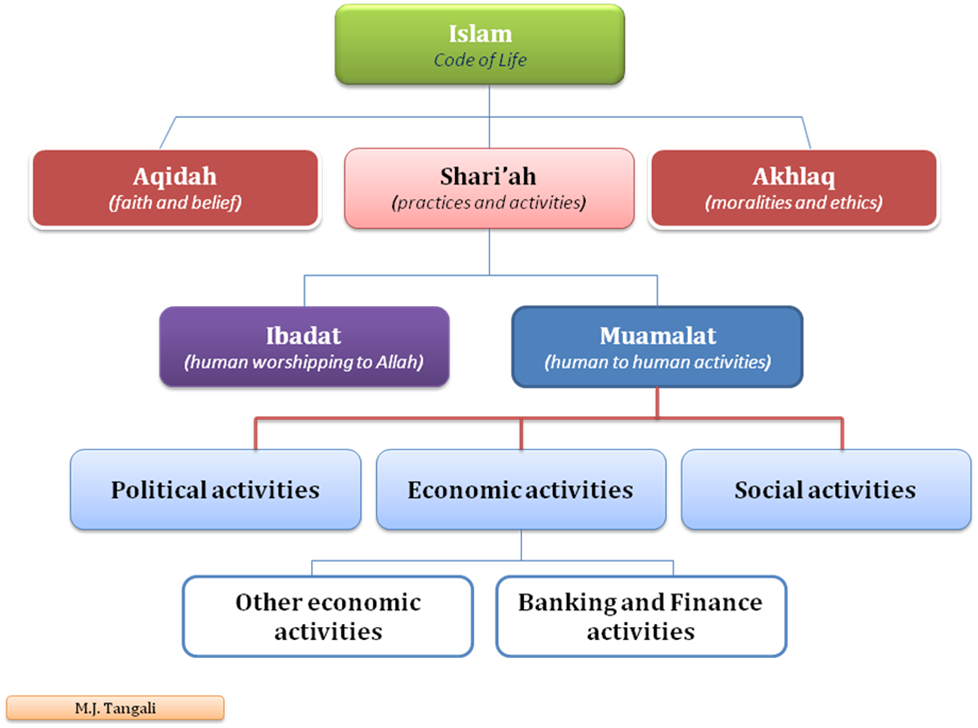
Islamic law, called Sharīʿah, precisely describes the moral goals of the community. In the Muslim context, the term “law” has a broader meaning than in the modern West, because Islamic law encompasses both legal and moral orders. The Sharīʿah consists of the Holy Qur’ān and the Sunnah of the Prophet Muhammad ﷺ. The Arabic word Sharīʿah refers to the laws and way of life prescribed by Allāh for His servants. It addresses ʿaqīdah (faith and ideology), akhlāq (behavior and manners), Ibādat (acts of worship such as prayer, fasting, almsgiving, pilgrimage, remembrance), and muʿāmalāt (practical daily matters) (Al‑Qur’ān, 5:48).
Al‑Qur’ān
This section introduces the main aspects of the Holy Qur’ān and related concepts: the forms of revelation, the collection and arrangement of its parts, the standardization of its text, the distinction between Meccan and Medinan revelations, the difference between muḥkam (clear) and mutashābih (ambiguous) verses, and the development of Qur’ānic exegesis (tafsīr and taʾwīl). It also considers the origins of these interpretive traditions, their schools, methods, and key representatives, as well as their impact on major themes and issues (Al‑Suyūṭī, n.d.).
The Qur’ān’s manner of presentation is simple and direct. It appeals to human intellect (ḥikmah), feelings, and imagination. It draws lessons from daily life yet speaks concisely while covering a multitude of subjects. Through anecdotes of prophets and accounts of earlier revelations (such as the Ṣaḥīfa, Zabūr, Torah, and Injīl), it spans the period from creation to the Day of Judgment and the life beyond. It discusses nature, the creation of humanity, the history of past nations, their beliefs and conduct, and urges reflection on ancient sites and civilizations. It also explores metaphysical relations between humanity and Allāh (Al‑Qur’ān, 17:9).
Muslims revere the Qur’ān as the Word of Allāh, conveyed to the Prophet Muhammad ﷺ by the archangel Jibrīl (Gabriel). Allāh Himself is the author of the Qur’ān, making it infallible and divinely protected. The Qur’ān was revealed over 23 years (611–634 CE), consisting of 114 chapters ((سُوَر) read suwar – plural of surah) of unequal length—some as short as three verses, others as long as 286 verses. Both Muslim and non‑Muslim scholars affirm the essential integrity of the Qur’ānic text (Nasr, 2002).
The Qur’ān safeguards the teachings of earlier scriptures revealed to prophets such as Dāwūd (David), Mūsā (Moses), and ʿĪsā (Jesus) (ʿalayhim al‑salām). Classical scholars (uṣūliyyūn and fuqahāʾ) define the Qur’ān as: “The Word that cannot be imitated, revealed to the Prophet ﷺ, written in codices, transmitted by an unbroken chain of narrators, and recited as an act of devotion.”
Qur’ānic sciences (ʿUloom al‑Qur’ān) comprise studies of its arrangement, codification, recitation, exegesis, stylistic beauty, and textual preservation. Jalāl al‑Dīn al‑Suyūṭī’s Al‑Itqān fī ʿUloom al‑Qur’ān lists 55 names for the Qur’ān, including al‑Kitāb (the Book), al‑Furqān (the Criterion), Karīm (Venerable), and Mubārak (Blessed). The most common designation is al‑Qur’ān al‑Karīm (the Noble Qur’ān) (Al‑Suyūṭī, n.d.). Revelation began when the Prophet ﷺ was forty years old, continuing for 13 years in Mecca (Makki verses). After the migration (Hijra) to Medina at age 53, revelation continued for another 10 years (Madani verses).
Allāh reveals guidance in the Qur’ān:
وَأَنزَلْنَآ إِلَيْكَ ٱلْكِتَابَ بِٱلْحَقِّ مُصَدِّقاً لِّمَا بَيْنَ يَدَيْهِ مِنَ ٱلْكِتَابِ وَمُهَيْمِناً عَلَيْهِ…
“And We have sent down to you the Book in truth, confirming the Scripture that came before it and as a protector over it. So, judge between them by what Allāh has revealed…” (Al‑Qur’ān, 5:48).
The Qur’ān is infallible and guarded by Allāh Himself:
إِنَّا نَحْنُ نَزَّلْنَا ٱلذِّكْرَ وَإِنَّا لَهُ لَحَافِظُونَ
“Indeed, We have sent down the Reminder, and indeed, We will be its Guardian.” (Al‑Qur’ān, 15:9).
This divine promise has been fulfilled for over fourteen centuries in the undisputed purity of the Qur’ānic text. Importantly, this promise also extends to the Sunnah of the Prophet Muhammad ﷺ, which is the practical application of the Qur’ān. As the Prophet ﷺ said: “The Qur’ān cannot be fully understood without the Sunnah.” During the period of revelation, the Prophet ﷺ initially forbade his companions from writing down his Sunnah to prevent confusion between Qur’ānic verses and his traditions (Al‑Bukhārī, n.d.).
Definition of Meccan and Medinan suwar
Among Muslim scholars, three definitions circulate regarding the classification of revealed suwar:
- Geographical definition: Everything revealed in Mecca, including chapters after the emigration (Hijrah) of the Prophet Muhammad ﷺ to Medina, and all chapters revealed in Medina. This definition is considered weak because some verses were revealed outside both Mecca and Medina. For example:
لَوْ كَانَ عَرَضاً قَرِيباً وَسَفَراً قَاصِداً لاَّتَّبَعُوكَ…
“If there had been any near gain and an easy journey, they would have followed you; but the distance was too great for them. They will swear by Allāh, ‘If we had been able, we would have gone with you.’ They destroy themselves, and Allāh knows they are liars.” (Al‑Qur’ān, 9:42).
- Linguistic definition: Chapters addressed to Meccans often begin with Yā Ayyuhannās (“O mankind”), while chapters revealed in Medina often begin with Yā Ayyuhalladhīna āmanū (“O believers”).
- Chronological definition: Revelations in Mecca before the Hijrah are classified as Meccan, while those revealed after the Hijrah in Medina are classified as Medinan. This third definition is considered the most dependable.
Scholars agree that only the Ṣaḥābah (companions of the Prophet ﷺ) could definitively distinguish between Meccan and Medinan chapters, since they witnessed the revelations directly.
Features of Meccan suwar
- Fifteen chapters contain the word kallā (“But no!”), appearing 33 times, mostly in the second half of the Qur’ān.
- Chapters marked with sajdah (prostration) notes in the margins.
- Chapters beginning with single Arabic letters (ḥurūf muqaṭṭaʿāt), except al‑Baqarah and Āl ʿImrān.
- Narratives of prophets, except in al‑Baqarah.
- Accounts of Prophet Ādam (ʿalayhis al‑salām) and Iblīs, except in al‑Baqarah.
Features of Medinan suwar
- Chapters dealing with ḥudūd (legal punishments) such as theft, adultery, and inheritance.
- Chapters granting permission for jihād.
- Chapters mentioning munāfiqūn (hypocrites), except al‑ʿAnkabūt, whose first seven verses are Medinan.
Scholarly Classifications
Al‑Suyūṭī (n.d.), citing Abū al‑Ḥasan al‑Ḥaṣar, divides the Qur’ān into three groups:
- Medinan chapters (20): e.g., al‑Baqarah, Āl ʿImrān, al‑Nisāʾ, al‑Māʾidah, al‑Nūr.
- Disputed chapters (12): e.g., al‑Fātiḥah, al‑Raʿd, al‑Raḥmān, al‑Zalzalah, al‑Ikhlāṣ.
- Meccan chapters (the remainder): according to the majority opinion.
Orientalist scholars often describe Meccan chapters as characterized by “violence, anger, and threat,” while some Western researchers argue they are short and direct because the Meccan audience was illiterate and less urbanized (Watt, 1970).
Tafsīr and Translation (Tafsīr wa al‑Tarjumah al‑Qur’ān)
Every translation of the Qur’ān is an interpretation. Literal translation is considered impossible because the inner meanings of Arabic cannot be fully conveyed in other languages. Moreover, literal translations often fail grammatically.
- Tafsīr means explanation of the Qur’ān and is traditionally conducted in Arabic.
- Tarjumah refers to translation of the Qur’ān.
In this dissertation, the tafsīr works of Ibn Kathīr, al‑Qurṭubī, and al‑Jalālayn are used.
Requirements for Translation
- The translator must have thorough knowledge of prophetic traditions, Arabic linguistics, and exegesis.
- The translator should not insert personal beliefs or philosophy.
- The translator must master both Arabic grammar and the grammar of the target language.
Tafsīr as a Science
According to al‑Zurqānī, tafsīr is the science that seeks to:
- Explain the meanings and rules of the Qur’ān.
- Identify Nāsikh wa‑l‑mansūkh (abrogating and abrogated verses).
- Understand asbāb al‑nuzūl (occasions of revelation).
Tafsīr vs. Taʾwīl
- Imām al‑Ṭabarī (d. 923) considered tafsīr and taʾwīl synonymous (Jāmiʿ al‑Bayān).
- Al‑Zamakhsharī (d. 1144) distinguished them: tafsīr explains the meanings of words, while taʾwīl elucidates deeper interpretations of verses (al‑Kashshāf).
Types of Tafsīr
- al‑tafsīr bi‑l‑maʾthūr (exegesis using Qur’ān, Sunnah, and reports of Companions).
- al‑tafsīr bi‑l‑raʾy (exegesis based on scholarly opinion).
- al‑tafsīr al‑ishārī (symbolic exegesis).
- al‑tafsīr al‑fiqhī (legal exegesis).
- al‑tafsīr al‑ijtimāʿī wa‑l‑adabī (social and literary exegesis).
- al‑tafsīr al‑ʿilmī (scientific exegesis).
- al‑tafsīr al‑lughawī (linguistic exegesis).
Tafsīr bi‑l‑maʾthūr is the oldest method, clarifying verses through the Qur’ān itself, Sunnah, and reports from the Companions and their successors.
Weaknesses of Early Tafsīr
- Israʾīliyyāt: Reports from Jewish converts to Islam. Ibn Kathīr rejected those that contradicted Qur’ān or Sunnah, or that were illogical.
- Weak chains of transmission (silsilah): After the generation of the Tābiʿīn, narrators were less reliable, leading hadith scholars to impose strict conditions for authenticating reports.
Sunnah
The Sunnah of the Prophet Muhammad ﷺ is the second source of guidance and rulings in Islam. The Sunnah is an inspiration from Allāh, conveyed through the words, actions, and tacit approvals of the Prophet ﷺ.
Technical Definition of Sunnah
- Everything narrated from the Prophet ﷺ in the form of words, actions, approvals, appearance, behavior, and life events, whether before or after his Prophethood.
- The term Sunnah refers to the practice and tradition of the Prophet ﷺ. It includes legislative Sunnah (e.g., how to perform prayer) and personal Sunnah exclusive to him (e.g., fasting continuously for two days in Ramadan, al‑wiṣāl), which Muslims are not obliged to follow (Al‑Bukhārī, n.d.; Muslim, n.d.).
Preservation of the Sunnah
Allāh preserved the Sunnah through the Ṣaḥābah (companions), who memorized, recorded, and practiced the Aḥādīth. Their successors (Tābiʿīn and Tābiʿ al‑Tābiʿīn) continued this transmission. When authenticity weakened, Allāh raised scholars with extraordinary memory and analytical skills. These scholars traveled widely to collect thousands of Aḥādīth, classifying them into:
- Reports affected by poor memory.
- Fabrications by unscrupulous liars.
- Authentic statements transmitted by trustworthy scholars and companions.
Thus, the Sunnah represents the lifestyle of the Prophet ﷺ—his actions, recommendations, and tacit consent.
Types of Sunnah
- Aqwāl (words): For example, the Prophet ﷺ said: “Actions are judged by intentions.” (Al‑Bukhārī, Muslim).
- Afʿāl (actions): Acts of worship such as prayer and fasting, transmitted by companions.
- Taqrīr (approvals): The Prophet ﷺ approved acts performed by companions. For instance, when he instructed them not to pray ʿAṣr except at Banī Qurayza, some delayed until Maghrib, while others prayed on time. He approved both interpretations (Al‑Bukhārī, Muslim).
Status of Sunnah in Islam
The Sunnah:
- Confirms Qur’ānic rulings.
- Details concepts briefly mentioned in the Qur’ān (e.g., īmān, iḥsān, details of ṣalāh, prohibition of usury).
- Provides rulings not explicitly stated in the Qur’ān (e.g., prohibition of silk for men).
The Sunnah is preserved in the Ṣaḥīḥ Sitta (six canonical collections: Al‑Bukhārī, Muslim, Abū Dāwūd, Ibn Mājah, al‑Tirmidhī, al‑Nasā’ī). Sunni Muslims also accept other collections such as al‑Ṭabarānī, Imām Aḥmad, and Mālik’s Muwattaʾ.
Allāh reveals guidance in the Qur’ān:
وَٱذْكُـرْنَ مَا يُتْـلَىٰ فِي بُيُوتِكُـنَّ مِنْ آيَاتِ ٱللَّهِ وَٱلْحِكْـمَةِ إِنَّ ٱللَّهَ كَانَ لَطِيفاً خَبِيراً
“And remember what is recited in your houses of the signs of Allāh and wisdom. Undoubtedly, Allāh is Subtle, All‑Aware.” (Al‑Qur’ān, 33:34).
Classical exegetes such as Yaḥyā ibn Abī Kathīr and Qatādah explained that “wisdom” (ḥikmah) here refers to the Sunnah (Al‑Suyūṭī, n.d.).
Transmission of Hadith
Unlike the Qur’ān, the Aḥādīth were transmitted orally for generations before being compiled in the ninth century. While the Qur’ān is divinely protected (Al‑Qur’ān, 15:9), the Hadith is subject to human transmission, which allowed for errors. Scholars therefore developed rigorous methods of authentication (ʿilm al‑Rijāl).
The Prophet ﷺ, though unlettered, astounded the world by expounding the highest principles of wisdom and knowledge. His teachings transformed the Bedouins into a highly advanced civilization, laying the foundations of moral, social, and scientific progress (Nasr, 2002).
All Aḥādīth known today were selected by researchers through meticulous examination of narrators, their family ties, and biographies, ensuring authenticity.
Ibādat – The Five Pillars of Islam
The foundation of Islam rests upon five pillars, which are obligatory for belief and practice to be a Muslim. This is part of Īmān (faith). Allāh is Wahdahu lā Sharikalah (“There is no deity but Allāh, without partner”). Therefore, people must worship Allāh alone and none of His creation. All creation is connected to Him. Whoever worships and prostrates only before Allāh will be rewarded by Him.
In the Holy Qur’ān, it is stated: “Indeed, those who say, ‘Our Lord is Allāh,’ and then remain steadfast, upon them the angels will descend [with blessings].” (Al‑Qur’ān, 41:30, Part 24, p. 362).
In a ḥadīth, the companions of the Prophet Muhammad ﷺ asked him: “Mata saʿatu yā RasūlAllāh?” (“When will the Day of Resurrection come?”). The Prophet ﷺ replied: “Māʿadadda lahā?” (“What preparations have you made for Judgment Day?”). The companions answered: “Ghayra annī uḥibbu Allāha wa Rasūlahu” (“Except that I love Allāh and His Messenger”). The Prophet ﷺ responded that this love is sufficient (Al‑Bukhārī, Ṣaḥīḥ, Kitāb al‑Īmān, Part 1, p. 12; Muslim, Ṣaḥīḥ, Kitāb al‑Īmān, Part 1, p. 45). From this ḥadīth we learn that we must strive in Ibādat (worship), since we do not know when our earthly life will end. We also learn that pride in one’s acts of worship is arrogance and a grave sin. Iblīs waits for such moments of pride to corrupt and destroy the worship itself.
There is no doubt that Muslims worship Allāh. Some people think that worshipping Allāh alone is sufficient, even without attention to the Prophet ﷺ during Ibādat. Yet the Qur’ān teaches that worship must be abundant, so that believers may gain reward, help, prospects, salvation, and a successful life from Him, and not be ungrateful (Al‑Qur’ān, 2:152, Part 2, p. 34).
To draw closer to Allāh, however, we must also engage in dhikr (remembrance) of the Prophet ﷺ, because Allāh Almighty commands this. For example, in ṣalāh (prayer), Muslims send durūd (salutations) upon the Prophet ﷺ. This perfects the prayer and strengthens the connection with Allāh. Thus, Ibādat is both the means and the pathway of connection with Allāh.
Īmān
A Muslim professes his faith with heart and soul by reciting the Shahāda. This creed reflects the belief that there is no god but Allāh and that Prophet Muhammad ﷺ is His final Messenger. It is not sufficient merely to acknowledge this wholeheartedly; it must also be put into practice by the believer. Īmān is the most essential quality of a Muslim. Without Īmān, one will be among the losers (Al‑Qur’ān, 3:85, Part 3, p. 52). Although human beings are connected to Allāh as His creation on earth, closeness to Him begins only at the point of Īmān—absolute submission to Allāh.
Īmān therefore means accepting every word of the Prophet Muhammad ﷺ as absolute truth and testifying wholeheartedly to his reality and message. One who observes this is a Muslim, provided none of his words, actions, or conditions reject, insult, or falsify Allāh Taʿālā and His Messenger ﷺ. Rejecting even one aspect known to be part of Islam constitutes kufr (disbelief). For example, denying the Resurrection (Qiyāmah), Angels, Paradise (Jannah), Hell (Dozakh), accountability (Ḥisāb), or refusing to believe that Ṣalāh, Ṣawm, Zakāt, or Ḥajj are obligatory (farḍ) removes one from the fold of Islam (Al‑Qur’ān, 2:285, Part 2, p. 46).
It is also kufr to deny that the Qur’ān is the Word of Allāh, to insult the Kaʿbah, the Qur’ān, or any of the Prophets or Angels. Likewise, degrading any Sunnah of the Prophet ﷺ, mocking the commands of Sharīʿah, or rejecting recognized aspects of Islam is unequivocally kufr. To be a Muslim, one must combine faith and belief with a pledge of identity as a Muslim.
Hazrat Abū Hurayrah (raḍiyAllāhu ʿanhu) relates that the Prophet ﷺ said: “Īmān has over sixty branches, and Ḥayāʾ (modesty, self‑restraint, dignity) is a part of Īmān.” (Al‑Bukhārī, Ṣaḥīḥ, Kitāb al‑Īmān, Part 1, p. 12; Muslim, Ṣaḥīḥ, Kitāb al‑Īmān, Part 1, p. 45).
The true meaning of Īmān is that respect and love for the Prophet ﷺ must be present. Without this, praying, fasting, and performing other religious obligations have no significance. Respect and love for the Prophet ﷺ must surpass attachment to anything or anyone, including parents and children (Al‑Qur’ān, 9:24, Part 10, p. 178).
Ṣalāt
A Muslim is obligated to pray five times a day. These prayers are:
- Fajr (before dawn)
- Ẓuhr (midday, beginning approximately one hour after the sun reaches its zenith)
- ʿAṣr (afternoon, starting about two hours before sunset in winter and two and a half hours before sunset in summer)
- Maghrib (immediately after sunset, at the break of dusk)
- ʿIshāʾ (night prayer, beginning more than two hours after sunset in summer and one and a half hours after sunset in winter).
Around midnight, the tahajjud prayer is voluntary and performed by those seeking spiritual elevation. During prayer, Muslims face the Kaʿbah in Mecca, the center of devotion.
Allāh reveals guidance in the Qur’ān:
فَإِذَا قَضَيْتُمُ ٱلصَّلَٰوةَ فَٱذْكُرُواْ ٱللَّهَ قِيَاماً وَقُعُوداً وَعَلَىٰ جُنُوبِكُمْ فَإِذَا ٱطْمَأْنَنتُمْ فَأَقِيمُواْ ٱلصَّلَٰوةَ إِنَّ ٱلصَّلَٰوةَ كَانَتْ عَلَى ٱلْمُؤْمِنِينَ كِتَٰباً مَّوْقُوتاً
“Then when you have finished your prayer, remember Allāh standing, sitting, and lying on your sides. When you are secure, establish prayer as usual. Undoubtedly, prayer is a fixed‑time obligation upon the believers.” (Al‑Qur’ān, 4:103, Part 5, p. 92).
If someone misses the fixed time of ṣalāt, he should perform qaḍāʾ (make‑up prayer) for it.
The philosophy of ṣalāt is that prayer cleanses the soul, enabling believers to address themselves to Allāh in this world and draw closer to Him in the Hereafter.
Allāh reveals guidance in the Qur’ān:
إِنَّنِيۤ أَنَا ٱللَّهُ لاۤ إِلَـٰهَ إِلاۤ أَنَاْ فَٱعْبُدْنِي وَأَقِمِ ٱلصَّلاَةَ لِذِكْرِيۤ
“Verily, I am Allāh. There is no deity except Me. So, worship Me and establish prayer for My remembrance.” (Al‑Qur’ān, 20:14, Part 16, p. 302).
Ṣawm (Fasting)
Every Muslim is obliged to submit to the Will of Allāh. From the age of approximately fifteen, it becomes obligatory to uphold at least the five pillars of Islam. The ninth month of the Islamic calendar is Ramadan. Since the Islamic lunar year is on average eleven days shorter than the Christian (Gregorian) calendar, Ramadan shifts each year in relation to the Christian calendar.
Fasting begins at dawn and ends at sunset. During this time, Muslims must abstain from eating, drinking, and sexual relations between spouses. Fasting requires great discipline and self‑control. Ramadan lasts 29 or 30 days, depending on the sighting of the new moon. Within this month lies a significant night of forgiveness known as Laylat al‑Qadr. On this lofty night, the Qur’ān was revealed to the Prophet Muhammad ﷺ. It is described as the night when the doors of blessing are opened, and Allāh calls upon Muslims to seek forgiveness.
Allāh reveals guidance in the Qur’ān:
يٰأَيُّهَا ٱلَّذِينَ آمَنُواْ كُتِبَ عَلَيْكُمُ ٱلصِّيَامُ كَمَا كُتِبَ عَلَى ٱلَّذِينَ مِن قَبْلِكُمْ لَعَلَّكُمْ تَتَّقُونَ
“O believers! Fasting has been made obligatory upon you as it was made obligatory upon those before you, so that you may attain piety. (Al‑Qur’ān, 2:183, Part 2, p. 36).
أَيَّاماً مَّعْدُودَاتٍ فَمَن كَانَ مِنكُم مَّرِيضاً أَوْ عَلَىٰ سَفَرٍ فَعِدَّةٌ مِّنْ أَيَّامٍ أُخَرَ…
“[Fasting is for] a fixed number of days. But whoever among you is ill or on a journey, then [he shall fast] the same number of other days. And upon those who are able [to fast but with hardship], a ransom [is due]: feeding a needy person. Whoever volunteers extra, it is better for him. But to fast is better for you, if only you knew.” (Al‑Qur’ān, 2:184, Part 2, p. 37).
Hazrat Abū Hurayrah (raḍiyAllāhu ʿanhu) reported that the Messenger of Allāh ﷺ said: “When Ramadan begins, the doors of heaven are opened.” Another narration states: “The doors of Paradise are opened, the doors of Hell are closed, and the devils are chained.” A third narration adds: “The doors of Mercy are opened.” (Al‑Bukhārī, Ṣaḥīḥ, Vol. 1, p. 255; Muslim, Ṣaḥīḥ, Vol. 1, p. 346).
Hazrat Shaykh ʿAbd al‑Ḥaqq Muḥaddith‑e‑Dihlawī (raḍiyAllāhu ʿanhu) comments:
“The meaning of the ‘doors of heaven’ being opened is the continuous descent of mercy and the ascension of charitable deeds to the Court of the Almighty without obstacle. It also signifies the acceptance of permissible applications. The ‘doors of Paradise’ being opened means encouragement and ability to perform honorable deeds, and their acceptance. The ‘doors of Hell’ being closed means protection of the souls of those who fast from forbidden acts and rescue from temptations. It also signifies breaking the desires of lust. The chaining of Satan means sealing off the ways through which evil whispers enter the mind.” (Ashiʿah al‑Lamāʿāt, Vol. 1, p. 112).
Zakāt
Zakāt is one of the five pillars of Islam. It is mentioned, along with daily ṣalāh, seventy times in the Qur’ān. Allāhs command “…and establish regular prayer and give regular Zakāt” is repeated in many places. From this, we conclude that after ṣalāh, zakāt is the most important act in Islam (Al‑Qur’ān, 2:43, Part 2, p. 7).
Islam signifies not only unity but also social justice. It teaches that worldly wealth remains temporarily in our possession and has no meaning in the afterlife. By transferring wealth to the poor and needy, one fulfills a good deed. Hoarding wealth while neglecting honorable deeds is a grave sin. Linguistically, zakāt means purification and growth. Technically, it refers to purifying one’s wealth by distributing a prescribed portion to the poor, the indigent, slaves or captives, and wayfarers.
Allāh reveals guidance in the Qur’ān:
مَّثَلُ ٱلَّذِينَ يُنْفِقُونَ أَمْوَالَهُمْ فِي سَبِيلِ ٱللَّهِ كَمَثَلِ حَبَّةٍ أَنبَتَتْ سَبْعَ سَنَابِلَ فِي كُلِّ سُنبُلَةٍ مِّئَةُ حَبَّةٍ وَٱللَّهُ يُضَاعِفُ لِمَن يَشَآءُ وَٱللَّهُ وَاسِعٌ عَلِيمٌ
“The example of those who spend their wealth in the way of Allāh is like that of a grain which produces seven ears, each containing a hundred grains. And Allāh multiplies for whom He wills. And Allāh is Bountiful, All‑Knowing.” (Al‑Qur’ān, 2:261, Part 3, p. 52).
Another verse states:
إِنَّمَا ٱلصَّدَقَاتُ لِلْفُقَرَآءِ وَٱلْمَسَاكِينِ وَٱلْعَامِلِينَ عَلَيْهَا…
“Zakāt is only for the poor, the needy, those employed to collect it, those whose hearts are to be reconciled, for freeing slaves, for debtors, for the cause of Allāh, and for the traveler. This is ordained by Allāh. And Allāh is Knowing, Wise.” (Al‑Qur’ān, 9:60, Part 10, p. 178).
In the Aḥādīth, Abū Hurayrah (raḍiyAllāhu ʿanhu) narrated that the Prophet ﷺ said three types of people will enter Hell first, one of them being the person who does not give Allāhs rightful share (zakāt and sadaqāh) from his wealth (Ibn Khuzaymah, Ṣaḥīḥ, Vol. 2, p. 85; Ibn Ḥibbān, Ṣaḥīḥ, Vol. 3, p. 112).
Abū Hurayrah (raḍiyAllāhu ʿanhu) also narrated that the Prophet ﷺ said: “Wealth does not decrease by giving charity. Allāh increases the honor of the one who forgives others, and Allāh raises the status of the one who humbles himself for His sake.” (Al‑Bukhārī, Ṣaḥīḥ, Kitāb al‑Zakāt, Vol. 2, p. 134; Muslim, Ṣaḥīḥ, Kitāb al‑Zakāt, Vol. 2, p. 210).
Benefits of Zakāt
- It reminds Muslims that whatever wealth they possess is due to Allāhs blessings and must be spent according to His commands.
- Zakāt functions as social security: those with wealth today contribute, and if they need support tomorrow, they will receive it.
- The payer fulfills an act of worship and gratitude to Allāh, while the receiver accepts it as a grant from Allāhs bounty.
- Economically, zakāt prevents hoarding. Wealth not invested but hoarded diminishes annually at the rate of zakāt. Redistribution enhances demand by placing purchasing power in the hands of the poor, stimulating production and supply.
Ḥajj
Ḥajj is one of the five pillars of Islam and a fundamental obligation. It represents the completion of surrender and the perfection of the religion of Islam. On this day, Allāh revealed to the Ummah of His beloved Prophet Muhammad ﷺ: “This day I have perfected your religion for you, completed My favor upon you, and chosen Islam as your religion.” (Al‑Qur’ān, 5:3, Part 6, p. 112).
The basis of all actions in Islam is intention (niyyah). Intention, when accompanied by sincerity, bears fruit. Thus, Ḥajj requires sincerity from those who perform it. For Muslims who are financially and physically able, performing Ḥajj is obligatory once in a lifetime. Each year, over two million Muslims travel to Mecca, Saudi Arabia, for this pilgrimage. The Kaʿbah, the House of Allāh, is the focal point of the rites. Modern developments in transportation, especially air travel, have facilitated access to Mecca. The pilgrim is honored with the title Ḥājjī. During the first ten days of the pilgrimage, the pilgrim must not cut his hair or nails and must refrain from indecent acts. The main rituals include:
- Circumambulating the Kaʿbah (tawāf) seven times.
- Walking briskly (saʿy) seven times between the hills of Ṣafāʾ and Marwah.
- Traveling to Minā (approx. 5 km).
- Proceeding to ʿArafāt (approx. 9 km further), spending the afternoon there, and listening to the sermon.
- Returning to Mecca to perform the sacrifice (qurbānī) in remembrance of Prophet Ibrāhīm (ʿalayhis al‑salām), who was commanded to sacrifice his son for Allāh.
- Visiting the Kaʿbah again.
After these ten days, the core obligations of the pilgrimage are fulfilled. Many pilgrims also travel to Medina to perform ziyārah (a blessing visit) at the tomb of the Prophet Muhammad ﷺ.
All five pillars of Islam share one purpose: activating the connection with the Creator. Yet Allāh Almighty also advises believers to perform extra acts of worship (ʿibādāt), especially during the night, to elevate their spiritual status.
Allāh reveals guidance in the Qur’ān:
وَمِنَ ٱلْلَّيْلِ فَتَهَجَّدْ بِهِ نَافِلَةً لَّكَ عَسَىٰ أَن يَبْعَثَكَ رَبُّكَ مَقَاماً مَّحْمُوداً
“And during the night, pray Tahajjud as an additional act of devotion for you. It may be that your Lord will raise you to a praised station.” (Al‑Qur’ān, 17:79, Part 15, p. 289).
Fiqh (Islamic Jurisprudence)
In this section, an outlook is provided on the principles and rules regarding human relationships and social dealings, with special attention to the following areas:
1. Islamic Family Law: A detailed study of the various principles and rules according to the major schools of jurisprudence (madhāhib) is required. Family law includes the role of the family in society, the duties and rights of each family member, parents, and children—towards one another. Classical jurists such as Imām Mālik, Imām al‑Shāfiʿī, and Imām Abū Ḥanīfah elaborated on marriage contracts, guardianship, divorce, and maintenance (Kamali, 2003, p. 212).
2. Islamic Inheritance Law: Inheritance law (farāʾiḍ) focuses on wills and waqf (donation of usufruct, especially for social purposes). The Qur’ān provides explicit shares for heirs, ensuring justice and preventing disputes (Al‑Qur’ān, 4:11, Part 5, p. 88). The institution of waqf became a cornerstone of Islamic philanthropy, supporting education, healthcare, and social welfare (Hallaq, 2009, p. 145).
3. Islamic Contract Law: Contract law (ʿuqūd) governs financial transactions and economic activity. Principles such as prohibition of ribā (usury), requirement of mutual consent, and avoidance of Gharār (excessive uncertainty) are central. Islamic finance today builds upon these classical rules, adapting them to modern contexts (Al‑Qur’ān, 2:275, Part 3, p. 41; Vogel & Hayes, 1998, p. 67).
4. Islamic Criminal Law: Islamic criminal law is based on the Qur’ān and Sunnah, supplemented by case law. It distinguishes between ḥadd punishments (fixed penalties for crimes such as theft, adultery, and intoxication), qiṣāṣ (retaliation), and taʿzīr (discretionary punishments determined by the judge). Jurists emphasized justice, deterrence, and rehabilitation (Al‑Qur’ān, 5:38, Part 6, p. 115; Peters, 2005, p. 92).
Categories of Punishment
The categories of punishment in Islamic jurisprudence are:
- Ḥadd: fixed punishments prescribed by revelation.
- Qiṣāṣ/Diyah: retaliation or financial compensation for bodily harm.
- Taʿzīr: discretionary punishments imposed by the court.
These categories reflect the balance between divine command and judicial discretion, ensuring both justice and mercy (Kamali, 2003, p. 245).
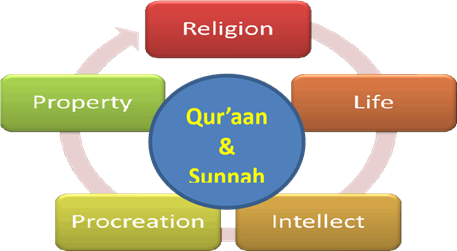
Exhibit 7: Cycle of necessity of life.
The Four Imams and the Development of Fiqh
Imām al‑Aʿẓam Abū Ḥanīfah, Imām Mālik, Imām al‑Shāfiʿī, and Imām Aḥmad ibn Ḥanbal (raḍiyAllāhu ʿanhum ajmaʿīn) are the leaders of the four schools of fiqh (Islamic law). Fiqh is the science of Islamic jurisprudence, referring to the collection and compilation of Islamic laws based on the Holy Qur’ān and the Sunnah of the Prophet Muhammad ﷺ. These great scholars devoted themselves to developing the science of understanding Islamic law and its practice. Although they differed in certain rulings, they held profound respect for one another, often serving as teachers and pupils to each other, united in the common goal of enhancing knowledge of Islam. All four were unanimous on ʿAqāʾid (Islamic beliefs). Muslims are therefore obliged to respect the different Sunni schools of thought (Hallaq, 2009, p. 45).
The compilation of fiqh developed rapidly compared to Roman law. It provides guidance in religious acts (ʿibādāt) and worldly affairs. Conventional law governs both the individual’s relationship with fellow humans and his relationship with the Creator. Fiqh is based on the Qur’ān, obedience to Allāh, and obedience to the Prophet ﷺ (Kamali, 2003, p. 212).
Islam as a Source of Morality
Islam implies peace, submission, justice, and well‑being (maṣlaḥah). Linguistically, it derives from the root salima‑yaslamu‑salāman (safe, peace) and aslama‑yuslimu‑islāman (to save, to bring peace). Religion generically brings liberation and salvation through new moral values for social transformation. Islam is a source of morality because of its metaphysical and humanistic character.
In the socio‑historical context of 7th‑century Arabia, nomadic tribes were prone to inter‑tribal conflicts and wars. Islam presented itself among these nomads, instilling ethical values and moral sensitivities. The language of the Qur’ān, laden with aesthetics and messages of humanity and divine unity, moved their hearts and inspired them to build societies based on social norms and order (Nasr, 2002, p. 85).
Legal Maxims (Qawāʿid al‑Fiqh)
Dr. Mohammad Hashim Kamali explains: “Legal maxims (Qawāʿid al‑Kulliyyah al‑Fiqhiyya) are theoretical abstractions, usually in the form of short epithetical statements that express, often in a few words, the goals, and objectives of the Sharīʿah. Many scholars have treated them as a branch of the maqāṣid (objectives) literature.” (Kamali, 2006, p. 17).
Legal maxims are derived from detailed readings of fiqh rules across various themes. They differ from modern statutory rules, which are concise and devoid of detail. Over time, jurists reduced detailed rulings into abstract principles. Some maxims are drawn directly from the Qur’ān or aḥādīth, while others are formulated by jurists and refined through usage.
The Five Leading Maxims
Early scholars identified five maxims as grasping the essence of the Sharīʿah:
- Al‑yaqīn lā yazūlu bish‑shakk (certainty is not overruled by doubt).
- Al‑mashaqqatu tajlibu at‑taysīr (hardship begets facility).
- Al‑ʿādatu muḥakkamatun (custom is the basis of judgment).
- Al‑ḍarar yuzāl (harm must be eliminated).
- Al‑umūr bi‑maqāṣidihā (matters are judged by their objectives).
Historical Development
- Hanafi jurists were the first to formulate legal maxims. Sufyān ibn Ṭāhir al‑Dabbās collated 17 maxims, later expanded to 39 by Abū al‑Ḥasan al‑Karkhī (d. 340H).
- Early maxims included: “The norm is that the affairs of Muslims are presumed upright unless proven otherwise” and “Prevention of evil takes priority over the attraction of benefit” (Dār al‑mafāsid awlā min jalb al‑Maṣāliḥ).
- Contributions followed from Shāfiʿī, Ḥanbali, and Mālikī scholars. Notable works include ʿIzz al‑Dīn ʿAbd al‑Salām’s Qawāʿid al‑Aḥkām fī Maṣāliḥ al‑Anām (d. 660H) and Ibn Rajab al‑Ḥanbalī’s Al‑Qawāʿid (d. 795H).
- The Ottoman Majalla al‑Aḥkām al‑ʿAdliyya (1870), compiled under Ahmed Cevdet Pasha, represents the most advanced stage of codification, serving as the civil code of the empire (Peters, 2005, p. 92).
Islamic Family Law
The objectives of this section are to understand the rulings of nikāḥ (marriage), the wisdom behind it, and its pillars (arkānuhu). It also covers divorce (ṭalāq), rajʿat (return to the wife during ʿiddah), ʿiddah (waiting period) and its types, as well as the rules of khulʿ (divorce initiated by the wife) and ʾīlāʾ (oath of abstinence), with their terms and conditions.
Islamic family law is of great significance to Muslims and is comprehensively covered in the Holy Qur’ān. As the Qur’ān is believed to contain the direct Word of Allāh, transmitted to the heart of the Prophet Muhammad ﷺ through the Archangel Jibrīl (ʿalayhis al‑salām), Qur’ānic laws pertaining to family matters are considered sacred and immutable.
Marriage (Nikāḥ)
In Islam, marriage is highly desirable. Celibacy is regarded as unnatural and does not equate with devotion to Allāh, as it does in some other faiths. Sexual relations outside marriage (zinā) are a serious crime, with some nations imposing severe penalties. The Qur’ān endorses marriage, and the Prophet Muhammad ﷺ himself married multiple times. Marriage is between a man and a woman; same‑gender relations are considered sinful.
Marriage in Islam is a contract (ʿaqd), combining cultural and religious features. The essential requirements are offer (ījāb) and acceptance (qabūl). In some schools of law, acceptance may be given by the bride’s walī (guardian, usually her father). The contract must specify a mahr (dowry) for the bride, which becomes her property. Mahr may be money, goods, investments, or commitments (e.g., teaching a skill). It may be deferred or paid immediately. Deferred mahr is payable upon divorce or death.
Allāh reveals guidance in the Qur’ān:
وَءَاتُواْ ٱلنِّسَآءَ صَدُقَٰتِهِنَّ نِحْلَةً…
“And give the women their dowries willingly. But if they remit part of it willingly, then consume it with pleasure.” (Al‑Qur’ān, 4:4, Part 5, p. 72).
Contracts may include conditions: e.g., the husband cannot take a second wife without permission, the couple must live in a specified location, or the wife must receive regular financial support. Breach of such conditions may be grounds for divorce (ṭalāq). Spouses may also apply to Sharīʿah courts for enforcement.
Divorce (Ṭalāq)
Divorce has become common, sometimes pronounced hastily with three ṭalāq. Later, couples regret and seek reconciliation, often consulting scholars or lawyers. Some claim that three simultaneous ṭalāq count as one, or that divorce pronounced in anger is invalid. However, Qur’ān and Sunnah emphasize observing the limits of Allāh.
Allāh reveals guidance in the Qur’ān:
فَإِنْ طَلَّقَهَا فَلاَ تَحِلُّ لَهُ مِن بَعْدُ…
“If he divorces her [for the third time], she is not lawful for him until she marries another husband. If that husband divorces her, then there is no blame if they return to each other, provided they observe the limits of Allāh.” (Al‑Qur’ān, 2:230, Part 2, p. 39).
Wills (Waṣiyyah)
Islamic family law also governs wills. Muslims may stipulate that no autopsy or embalming be performed, and that burial occur promptly according to Islamic rites. Executors must return trust properties, pay debts, cover funeral expenses, and fulfill obligations to Allāh (ḥuqūq Allāh), such as unpaid zakāt, kaffārah, or unperformed ḥajj. Remaining wealth is distributed among heirs according to Qur’ānic shares (Al‑Qur’ān, 4:11, Part 5, p. 88).
Islamic Inheritance Law
Inheritance law is an integral part of Sharīʿah and its application in Islamic society is mandatory. The major rules of inheritance are detailed in the Qur’ān, ḥadīth, and fiqh. Historically, Muslim communities have sometimes neglected these rules, either willfully or due to social circumstances.
From Surah al‑Nisāʾ, we learn that both men and women have a share in what their parents and relatives leave behind. At the time of division, kinsfolk, orphans, and those in need should also be treated with kindness and provision.
Allāh commands:
لِّلرِّجَالِ نَصِيبٌ مِّمَّا تَرَكَ ٱلْوَالِدَانِ وَٱلأَقْرَبُونَ وَلِلنِّسَآءِ نَصِيبٌ مِّمَّا تَرَكَ ٱلْوَالِدَانِ وَٱلأَقْرَبُونَ…
“For men there is a share in what their parents and relatives leave, and for women there is a share in what their parents and relatives leave, be it little or much—a determined share.” (Al‑Qur’ān, 4:7, Part 5, p. 73).
Qur’ānic Distribution Rules
- A male receives the portion of two females.
- If only daughters: two or more share two‑thirds; one daughter receives half.
- Parents: if the deceased has children, each parent receives one‑sixth. If there are no children, the mother receives one‑third and the father two‑thirds. If siblings exist, the mother receives one‑sixth.
- Husbands: half if the wife leaves no children; one‑fourth if she leaves children.
- Wives: one‑fourth if the husband leaves no children; one‑eighth if he leaves children.
- Siblings: one‑sixth if only one; one‑third collectively if more than one.
All shares are distributed after payment of debts and bequests (Al‑Qur’ān, 4:11, Part 5, p. 88).
Example of Distribution
Case: One widow, one son, and one daughter.
- Widow: 1/8 = 12.5%
- Son: 7/12 = 58.3%
- Daughter: 7/24 = 29.2%
- Total = 100%
Protection of Orphans
Allāh commands:
وَٱبْتَلُواْ ٱلْيَتَامَىٰ حَتَّىٰ إِذَا بَلَغُواْ النِّكَاحَ…
“Test the orphans until they reach marriageable age. If you find them mature, deliver their property to them. Do not consume it extravagantly or hastily before they grow up. Whoever is rich should abstain, and whoever is poor may consume with equity. When you deliver their property, take witnesses. Allāh is sufficient as Reckoner.” (Al‑Qur’ān, 4:6, Part 5, p. 71).
The Qur’ān repeatedly warns against misappropriating orphan property:
وَلاَ تَقْرَبُواْ مَالَ ٱلْيَتِيمِ إِلاَّ بِٱلَّتِي هِيَ أَحْسَنُ…
“Do not approach the property of the orphan except in the best manner, until he reaches maturity. Fulfill promises, for promises will be questioned.” (Al‑Qur’ān, 17:34, Part 15, p. 287).
Hadith Evidence
- Abū Hurayrah (raḍiyAllāhu ʿanhu) reported that misappropriating orphan property is ruinous (Al‑Bukhārī, Ṣaḥīḥ, Vol. 3, p. 245; Muslim, Ṣaḥīḥ, Vol. 3, p. 312).
- On the Night of Ascension, the Prophet ﷺ saw men eating stones. Jibrīl (ʿalayhis al‑salām) explained they were those who unjustly consumed orphan property (Muslim, Ṣaḥīḥ, Vol. 3, p. 315).
Ethical Dimension
Inheritance law is not only a legal framework but also a moral test of trustworthiness. Societies that neglect justice in inheritance, especially towards orphans, risk corruption, and collapse. Upholding promises and fairness in transactions—such as weights and measures—is emphasized as a foundation for a healthy society (Al‑Qur’ān, 6:53, Part 8, p. 142).
Islamic Contract Law
The fundamentals for establishing a lawful contract under Sharīʿah relate to the legal status of the parties signing the agreement, the way the contract is offered and accepted, and the subject matter of the contract itself. Parties may only participate if they are legally competent. Both written and verbal contracts are acceptable, if offer (ījāb) and acceptance (qabūl) occur in the same meeting, without interruption or change of venue before direct acceptance (Kamali, 2003, p. 212).
Islamic Economy and Finance
An Islamic economy is regulated by a system of rules based on Sharīʿah. The term “economy” is broader than regulation alone; it encompasses business practices, companies, and financial matters. In other words, it regulates “Islamic finance.” Islamic finance developed scientifically in the latter half of the 20th century. With the growing role of banking and financial systems, Muslims confronted the issue of ribā (interest).
The Qur’ān clearly prohibits ribā:
ٱلَّذِينَ يَأْكُلُونَ ٱلرِّبَٰواْ لاَ يَقُومُونَ إِلاَّ كَمَا يَقُومُ ٱلَّذِي يَتَخَبَّطُهُ ٱلشَّيْطَانُ مِنَ ٱلْمَسِّ…
“Those who consume interest will not stand [on the Day of Judgment] except as one stand who is being beaten by Satan into madness. That is because they say, ‘Trade is just like interest.’ But Allāh has permitted trade and forbidden interest. So, whoever, after receiving admonition from his Lord, desists may keep what he has taken before, and his matter rests with Allāh. But whoever returns [to dealing in interest]—those are the companions of the Fire; they will abide therein eternally.” (Al‑Qur’ān, 2:275, Part 3, p. 41).
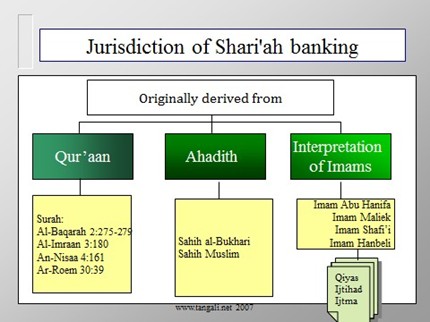
Exhibit 8: authority of Islamic banking.
Islamic Banking and Finance
Islamic banks do not raise interest rates. Unlike conventional banks, which operate on interest (ribā), Islamic banks focus on customer relations and rely on Sharīʿah-compliant methods to generate revenue. These methods are proven forms of Islamic finance and are appointed by Sharīʿah.
Core Methods of Islamic Finance
There are three primary forms of Islamic finance:
- Mudarabah (participation finance):
- A partnership where one party provides capital (the depositor) and the other provides expertise and management (the bank).
- Categories include:
- Required deposits: unlimited deposits, returned upon request, not profit‑sharing.
- Mutual investment deposits: pooled with bank funds, profits distributed annually.
- Special investment deposits: invested in specific projects, with profits and losses shared according to agreement.
- Murābaḥa (resale financing):
- The bank purchases goods at the customer’s request and resells them at a higher price.
- The customer pays in installments.
- Like hire purchase in conventional systems.
- Ijārah (leasing):
- The bank purchases an asset and leases it to the customer for a fixed period and rent.
- At the end of the lease, ownership may transfer to the customer.
- Two types: finance lease and operating lease.
Qur’ānic Guidance on Trade and Ribā
Allāh reveals:
ٱلَّذِينَ يَأْكُلُونَ ٱلرِّبَٰواْ لاَ يَقُومُونَ إِلاَّ كَمَا يَقُومُ ٱلَّذِي يَتَخَبَّطُهُ ٱلشَّيْطَانُ…
“Those who consume interest will not stand [on the Day of Judgment] except as one stand who is being beaten by Satan into madness. That is because they say, ‘Trade is just like interest.’ But Allāh has permitted trade and forbidden interest.” (Al‑Qur’ān, 2:275, Part 3, p. 41).
And:
يَٰأَيُّهَا ٱلَّذِينَ آمَنُواْ لاَ تَأْكُلُوۤاْ أَمْوَٰلَكُمْ بَيْنَكُمْ بِٱلْبَٰطِلِ…
“O believers! Do not consume one another’s wealth unjustly, except through trade by mutual consent. (Al‑Qur’ān, 4:29, Part 5, p. 77).
Prohibitions in Islamic Finance
- Ribā (interest): borrowing with surplus repayment.
- Gharār (excessive uncertainty): contracts with ambiguity.
- Qimār (gambling): speculative transactions.
- State‑prohibited activities: bribery, smuggling, money laundering.
- Harmful externalities: pollution, obstruction of public rights.
The prohibition of interest poses challenges in modern financial systems, where Western banks operate on interest‑bearing accounts and loans. Based on Qur’ānic injunctions, Muslims are instructed not to use such facilities. Linguistically, ribā means “increase” or “extra.” In Sharīʿah, it refers to borrowing money for a fixed period with repayment plus a surplus (interest). This prohibition led to the development of “Islamic banking,” which seeks to provide financial services without interest, relying instead on profit‑sharing, leasing, and partnership models (Vogel & Hayes, 1998, p. 67).
The Four Cs of Islamic Financial Engineering
- Consciousness: contracts must be entered on willingly, without compulsion.
- Clarity: terms must be clear; ambiguity invalidates contracts.
- Capability: parties must be able to fulfill conditions; selling unowned goods is invalid.
- Commitment: Party must honor contracts sincerely, avoiding legal tricks.
Corporate Social Responsibility
Islamic banks also emphasize social responsibility. For example, they will not finance goods used to produce alcohol. This principle extends to investment ethics. A notable case of CSR in practice is Grameen Danone Foods, founded in 2006 by Danone and Nobel laureate Dr. Muhammad Yunus, to combat malnutrition in Bangladesh (Knittel, 2006, p. 12).
Qur’ānic Prohibition of Unlawful Activities
Allāh reveals:
يَٰأَيُّهَا ٱلَّذِينَ آمَنُواْ إِنَّمَا ٱلْخَمْرُ وَٱلْمَيْسِرُ وَٱلأَنصَابُ وَٱلأَزْلاَمُ رِجْسٌ مِّنْ عَمَلِ ٱلشَّيْطَانِ فَٱجْتَنِبُوهُ لَعَلَّكُمْ تُفْلِحُونَ
“O believers! Wine, gambling, idols, and divining arrows are unclean works of Satan. Avoid them so that you may prosper.” (Al‑Qur’ān, 5:90, Part 6, p. 121).
Islamic Commercial Law and Ethics
As with other legal systems, the exact nature of goods must be clearly defined in terms of quality and specifications. Except for money‑exchange deals, the price at which goods change hands must be agreed upon at the time of the contract. Agreements cannot be based on future market rates or the opinion of external parties. The most common contract for the sale of goods is the muʿāwaḍāt (exchange) contract. This includes barter‑style exchanges, sales of goods for money, or money‑exchange deals. Another usual form is ijārah (leasing), used for equipment, real estate, or labor.
Prophetic Guidance on Fairness in Trade
Abū Hurayrah (raḍiyAllāhu ʿanhu) reported that the Prophet ﷺ said Allāh Himself will appear as a complainant on the Day of Judgment against three types of people:
- One who breaks a promise.
- One who sells a free man as a slave.
- One who hires a laborer but does not pay his wages.
(Al‑Bukhārī, Ṣaḥīḥ, Vol. 3, p. 245).
Other aḥādīth emphasize honesty:
- A man adulterated milk with water; Abū Hurayrah warned him of accountability on the Day of Judgment (al‑Baihāqi, Sunan, Vol. 5, p. 112).
- Hakīm ibn Ḥizām reported that when buyer and seller speak truthfully, blessings (baraka) remain, but if they lie, blessings are removed (Al‑Bukhārī, Ṣaḥīḥ, Vol. 3, p. 248; Muslim, Ṣaḥīḥ, Vol. 3, p. 312).
- Abū Dharr reported that the Prophet ﷺ said Allāh will not look at those who sell wares by false oaths (Al‑Bukhārī, Ṣaḥīḥ, Vol. 3, p. 250).
From these narrations, we learn that fairness in commercial transactions in Islam is stricter than in other religions. Islam is not merely a set of doctrines or rituals; it is a comprehensive code regulating trade, politics, family, and social relations.
Ethical Foundations
A true Islamic society is founded on honesty, justice, and community, intolerant of corruption. Absolute honesty in business and commerce is a genuine Islamic concept. The Prophet Muhammad ﷺ encouraged his followers to adopt trade as a profession and to implement fairness and accuracy in transactions. Islam emphasizes qaṭ ḥalāl—food and income earned legitimately. Just as harmful food damages physical health, income earned through unlawful means damages spiritual and moral health. Fraudulent practices, drugs, or illegal trade prevent moral elevation. Islam condemns all forms of commercial dishonesty, forbidding transactions not based on fairness and courtesy. The Prophet ﷺ said: “One who deceives us is not one of us.” (Muslim, Ṣaḥīḥ, Vol. 3, p. 315).
Historical Context: Al‑Andalus
Between 1000 and 1250 CE, Muslim Spain (Al-Andalus) played a significant role in Mediterranean commerce. Integrated into the trading networks of North Africa, Egypt, and southern Europe, Andalusian trade was later disrupted by the Reconquista and Crusades. By the late 13th century, Christian powers dominated western Mediterranean routes, shifting trade toward Italian merchants. The Andalusian silk industry declined, replaced by wool production under Christian rule (Constable, 1994, p. 178). Sources for Andalusian commerce include Arabic chronicles, Jewish merchant letters, Latin notarial records, and archaeological evidence, which together illuminate the region’s role in medieval trade.
Imam al‑Ghazālī on Trade
Imām al‑Ghazālī (raḍiyAllāhu ʿanhu) emphasized that Muslims intending to trade must understand the business rules codified by Sharīʿah. Without this knowledge, they risk lapses leading to unlawful income. He stressed that early Muslims had a profound horror of illegal trade, and thus he labored to clarify Islamic laws and regulations on commerce as a prerequisite for adopting trade as a profession (Al‑Ghazālī, Iḥyāʾ ʿUloom al‑Dīn, Vol. 2, p. 145).
Fairness in Business According to the Qur’ān
The Holy Qur’ān emphasizes the importance of fairness in business transactions. Allāh reveals:
وَيٰقَوْمِ أَوْفُواْ ٱلْمِكْيَالَ وَٱلْمِيزَانَ بِٱلْقِسْطِ وَلاَ تَبْخَسُواْ ٱلنَّاسَ أَشْيَآءَهُمْ وَلاَ تَعْثَوْاْ فِي ٱلأَرْضِ مُفْسِدِينَ
“And O my people! Fill up measure and weight with justice and do not diminish people’s goods, and do not spread corruption in the land.” (Al‑Qur’ān, 11:85, Part 12, p. 223).
بَقِيَّتُ ٱللَّهِ خَيْرٌ لَّكُمْ إِن كُنتُم مُّؤْمِنِينَ وَمَآ أَنَاْ عَلَيْكُمْ بِحَفِيظٍ
“And that which remains from the provision of Allāh is better for you, if you believe. And I am not a guardian over you.” (Al‑Qur’ān, 11:86, Part 12, p. 223).
These words of Prophet Shuʿayb (ʿalayhis al‑salām) articulate fundamental principles of Islamic commercial ethics:
- Correct measurement and weight.
- Avoid depriving people of their rightful goods.
- Do not cause harm or corruption on earth.
- Preserve what Allāh has left for us after fulfilling obligations to others.
Prophetic Guidance in Trade
A careful study of Kitāb al‑Buyūʿ (Book of Commercial Transactions) in Ṣaḥīḥ Muslim reveals that the Prophet Muhammad ﷺ based trade on strict truth and justice. He emphatically rejected all transactions involving injustice or harm to either buyer or seller. He encouraged both parties to be sympathetic and considerate, forbidding exploitation of ignorance or simplicity. The seller must not attempt to squeeze the buyer but should take only a fair share. Islam condemns all forms of injustice and exploitation in human relationships. Business should be conducted in a spirit of fairness, kindness, and even iḥsān (generosity). The Prophet ﷺ said: “Allāh will forgive the sins of a Muslim who forgives a sales contract that was not valued by the other.” (Muslim, Ṣaḥīḥ, Kitāb al‑Buyūʿ, Vol. 3, p. 312).
Principles of Islamic Transactions
All transactions must be founded on the principle of taʿāwanū ʿalā al‑birri wa‑l‑taqwā (cooperation in goodness and piety). Transactions motivated purely by greed or reputation are unlawful. Islam strikes at the root of excessive love for wealth, condemning hoarding and exploitation. Instead, virtue and piety are established as the decisive criteria for human dignity (Al‑Qur’ān, 9:34, Part 10, p. 176).
Islamic Criminal Law
In pre‑Islamic Arabia, criminal law was based on customary codes agreed upon by tribal groups to punish those adjudged guilty of crimes. These codes sought to protect public interest, peace, and order, and to safeguard sovereignty from attacks on life and property. Punishments, however, were not uniform; they varied across time and place. Some systems focused on the act of crime itself, while others emphasized the offender. The emergence of Islam profoundly altered Arab society, reshaping the legal system, social standing, and criminal law. Islamic law is not comparable to modern Western penal codes. Rather than being a codified statute book, Sharīʿah is a comprehensive framework regulating all aspects of private and public life, forming the basis of civil and moral theory (Hallaq, 2009, p. 92).
Sources of Islamic Criminal Law
For Muslims, the Qur’ān is the divine Word of Allāh revealed to His Messenger ﷺ. It is the primary source of Islamic criminal law, offering both spiritual and legal guidance. Alongside the Qur’ān, other sources include:
- Sunnah: Prophetic traditions.
- Ijmāʿ: Consensus of legal scholars.
- Qiyās: Analogical reasoning (disputed as a source).
The principle behind qiyās is that everything is permissible unless explicitly prohibited. Jurists are unanimous on the Qur’ān, Sunnah, and Ijmāʿ, but differ on Qiyās (Kamali, 2003, p. 212).
Ḥudūd Offenses
Islamic criminal law does not maintain a separate corpus of “criminal law” in the Western sense. Sharīʿah courts traditionally oversee disputes between individuals, even criminal ones. However, a special category of offenses against Allāh exists: ḥudūd (limits). These are the most serious crimes, with punishments fixed in the Qur’ān and Sunnah.
Examples include:
- Theft → amputation (Al‑Qur’ān, 5:38, Part 6, p. 115).
- Adultery/fornication → stoning or lashes (Al‑Qur’ān, 24:2, Part 18, p. 342).
- Drinking alcohol → lashes (Hadith: Al‑Bukhārī, Ṣaḥīḥ, Vol. 8, p. 25).
- False accusation of adultery (qadhf) → lashes (Al‑Qur’ān, 24:4, Part 18, p. 343).
Ḥudūd punishments are only applied under strict evidentiary criteria. Many scholars argue that unless a society is fully governed by Sharīʿah, ḥudūd cannot be legitimately enforced.
Categories of Crimes in Islam
Islamic criminal law divides crimes into four categories:
- Ḥudūd – fixed punishments for offenses against Allāh.
- Qiṣāṣ/Diyah – retaliation or financial compensation for bodily harm.
- Taʿzīr – discretionary punishments determined by the judge.
- Siyāsah Sharīʿah – administrative measures taken by rulers for public order.
This categorization reflects the balance between divine command and judicial discretion, ensuring justice, deterrence, and mercy (Peters, 2005, p. 92).
Sharb al‑Khamr (Drinking Alcohol)
Ibn Kathīr, in his Tafsīr, records the narration of Anas ibn Mālik (raḍiyAllāhu ʿanhu):
“I was the butler of the people in the house of Abū Ṭalḥah when wine was prohibited. In those days, alcohol was made from unripe and ripe dates. A caller heralded the prohibition, and Abū Ṭalḥah ordered me to spill the wine. I went out and spilled it, and it flowed in the streets of Madīnah.” (Ibn Kathīr, Tafsīr, Vol. 2, p. 178).
Another narration states that Anas ibn Mālik was serving Abū Ṭalḥah, Abū ʿUbaydah ibn al‑Jarrah, Abū Dujānah, Muʿādh ibn Jabal, and Suhayl ibn Bayḍāʾ until they became intoxicated. Then a herald announced: “Wine has been made unlawful.” They immediately spilled the alcohol, broke the barrels, performed ablution, and went to the Masjid while the Prophet ﷺ recited the revelation.
Allāh reveals guidance in the Qur’ān:
يَٰأَيُّهَا ٱلَّذِينَ آمَنُواْ إِنَّمَا ٱلْخَمْرُ وَٱلْمَيْسِرُ وَٱلأَنصَابُ وَٱلأَزْلاَمُ رِجْسٌ مِّنْ عَمَلِ ٱلشَّيْطَانِ فَٱجْتَنِبُوهُ لَعَلَّكُمْ تُفْلِحُونَ
“O believers! Wine, gambling, idols, and divining arrows are unclean works of Satan. Avoid them so that you may prosper.” (Al‑Qur’ān, 5:90, Part 6, p. 121).
إِنَّمَا يُرِيدُ ٱلشَّيْطَانُ أَن يُوقِعَ بَيْنَكُمُ ٱلْعَدَاوَةَ وَٱلْبَغْضَآءَ فِي ٱلْخَمْرِ وَٱلْمَيْسِرِ…
“Satan only desires to sow hatred and enmity among you through wine and gambling, and to bar you from the remembrance of Allāh and from prayer. Will you then desist?” (Al‑Qur’ān, 5:91, Part 6, p. 121).
Ibn ʿUmar (raḍiyAllāhu ʿanhu) reported that the Prophet ﷺ said: “Allāhs curse is upon those who drink wine, serve it, sell it, buy it, distill it, have it distilled, carry it, or benefit from its income.” (Abū Dāwūd, Sunan, Vol. 4, p. 112; Ibn Mājah, Sunan, Vol. 3, p. 45).
Abū Umāmah (raḍiyAllāhu ʿanhu) narrated that the Prophet ﷺ warned of severe punishments for communities indulging in wine, entertainment, interest, silk, and severing family ties, including transformations, earthquakes, and storms (Aḥmad, Musnad, Vol. 5, p. 321; Ibn Abī al‑Dunyā, Dhamm al‑Khamr, Vol. 1, p. 88).
As‑Sariqah and Qaṭʿ al‑Ṭarīq (Theft and Robbery)
Ibn Kathīr records that Abū Hurayrah (raḍiyAllāhu ʿanhu) reported the Prophet ﷺ said: “May Allāh curse the thief who steals an egg and his hand is cut off or steals a rope and his hand is cut off.” (Al‑Bukhārī, Ṣaḥīḥ, Vol. 8, p. 25; Muslim, Ṣaḥīḥ, Vol. 3, p. 312).
Hazrat ʿĀishah (raḍiyAllāhu ʿanhā) narrated that the Prophet ﷺ said: “The hand of the thief shall be cut off if he steals a quarter of a Dinar or more.” (Muslim, Ṣaḥīḥ, Vol. 3, p. 313). This hadith establishes the minimum threshold for theft requiring amputation: one‑quarter of a Dinar. Since one Dinar equaled twelve Dirhams, three Dirhams equaled one‑quarter of a Dinar. Thus, the two views are harmonized. This ruling was supported by ʿUmar ibn al‑Khaṭṭāb, ʿUthmān ibn ʿAffān, ʿAlī ibn Abī Ṭālib, and later jurists including al‑Shāfiʿī, Aḥmad ibn Ḥanbal, and others.
Imām Abū Ḥanīfah and his students, however, held that the minimum threshold was ten Dirhams. Despite this difference, the majority view affirms the quarter‑Dinar threshold as a deterrent against theft, reflecting wisdom and justice (Kamali, 2003, p. 245).
Theft (As‑Sāriqah)
Allāh reveals guidance in the Qur’ān:
وَٱلسَّارِقُ وَٱلسَّارِقَةُ فَٱقْطَعُوۤاْ أَيْدِيَهُمَا جَزَآءً بِمَا كَسَبَا نَكَالاً مِّنَ ٱللَّهِ وَٱللَّهُ عَزِيزٌ حَكِيمٌ
“As to the thief, male or female, cut off his or her hand: a retribution for what they have earned, a punishment from Allāh. And Allāh is Mighty, Wise.” (Al‑Qur’ān, 5:38, Part 6, p. 115).
This verse establishes the fixed (ḥadd) punishment for theft, applied under strict evidentiary conditions. Classical jurists debated the minimum threshold for theft requiring amputation, with the majority view being one‑quarter of a Dinar (equivalent to three Dirhams).
Illegal Sexual Intercourse (Az‑Zinā)
Ibn Kathīr, in his Tafsīr, explains that Allāh commands:
ٱلزَّانِيَةُ وَٱلزَّانِي فَٱجْلِدُواْ كُلَّ وَاحِدٍ مِّنْهُمَا مِاْئَةَ جَلْدَةٍ
“The woman and the man guilty of fornication—flog each one of them with a hundred stripes.” (Al‑Qur’ān, 24:2, Part 18, p. 342). This ruling applies to unmarried offenders. In addition, the Sunnah prescribes banishment for one year. For married offenders, the punishment is stoning to death (rajm), as recorded in authentic aḥādīth.
Abū Hurayrah and Zayd ibn Khalīd al‑Juhanī narrated the case of two Bedouins who came to the Prophet ﷺ: one confessed to fornication, and the Prophet ﷺ judged according to the Book of Allāh—flogging and banishment for the unmarried offender, and stoning for the married woman who confessed (Al‑Bukhārī, Ṣaḥīḥ, Vol. 8, p. 25; Muslim, Ṣaḥīḥ, Vol. 3, p. 312).
ʿUmar ibn al‑Khaṭṭāb (raḍiyAllāhu ʿanhu) affirmed that the verse of stoning was revealed and practiced by the Prophet ﷺ and the Companions, warning against its denial in later generations (Mālik, Muwattaʾ, Vol. 2, p. 145).
Modesty and Chastity
Allāh commands:
وَقُل لِّلْمُؤْمِنَاتِ يَغْضُضْنَ مِنْ أَبْصَارِهِنَّ وَيَحْفَظْنَ فُرُوجَهُنَّ…
“And tell the believing women to lower their gaze, guard their chastity, and not display their adornment except what is apparent. Let them draw their veils over their bosoms and not display their adornment except to their husbands, fathers, husbands’ fathers, sons, husbands’ sons, brothers, brothers’ sons, sisters’ sons, their women, their slaves, male attendants free of sexual desire, or children unaware of women’s private parts. And let them not stamp their feet to reveal hidden adornment. And all of you repent to Allāh, O believers, that you may prosper.” (Al‑Qur’ān, 24:31, Part 18, p. 343). This verse establishes the principle of modesty and chastity, forming the ethical foundation for preventing unlawful sexual relations.
Prophetic Warning
Abū Qatādah (raḍiyAllāhu ʿanhu) reported that the Prophet ﷺ said: “Whoever lies on the bed of a woman whose husband is absent, intending to exploit her, a black serpent will be deputed against him on the Day of Judgment, biting him continuously.” (Al‑Ṭabarānī, al‑Muʿjam al‑Kabīr, Vol. 7, p. 212).
Irtidād or Ridda (Apostasy, including Blasphemy)
Apostasy (irtidād or ridda) in Islamic law refers to abandoning Islam, including acts of blasphemy, or associating partners with Allāh. The Qur’ān warns:
قُلْ يٰأَهْلَ ٱلْكِتَابِ تَعَالَوْاْ إِلَىٰ كَلِمَةٍ سَوَآءٍ بَيْنَنَا وَبَيْنَكُمْ…
“Say, O People of the Book! Come to a word common between us and you: that we worship none but Allāh, associate no partners with Him, and that none of us take others as lords besides Allāh. If they turn away, then say: Bear witness that we are Muslims.” (Al‑Qur’ān, 3:64, Part 3, p. 52).
Hadith Evidence
Ibn Kathīr records in his Tafsīr that Imām Aḥmad narrated from Abū Dharr (raḍiyAllāhu ʿanhu): “No servant proclaims ‘There is no deity worthy of worship except Allāh’ and dies upon that belief, except that he will enter Paradise—even if he committed adultery and theft.” (Al‑Bukhārī, Ṣaḥīḥ, Vol. 1, p. 45; Muslim, Ṣaḥīḥ, Vol. 1, p. 65). This narration emphasizes the primacy of tawḥīd (monotheism) as the foundation of salvation, despite other sins.
ʿIkrimah reported that some zanādiqa (atheists) were brought to ʿAlī ibn Abī Ṭālib (raḍiyAllāhu ʿanhu), who burned them. Ibn ʿAbbās (raḍiyAllāhu ʿanhu) objected, saying: “If I had been in his place, I would not have burned them, for the Prophet ﷺ forbade punishing with Allāhs punishment (fire). I would have killed them according to the statement of the Prophet ﷺ: ‘Whoever changes his religion, kill him.’” (Al‑Bukhārī, Ṣaḥīḥ, Vol. 9, p. 45).
Sources of Islamic Criminal Law
From these discussions, the four primary sources of Islamic criminal law are reaffirmed:
- Qur’ān – the divine Word of Allāh.
- Sunnah – the traditions of the Prophet ﷺ.
- Ijmāʿ – consensus of the scholars.
- Qiyās – analogical reasoning (disputed but used in many schools).
Together, these sources form the foundation of Islamic jurisprudence, including rulings on apostasy.
Communication in Islam and Modern Thought
People who can understand, see, and listen possess half of wisdom, but those who refuse to learn remain trapped in cycles without progress. Communication is not only a physical aspect of life but also a mystical one. Through observation, humans can learn much about the science of communication. The Holy Qur’ān contains passages that highlight the importance of communication. Once communication is established, connection begins.
Allāh reveals guidance in the Qur’ān:
وَلَقَدْ ذَرَأْنَا لِجَهَنَّمَ كَثِيراً مِّنَ ٱلْجِنِّ وَٱلإِنْسِ…
“Undoubtedly, We have created for Hell many jinn and men. They have hearts but do not understand, eyes but do not see, and ears but do not hear. They are like cattle, nay, more misguided. They are indeed heedless.” (Al‑Qur’ān, 7:179, Part 9, p. 152).
The Concept of Information
The concept of “information” today carries far more weight than it did a century ago. Scientists are developing theories to define information, while social scientists speak of the “information age.” Information is now seen as a fundamental component of the universe, alongside matter and energy. This challenges materialistic philosophies of the 21st century, which defined the universe solely in terms of matter and energy.
Communication as Symbolic Exchange
Communication is a symbolic exchange of information between people, whether in immediate presence or mediated awareness. Information is partly consciously and partly unconsciously given, received, and interpreted. Communication requires at least two parties, each acting as both sender and receiver.
- Encoding: The process of expressing ideas, thoughts, and feelings in language or symbols.
- Decoding: The process of interpreting and understanding the message.
- Reference: Words are not isolated but part of larger units of meaning.
Verbal and nonverbal signals, as well as situational cues (e.g., clothing, gestures), shape communication.
Channels of Communication
- Auditory channel: Speech and listening.
- Visual channel: Gestures and facial expressions.
- Tactile channel: Physical touch.
Noise is almost unavoidable in interpersonal communication. It distorts or disrupts the transmission of messages.
Types of Noise
- Physical noise: External disturbances (e.g., loud sounds, visual obstructions).
- Psychological noise: Prejudices and stereotypes that hinder understanding.
- Semantic noise: Miscommunication due to differences in code or meaning.
Functions of Communication
- Feedforward: Announcing something about the message to follow (e.g., “I hope you do not misunderstand, but…”).
- Feedback: Information about previously transmitted messages, either from oneself or others.
- Context: Communication is shaped by physical setting and social‑psychological aspects, such as power dynamics between parties.
Connecting
Now that we have understood what communication and information mean, we can proceed to the concept of connecting. Connecting often develops under surprising circumstances and at the most unexpected times. It may be pursued with an ending in mind, yet it is never identical among people. It is as unique as a fingerprint, yet as universal as a smile.
Connecting extends far beyond achieving fame or fortune, gaining the approval of friends, collecting awards, or even saving the world. Some individuals will enjoy achievements that are widely recognized; others will make a small but significant difference in the life of just one person. Still others will discover a deeper form of connection through inner strength or generosity of spirit.
At its essence, connecting is when we prove our own potential to ourselves. Once this point is reached, the ripple effects are powerful and lasting, for all of us are connected to humanity. Every action we take impacts on another human being. Whether we wave at a neighbor, stand in line at a grocery store, drive in traffic, or play a computer game with an unknown person across the world, we are touching others with our spirit. Connecting manifests in many forms and sizes.
Social Programs and Peacebuilding
Programs that foster connection continue to evolve. Their message is magnified through community meetings, dramatic presentations, role‑playing exercises, the internet, traditional mail, and the involvement of young people. The goal is to connect youth in networks of recognition and friendship, building alliances for sustainable peace. Such initiatives provide opportunities for those who wish to save lives, whether in regions of conflict or in areas currently at peace.
Spiritual Connection
In the same way, we can connect with Allāh by engaging deeply in acts of worship:
- Ṣalāh (prayer)
- Ṣawm (fasting)
- Zakāt (almsgiving)
- Ḥajj (pilgrimage)
- Dhikr (remembrance of Allāh)
Through these practices, humanity communicates with its Creator, affirming the ultimate connection that transcends all world ties.
Creations
Allāh is the Creator of everything and the sole possessor of all beings. It is Allāh Who heaps up the heavy clouds, heats and brightens the earth, varies the direction of the winds, holds birds suspended in the sky, splits the seed, makes the human heart beat, ordains photosynthesis in plants, and keeps planets in their separate orbits. People often assume that such phenomena occur according to the laws of physics, gravity, aerodynamics, or other physical factors. The only possessor of power in the universe is Allāh. He rules all systems in the universe, whether we are aware of them or not, whether we are asleep, sitting, or walking. Each of the myriad processes essential to our existence is under Allāhs control.
Allāh is in no need of His creations, yet He creates everything—both what we can perceive with our senses and what lies beyond human observation. Among His creations, the greatest is the Holy Prophet Muhammad ﷺ. This is not only the belief (īmān) of Muslims, but even non‑Muslims have recognized his unparalleled influence. For example, Michael H. Hart, a Christian author in the United States, ranked the Prophet Muhammad ﷺ first in his book The 100: A Ranking of the Most Influential Persons in History (Hart, 1978, p. 3).
Qur’ānic Guidance
Allāh reveals:
ذَٰلِكُمُ ٱللَّهُ رَبُّكُمْ خَـٰلِقُ كُلِّ شَيْءٍ لاَّ إِلَـٰهَ إِلاَّ هُوَ فَأَنَّىٰ تُؤْفَكُونَ
“That is Allāh, your Lord, the Creator of everything. None is to be worshipped except Him. So where are you being turned away?” (Al‑Qur’ān, 40:62, Part 24, p. 455).
Ibn Kathīr comments in his Tafsīr: “That is Allāh, your Lord, the Creator of all things. La ilāha illā Huwa—meaning, the One Who does all of these things is Allāh, the Unique Creator, besides Whom there is no other god or lord.” (Ibn Kathīr, Tafsīr, Vol. 4, p. 212).
Hadith on Creation
The Prophet Muhammad ﷺ stated: “Angels are created from light, the Jinn from fire containing no smoke, and Adam (ʿalayhis al‑salām) from what has already been described to you (black, white, and red sand).” (Muslim, Ṣaḥīḥ, Vol. 4, p. 218).
Ibn Kathīr further explains that Allāh created humankind from clay, like pottery, and the Jinn from the tip of a smokeless flame of fire. This was narrated by al‑Ḍaḥḥāk from Ibn ʿAbbās, and reported by ʿIkrimah, Mujāhid, al‑Ḥasan, and Ibn Zayd. Al‑ʿAwfī reported from Ibn ʿAbbās: “From the best part of the fire, from its smokeless flame.” Imām Aḥmad recorded from ʿĀishah (raḍiyAllāhu ʿanhā) that the Prophet ﷺ said: “The angels are created from light, the Jinn from a smokeless flame of fire, and Adam from what has been described to you.” (Aḥmad, Musnad, Vol. 6, p. 112; Muslim, Ṣaḥīḥ, Vol. 4, p. 218).
Are My Sacrifices Enough?
The arrogance and ignorance of this age often make Muslims unaware of their duties toward humankind. Many assume that giving some charity, visiting the mosque, or providing food and clothing for their children is sufficient. Life on earth is nothing but a test for humankind, a preparation for entry into the true life of Jannah. Your sacrifices are never “enough,” because no one knows whether Allāh has accepted them. He will assess you regardless. Arrogance prevents people from understanding the Qur’ān, for an arrogant person considers himself superior and lacks the humility and awareness necessary to approach divine revelation properly.
Qur’ānic Guidance on Testing and Sacrifice
Allāh reveals:
أَحَسِبَ ٱلنَّاسُ أَن يُتْرَكُوۤاْ أَن يَقُولُوۤاْ آمَنَّا وَهُمْ لاَ يُفْتَنُونَ
“Do people think they will be left alone because they say, ‘We believe,’ and they will not be tested?” (Al‑Qur’ān, 29:2, Part 20, p. 372).
وَلَقَدْ فَتَنَّا ٱلَّذِينَ مِن قَبْلِهِمْ فَلَيَعْلَمَنَّ ٱللَّهُ ٱلَّذِينَ صَدَقُواْ وَلَيَعْلَمَنَّ ٱلْكَاذِبِينَ
“And indeed, We tested those before them, so Allāh will surely know the truthful and will surely know the liars.” (Al‑Qur’ān, 29:3, Part 20, p. 372).
Al‑Jalālayn explains: “This verse was revealed about believers who endured suffering at the hands of idolaters. It shows that trials reveal sincerity of faith, distinguishing the truthful from the false.” (Al‑Jalālayn, Tafsīr, Vol. 2, p. 145).
Allāh further warns:
سَأَصْرِفُ عَنْ آيَاتِي ٱلَّذِينَ يَتَكَبَّرُونَ فِي ٱلأَرْضِ بِغَيْرِ ٱلْحَقِّ…
“I shall turn away from My signs those who act arrogantly on earth without right. Even if they see every sign, they will not believe in it; if they see the path of guidance, they will not adopt it; but if they see the path of error, they will readily take it. This is because they denied Our signs and were heedless of them.” (Al‑Qur’ān, 7:146, Part 9, p. 153).
The Meaning of Sacrifice
Arrogance leads one to view intelligence, culture, or knowledge as superior, distancing the person from the Qur’ān. Sincere gratitude to Allāh is expressed through sacrifices offered sincerely for His sake, not for showing off wealth or status. Sacrifice in Islam is not limited to the slaughtering of animals during the yearly ritual. It symbolizes submission to the Will of Allāh. It reminds believers that they must be ready to sacrifice their time, wealth, homes, children, and even their lives for the spread of Islam and the betterment of the Muslim community. This spirit of sacrifice commemorates the tremendous devotion of Prophet Ibrāhīm (ʿalayhis al‑salām) and his son Ismāʿīl (ʿalayhis al‑salām), who embodied obedience and submission to Allāhs command.
Self‑Centered Attitude (Believing that Our Dunya Sacrifices Are Great)
The Holy Qur’ān declares that “reform of the Earth” (iṣlāḥ al‑arḍ) is the ideal human effort. Yet the fundamental criticism of humankind in the Qur’ān is that people are often too proud, narrow, and selfish. By nature, man is fearful: when evil befalls him, he panics; when good reaches him, he shares it selectively. Such subordinate motives lower individuals to a level where they lose sight of the Creator. Only when they fall into frustration do they remember Allāh.
Because of shortsightedness, people fear that their charity and sacrifices for others will diminish their own wealth or status. This is the influence of Satan. Almighty Allāh, however, has promised blessing and good fortune to those who act sincerely. The Qur’ān insists that people focus not on the apparent insignificance of their deeds but on their unfolding impact. By obeying Allāhs commands, believers develop inner morality—taqwā.
Taqwā as the Measure of Deeds
Taqwā is loosely translated as “fear of Allāh,” but means “protection from danger.” It is the criterion by which good and bad are distinguished. The true value of a deed can only be assessed by taqwā—not by ambition, self‑pleasure, or worldly recognition. A personal commitment to maximize benefit for humanity, rather than self‑interest, is the essence of sacrifice.
Islamic Ethics and the Nafs
The core of Islamic ethics is love and respect for one’s nafs (soul, spirit). In the Muslim community, there is a tendency to sever communication with those we disagree with. Yet Islam emphasizes dialogue, sharing ideas, and maintaining open lines of communication. Severing ties only closes avenues for reconciliation. The Prophet Muhammad ﷺ exemplified this principle. He never hated anyone who proclaimed Lā ilāha illAllāh Muhammadur Rasūl Allāh. Among thousands of Companions (Ṣaḥābah), he treated each one in such a way that every individual felt he was the Prophet’s most beloved companion. Muslims today should adopt the same attitude, beginning in their own homes. Parents should treat each child so that each feels like the “favorite.” Siblings should treat one another with equal love and respect.
Prioritizing the Pleasure of Allāh
A religious person naturally seeks good in both this world and the next, but for him the pleasure of Allāh is more than anything else.
Mevlānā Jalāluddīn Rūmī (ʿalayhis al‑Raḥmah) illustrates this beautifully in his Masnavī:
“Human life is like a boat which needs sufficient water to stay afloat. Water is like human necessities. If water remains beneath the boat, it helps it float. But if water floods into the boat, it endangers the boat and all its passengers.” This metaphor teaches that worldly necessities are acceptable in moderation, but when they overwhelm the soul, they become destructive.
The Tragedy of the Modern Age
The tragedy of the modern age is that Dunya and its material trappings have become the central focus of life. Hearts are blindfolded, oblivious to death and the Hereafter. For Muslims, belief in the Hereafter and remembrance of death are fundamental. As Hazrat Mufti Ahmed Yār Khan Naeemi (ʿalayhis al‑Raḥmah) emphasized in Ḥākim al‑Ummat, awareness of death and accountability is essential for true faith.
Knowledge and Realization as a Link to Relationship with Allāh
The Holy Qur’ān is a treasure house of knowledge and wisdom. It contains more than 800 references to knowledge and its derivatives, and over 600 references to “books” and “writing.” This emphasis demonstrates the divine importance of knowledge and its acquisition at all levels of life. The Qur’ān insists that one should pursue only aims grounded in clear and definite knowledge.
Qur’ānic Guidance
Allāh reveals:
وَلاَ تَقْفُ مَا لَيْسَ لَكَ بِهِ عِلْمٌ إِنَّ ٱلسَّمْعَ وَٱلْبَصَرَ وَٱلْفُؤَادَ كُلُّ أُولـٰئِكَ كَانَ عَنْهُ مَسْؤُولاً
“Do not pursue that of which you have no knowledge. Indeed, the hearing, the sight, and the heart—each of them will be questioned.” (Al‑Qur’ān, 17:36, Part 15, p. 287). Ibn Kathīr explains: “Do not speak without knowledge. Do not accuse anyone without evidence. Do not say ‘I saw’ when you did not see, or ‘I heard’ when you did not hear, or ‘I know’ when you do not know. Allāh will ask you about all of that.” (Ibn Kathīr, Tafsīr, Vol. 3, p. 212).
Allāh further reminds:
وَٱللَّهُ أَخْرَجَكُم مِّن بُطُونِ أُمَّهَاتِكُمْ لاَ تَعْلَمُونَ شَيْئاً وَجَعَلَ لَكُمُ ٱلسَّمْعَ وَٱلأَبْصَارَ وَٱلأَفْئِدَةَ لَعَلَّكُمْ تَشْكُرُونَ
“Allāh brought you forth from the wombs of your mothers knowing nothing, and He gave you hearing, sight, and hearts so that you may be grateful.” (Al‑Qur’ān, 16:78, Part 14, p. 265).
Tafsīr and Hadith Commentary
- Ibn ʿAbbās (raḍiyAllāhu ʿanhu): “Do not say anything of which you have no knowledge.”
- Qatādah: “Do not claim to have seen or heard what you did not.”
- Hadith: “Beware of suspicion, for suspicion is the falsest of speech.” (Abū Dāwūd, Sunan, Vol. 3, p. 45).
- Hadith: “The worst of lies is to claim to have seen something one has not seen.” (Muslim, Ṣaḥīḥ, Vol. 4, p. 218).
Two Kinds of Knowledge
- Secular/Institutional knowledge – taught in madrasas, schools, colleges, and universities, satisfying material needs.
- Spiritual knowledge – realization of Allāhs signs, leading to taqwā and moral awareness.
Weakness complexes often cause people to blindly imitate powerful nations, “seeing with the eyes of others, hearing with the ears of others, and thinking with the brains of others.” The Qur’ān warns against such heedlessness:
وَلَقَدْ ذَرَأْنَا لِجَهَنَّمَ كَثِيراً مِّنَ ٱلْجِنِّ وَٱلإِنْسِ…
“We have created for Hell many jinn and men. They have hearts but do not understand, eyes but do not see, and ears but do not hear. They are like cattle, nay, more misguided. They are heedless.” (Al‑Qur’ān, 7:179, Part 9, p. 152).
Classical and Modern Perspectives
- Imām Abū Ḥanīfah (raḍiyAllāhu ʿanhu) in Fiqh al‑Akbar: “Allāh is attributed with knowledge unlike our knowledge, and speech unlike our speech.”
- Hamid Algar (1980): “God Most High was a Creator before He created a Provider before He bestowed provision. He will be seen in the Hereafter by believers, without anthropomorphism or comparison.
- Abū Kabshah al‑Anmārī (Hadith, al‑Tirmidhī): Humanity is divided into four types—those with both property and knowledge, those with knowledge but no property, those with property but no knowledge, and those with neither.
- Dr. Maurice Bucaille (1976): In The Qur’an and Modern Science, he noted that pre‑Islamic Arabia had limited knowledge, but Islam opened pathways to both Qur’ānic and secular sciences, benefiting humankind.
Disbelief and the Divine Decree (al‑Qadar)
Ibn Kathīr, in his Tafsīr, explains Allāhs statement: “And surely, We have created for Hell many of the Jinn and humankind.” He comments that Allāh prepared them for the Fire by their performance of the deeds of its people. When Allāh intended to create creation, He already knew what their actions would be before they existed. He wrote all this in a Book kept with Him fifty thousand years before He created the heavens and the earth.
Muslim records from ʿAbdullāh ibn ʿAmr that the Messenger of Allāh ﷺ said: “Verily, Allāh decided the destination and due measurement of creation fifty thousand years before He created the heavens and the earth, and His Throne was over the water.” (Muslim, Ṣaḥīḥ, Vol. 4, p. 218).
Qur’ānic Descriptions of Disbelief
Allāh describes disbelievers as those who fail to benefit from the faculties He gave them:
- “They have hearts with which they do not understand, eyes with which they do not see, and ears with which they do not hear.” (Al‑Qur’ān, 46:26, Part 26, p. 512).
- “They are deaf, dumb, and blind, so they return not to the right path.” (Al‑Qur’ān, 2:18, Part 1, p. 5).
- “Verily, it is not the eyes that grow blind, but it is the hearts in the breasts that grow blind.” (Al‑Qur’ān, 22:46, Part 17, p. 342).
- “Whoever turns away from the remembrance of the Most Gracious, We appoint for him a Shayṭān to be his companion.” (Al‑Qur’ān, 43:36–37, Part 25, p. 478).
Ibn Kathīr explains that such people are “like cattle,” who hear only the voice of their shepherd but cannot understand his words. Yet disbelievers are even more astray, for cattle at least fulfill their purpose, while disbelievers reject the worship of Allāh for which they were created.
Knowledge and Science
In modern practice, the word “knowledge” has often been limited to experimental science. Two distinctions are important:
- Knowledge (ʿilm) – encompassing wisdom, information, and divine guidance.
- Science – knowledge based exclusively on experiment and induction.
Restricting knowledge from experimental science has led to the mistaken belief that only empirical knowledge is valuable, while other forms are dismissed. Islam, however, stresses that truthful thinking and knowledge in all its forms are essential for salvation.
Qur’ānic Guidance on Knowledge
Allāh reveals:
وَٱلَّذِينَ ٱجْتَنَبُواْ ٱلطَّاغُوتَ أَن يَعْبُدُوهَا وَأَنَابُوۤاْ إِلَى ٱللَّهِ لَهُمُ ٱلْبُشْرَىٰ فَبَشِّرْ عِبَادِ
“And those who saved themselves from worshipping idols and turned towards Allāh in repentance—for them are glad tidings. So, give glad tidings to My servants.” (Al‑Qur’ān, 39:17, Part 23, p. 432).
ٱلَّذِينَ يَسْتَمِعُونَ ٱلْقَوْلَ فَيَـتَّبِعُونَ أَحْسَنَهُ أُوْلَـٰئِكَ ٱلَّذِينَ هَدَاهُمُ ٱللَّهُ وَأُوْلَـٰئِكَ هُمْ أُوْلُواْ ٱلأَلْبَابِ
“Those who listen to the word attentively and follow the best of it—it is they whom Allāh has guided, and it is they who possess wisdom.” (Al‑Qur’ān, 39:18, Part 23, p. 432).
What Is Mine Is Mine?
It is not right that things created by Allāh for the benefit of humanity should be taken into possession and then left idle or useless. One should either benefit from them oneself or make them available to others. Based on this principle, Islam holds that no one may keep his land unused for more than three years. If, during this period, he does not use it for cultivation, construction, or another productive purpose, such land shall be treated as “vacated.” Anyone else who makes use of it shall not be liable to legal proceedings, nor shall the government have authority to hand it back to the previous owner.
Anyone who takes possession of the earth’s natural resources and puts them to beneficial use acquires a rightful title over them. For example, if someone takes possession of uncultivated land, on which nobody has a prior right of ownership, and makes productive use of it, he cannot arbitrarily be dispossessed with that land.
Qur’ānic Guidance
Allāh reveals:
مَّآ أَفَآءَ ٱللَّهُ عَلَىٰ رَسُولِهِ مِنْ أَهْلِ ٱلْقُرَىٰ فَلِلَّهِ وَلِلرَّسُولِ وَلِذِي ٱلْقُرْبَىٰ وَٱلْيَتَامَىٰ وَٱلْمَسَاكِينِ وَٱبْنِ ٱلسَّبِيلِ كَيْ لاَ يَكُونَ دُولَةً بَيْنَ ٱلأَغْنِيَآءِ مِنكُمْ وَمَآ آتَاكُمُ ٱلرَّسُولُ فَخُذُوهُ وَمَا نَهَاكُمْ عَنْهُ فَٱنتَهُواْ وَٱتَّقُواْ ٱللَّهَ إِنَّ ٱللَّهَ شَدِيدُ ٱلْعِقَابِ
“Whatever spoils Allāh gave to His Messenger from the people of the towns is for Allāh and His Messenger, and for near relatives, orphans, the needy, and the wayfarer, so that it may not merely circulate among the wealthy among you. Whatever the Messenger gives you, take it; and whatever he forbids you, abstain from it. And fear Allāh; indeed, Allāhs punishment is severe.” (Al‑Qur’ān, 59:7, Part 28, p. 545).
Origins of Ownership
This principle reflects how every right of ownership originated in the world. When humankind first appeared, everything was available to everyone. Whoever took possession of something and made it useful in any manner became its owner, that is, he acquired the right to use it for his own purpose and to obtain compensation if others wished to use it. This natural basis of ownership is the foundation of all economic activity in human society.
Concept of Ownership in Islam
For relative ownership of the individual over his work and its fruits to be realized, there must be a relationship between the individual, society, and Allāh. This relationship is both the cause and the embodiment of ownership, revealing its possibility. Islam is a system in which every rule, law, and condition reflects guiding principles. Without this, Islam would not be a system. The decline of these guiding principles has led to the distortion of rules and conditions in practice.
Absolute ownership belongs to Allāh alone. To reflect the principle of tawḥīd (Oneness of Allāh), human ownership must be qualified. Everyone’s work belongs to Allāh; only to the extent that the individual acts as Allāhs vicegerent (khalīfah) on earth can he have ownership. Any relationship between an individual and his earnings that contradicts tawḥīd is un‑Islamic. Thus, absolute ownership is not acceptable in Islam, for it would deny the principle of divine unity.
Three Kinds of Ownership
- Absolute Ownership
- Public Ownership
- Private Ownership
Absolute Ownership
Absolute ownership entitles the owner to do whatever he likes with his property without restriction. From the Islamic perspective, this belongs only to Allāh. He alone can give and take, grant life and death, punish, and forgive.
Allāh reveals:
وَلِلَّهِ مَا فِي ٱلسَّمَٰوَٰتِ وَمَا فِي ٱلأَرْضِ لِيَجْزِيَ ٱلَّذِينَ أَسَاءُواْ بِمَا عَمِلُواْ وَيَجْزِيَ ٱلَّذِينَ أَحْسَنُواْ بِٱلْحُسْنَى
“And to Allāh belongs whatever is in the heavens and whatever is in the earth, so that He may recompense the evildoers for what they have done, and reward those who do good with the best.” (Al‑Qur’ān, 53:31, Part 27, p. 523).
Ibn Kathīr comments: “Allāh knows every matter, whether small or great, and He rewards each according to his or her deeds.” (Tafsīr Ibn Kathīr, Vol. 4, p. 212).
Allāh asserts His sovereignty over creation, ruling with justice. All dispensations of Allāh are characterized by mercy and excellence, not exploitation. Nothing is self‑existing; all belongs to Him.
Public Ownership
According to Islamic economic law, all natural resources—land, seas, forests, mountains—are for public use. They cannot be private property. Imam Jaʿfar al‑Ṣādiq (raḍiyAllāhu ʿanhu) explained: “Watercourses, hills, forests, and fallow lands left by their owners are all public property.”
Other forms of wealth also fall under public ownership. For example, estates of deceased persons without heirs go to the public treasury (bayt al‑māl).
Private Ownership
Private ownership arises when an individual lawfully appropriates something from public property. For instance, if someone catches a fish from the sea, it becomes his private property. Before it was caught, anyone could have taken it. Once caught, only the catcher has the right to consume or exploit it, and others may use it only with his authorization.
Thus, private ownership is recognized, but always within the framework of divine sovereignty and Islamic law.
Selfishness in Money and Property
Properties and resources endowed by Allāh, which can be used directly by humankind, are meant to be utilized freely. Each person is entitled to benefit from them according to his needs. Water in rivers and springs, timber in forests, fruits of wild plants, wild grass and folder, air, animals of the jungle, minerals beneath the earth, and similar resources cannot be monopolized by anyone. Nor can restrictions be imposed on their free use by Allāhs creatures to fulfill their needs.
Allāh repeatedly reminds humanity of His favors:
فَبِأَيِّ آلاۤءِ رَبِّكُمَا تُكَذِّبَانِ
“Which then, of the favors of your Lord will you deny?” (Al‑Qur’ān, 55:13, Part 27, p. 525).
Comparative Religious Perspectives
Islamic economics is not the only system with a moral agenda. Christianity, Judaism, Buddhism, and Hinduism also emphasize that economic and social problems stem from moral collapse, which must be countered by moral restructuring. Norms such as solidarity and honesty are viewed as prerequisites for social stability and balanced economic growth.
Secular economics, however, is often criticized as immoral or amoral since market competition is believed to foster selfishness and reduce concern for the needy. While ideological foundations overlap, Islam provides the most comprehensive and principled economic framework today. In several Muslim‑majority countries, Islamization of society is an official strategy. Even in the UK, Islamic mortgages and the Muslim Arbitration Tribunal are recognized, and London competes with Dubai to be the global hub of Islamic finance.
Wealth as Circulation
From an economic perspective, wealth is not unlimited or unrestricted. It is transferable and must circulate, like blood in the body, flowing from hand to hand and business to business. If wealth is blocked within a particular class, social weaknesses develop. Without economic balance, society cannot harmonize efforts to prevent collapse and ruin.
Islamic Perspective on Money
From the Islamic viewpoint, money is a means of welfare and satisfaction of human needs. It should be used to improve general conditions and guide people to the path of Allāh. It must not be used for ostentation, pride, or hoarding. Making wealth accumulation the goal of life leads only to misery, not happiness.
Allāh warns:
ويْلٌ لِّكُلِّ هُمَزَةٍ لُّمَزَةٍ ٱلَّذِى جَمَعَ مَالاً وَعَدَّدَهُ يَحْسَبُ أَنَّ مَالَهُ أَخْلَدَهُ
“Woe to every slanderer and backbiter, who gathers wealth and counts it, thinking that his wealth will make him immortal.” (Al‑Qur’ān, 104:1–3, Part 30, p. 602).
Property Rights in Economic Systems
- Ancient systems: Property rights were almost unlimited; owners could exploit their property without restriction.
- Capitalist systems: Emphasize unrestricted freedom to increase private income and spend it according to personal desires. Restrictions are imposed only when capitalist interests clash, not to safeguard the masses. Economic progress is reserved for the capitalist class.
- Socialist systems: Property rights are transferred to the state. While economic injustice is reduced, natural human incentive is weakened.
The Rights of Creation and the Obligation to Serve Them
Allāh Taʿālā has endowed all creatures with rights within set limits. Humanity has the right to live on earth and explore life. Fish have the right to live in clean and healthy water. Every creature is entitled to the conditions necessary for its existence. Human society remains truly human only when individuals are free to think for themselves and choose the way of life, they deem best. If a person merely thinks and acts as others dictate, he ceases to be a true human being, losing independent will and personality. When his actions are planned by others, he can be neither a planner nor a chooser. In many cases, the economic value of such a person’s labor is considered less than that of the machine beside him. This humiliating situation is the result of materialistic philosophy, which reduces human beings to instruments of production rather than recognizing their dignity and rights. Islam insists that serving creation is part of serving the Creator. Respecting the rights of all beings—humans, animals, and the environment—is a divine obligation.
Tasawwuf (Sufism)
Tasawwuf (Sufism) dates from the 8th century CE, when small groups of devout Muslims began to cultivate the inner life of the mind through moral purification. Sufism began during the physical presence of the Prophet Muhammad ﷺ. Two schools were established in Medina: one emphasized major study of Sharīʿah with minor attention to spirituality, while the other emphasized spirituality first, followed by study of Sharīʿah. During this period, all the Ṣaḥābah (companions) were considered ʿUlamāʾ (scholars). Today, it is considered wiser to study Sharīʿah first and then spirituality, as the Awliyāʾ (saints) did (Nasr, 2002, p. 85).
In the 9th century CE, Sufi mystical teachings developed with an emphasis on direct affiliation or ecstatic union with Allāh as the ideal. This mystical orientation sometimes disturbed orthodox Muslim belief in strict monotheism. In 922 CE, al‑Ḥallāj was accused of identifying himself with Almighty Allāh and was executed in Baghdad (Schimmel, 1975, p. 62). Prominent Sufis thereafter sought to merge moderate Sufism with orthodox practices.
In the 11th century CE, Imām al‑Ghazālī (raḍiyAllāhu ʿanhu) succeeded in integrating Sufism within orthodox limits, reconciling spirituality with Islamic law (Sharīʿah) (Al‑Ghazālī, Iḥyāʾ, Vol. 4, p. 112).
By the 12th century CE, Sufism had become a skilled elite movement within a complex popular framework. Sufis focused on intuitive knowledge and love of Almighty Allāh, which increased the appeal of Islam. Sufism expanded from the Middle East to Africa and East Asia, spreading rapidly from the Atlantic coast to Indonesia. Some Sufi institutions became global, while others remained regional or local.
The success of Sufi brotherhoods was due to the skills and kindness of their founders and leaders, who not only guided followers spiritually but also assisted the poor sincerely, often serving as intermediaries between the people and the government. Famous Sufi Orders include the Qādiriyya, Chishtiyya, Naqshbandiyya, and Suhrwardiyya (Trimingham, 1998, p. 45).
Conclusion
ʿIbādat (worship) is the connection between Allāh and His servant, while muʿāmalāt refers today‑to‑day interactions and transactions between human beings (whether business‑to‑business or business‑to‑consumer). Both dimensions are essential in Islam.
Muslims must be people of spirituality, reflecting faith (īmān) and taqwā in their outlook, character, and personality. A Muslim cannot be one who spreads hatred; rather, spirituality is what Western society lacks and what Muslims can offer freely.
Education is central to this mission. The Prophet Muhammad ﷺ elevated the acquisition of knowledge to the level of worship. Yet many Muslim countries today suffer from high illiteracy rates. Without reclaiming this prophetic heritage, Muslims cannot expect to bring meaningful change to the world. Education must strengthen both Dīn (Islamic sciences) and Dunyā (secular sciences).
Muslims should abandon excessive love for materialism to draw closer to the Creator and prepare for eternal life. Wealth that becomes unnecessary or consumes one’s time in business distracts from the real test of family life and fosters selfishness. Adopting simplicity, prudence, and honesty in all dealings brings barakah (divine blessing), peace, and satisfaction.
There must be a balance between love for material possessions and preparation for the Hereafter.