Table of Contents
- Summary
- Introduction
- Is True Leadership Servitude? (Politicians/Politics/Religious Leaders)
- Charity begins at home.
- Family is ignored and the most difficult people to be charitable towards
- Even patience/compassion with relations is service.
- Not even a thank you!
- Serving others for a sense of pride/achievement/pat on back
- Concepts of expecting gratitude (reflects one’s own ungratefulness)
- Who pays for it?
- State versus individual responsibility for the community (belief that paying tax is enough to expect certain amenities)
- Conclusion
Summary
Although an Islamic state may be established anywhere, this does not imply the restriction of rights or privileges. Islam has laid down universal fundamental rights that must be respected under all circumstances. It thus becomes clear that the Islamic state is not an end in itself but rather a means to an end—the end being the development of a community committed to equity and justice, to standing for right over wrong, or, to phrase it differently, to creating conditions that enable the greatest possible number of human beings to live spiritually, morally, and physically in accordance with the teachings of Islam.
Objectives of this part:
- Understanding of the political framework of Islam.
- Understanding of the politics of the West.
Introduction
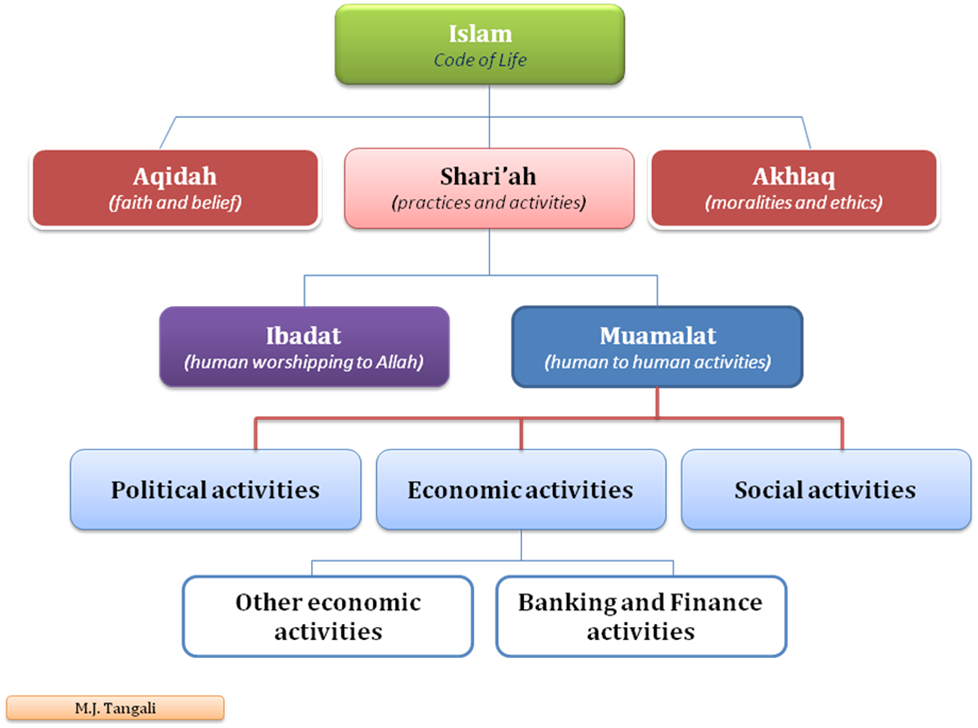
In this section, you will learn about the political arena: what politics is, how it functions in the West, and what the Sharīʿah teaches about political governance. The political system of Islam is founded upon three core principles: Tawḥīd (Oneness of Allāh Almighty), Risālah (Prophethood), and Khilāfah (Caliphate).
Tawḥīd
Tawḥīd means that there is only one Allāh, the Creator of all things, the Sustainer of life, and the Master of the universe and everything within it. He alone holds the authority to declare what is permissible or prohibited. Worship and obedience are due to Him alone, and this divine authority was entrusted to the Holy Prophet ﷺ.
Allāh reveals:
وَأَطِيعُواْ ٱللَّهَ وَٱلرَّسُولَ لَعَلَّكُمْ تُرْحَمُونَ
“And remain obedient to Allāh and the Messenger, in the hope that you may be shown mercy.” (Al‑Qur’ān, 3:132, Part 4, p. 73). This principle of the Oneness of Allāh renders the concept of legal and political sovereignty belonging to the people meaningless. No individual, family, class, or group—regardless of status—can elevate anyone above Allāh Almighty. He alone is the Lord, and His commandments constitute the laws of Islam.
Risālah
Risālah refers to Prophethood, the means through which we received the commandments of Allāh. Through it, we have been given two things:
- The Holy Qur’ān, the divine Book of Allāh containing His laws.
- The authoritative interpretation and explanation of this Scripture as conveyed by the Holy Prophet Muhammad ﷺ through his words and actions as the representative of Allāh Almighty.
The Qur’ān outlines the essential principles upon which human life should be centered, thereby forming the foundation of the Islamic system of governance and way of life. The combination of these two authentic sources—the Qur’ān and the Aḥādīth—is known as the Sharīʿah (Sacred Law).
Khilāfah
Khilāfah means representation or stewardship. According to Islam, human beings are the representatives of Allāh Almighty on earth, a role granted through His strength and knowledge. This includes the Companions (Ṣaḥābah), the Followers (Tābiʿīn and Tāba Tābiʿīn), as well as the spiritually elevated such as the Ghawth, Abdāl, Awrād, ʿUlamāʾ, and Imāms—those raised through their spiritual efforts. These leaders are recognized and accepted by the Muslim community as their rightful guides and administrators.
Democracy in Islam
The explanation of the caliphate and administration makes it clear that no individual or dynasty by itself can be a Khalīfah. Certain conditions must be met acknowledgment of Tawḥīd (Oneness of Allāh), Risālah (Prophethood), and Khilāfah (representation). Furthermore, the Khalīfah must be accepted by the Muslim community. At this point begins the principle of democracy in Islam. It is understood that elected politicians must be literate and capable since ignorance can cause public disorder. Unfortunately, in some Western parliaments, apostate atheists are elected, which Islam regards as a danger to social order.
Islamic Fundamental Rights
Although an Islamic state may be founded anywhere, it does not mean curbing rights or privileges. Islam has laid down universal fundamental rights that must be respected under all circumstances.
Examples include:
- Women, children, the elderly, sick, and injured must not be suppressed.
- Women’s chastity and dignity must be respected.
- The hungry must be fed, and the naked clothed.
- Medical supplies must be provided to both Muslims and non‑Muslims, even enemies.
- No distinction should be made between race, culture, or background.
Moreover, there should be no difference in the application of Islamic and secular law with respect to Muslims and non‑Muslims. Criminals, terrorists, thieves, and murderers must be condemned under the same law.
Jihad
Jihād means striving against fasād (corruption) and ẓulm (tyranny). It includes fighting against external evil and the inner ego. Munkar (transgression) is not limited to alcohol, gambling, prostitution, or zinā (unlawful sex). It also includes degrading human dignity, cheating in elections, refusing to give evidence, corruption in government, discrimination, negligence in public funds, and monopolizing people’s needs. All these are serious offences. Imām al‑Nawawī explains in his commentary on Ṣaḥīḥ al‑Bukhārī and Ṣaḥīḥ Muslim that Abu ʿAbdullāh al‑Nuʿmān ibn Bashīr (raḍiyAllāhu ʿanhu) reported the Prophet ﷺ said: “It is clear what is ḥalāl and ḥarām. Between them there are doubtful cases which many people do not know. Whoever avoids doubtful cases protects his religion and honor. Whoever falls into doubtful cases falls into ḥarām, like a shepherd grazing near another’s land. Every king has a domain, and Allāhs domain is His prohibitions. Truly, there is a piece of flesh in the body: if it is sound, the whole body is sound; if it is corrupt, the whole body is corrupt. That piece is the heart.” (Ṣaḥīḥ Muslim, Vol. 3, p. 1219).
Allāh reveals:
ٱدْعُواْ رَبَّكُمْ تَضَرُّعاً وَخُفْيَةً إِنَّهُ لاَ يُحِبُّ ٱلْمُعْتَدِينَ
“Call on your Lord humbly and secretly. Surely, He does not love those who transgress.” (Al‑Qur’ān, 7:55, Part 8, p. 156).
Islam requires that every Muslim assume political responsibility. Therefore, Muslims must train in both Islamic and secular sciences, work to suppress violations, and expose offenders publicly.
Hazrat Abu Huraira (raḍiyAllāhu ʿanhu) narrated that the Prophet ﷺ said: “the Prophets ruled the Children of Israel. Whenever a Prophet died, another succeeded him. But there will be no Prophet after me; there will be many caliphs. The Companions asked, ‘What do you command us to do?’ He replied, ‘Give allegiance to the one who is first given allegiance.” Fulfill their rights, for Allāh will ask them about those entrusted to them.’” (Ṣaḥīḥ Muslim, Vol. 3, p. 1377).
Development and Functioning of Dutch Politics
The origin of political parties in the Netherlands and the development of electoral democracy began with the Constitution of 1815, which established the House of Representatives as the body representing Dutch citizens.
In 1848, Johan Rudolph Thorbecke introduced the parliamentary system and direct elections for the House of Representatives, granting members freedom to act at their own discretion. In response to this free mandate, Guillaume Groen van Prinsterer advocated for a more direct link between voters and elections. Over time, political movements became more defined within parliament. Across the country, local electoral associations formed and gradually united. By the end of the 19th century, modern and powerful political party organizations had emerged.
With the rise of political parties, the Netherlands transitioned from the classical liberal electoral democracy of the 19th century to the representative democracy we know today. This indirect democracy is based on the principle of delegation.
In the Netherlands, politics can be understood in four dimensions:
- Strategic and tactical actions (political maneuvering).
- Policy (market policy, financial policy).
- Structural conflict (politically sensitive issues).
- Action by the State (The Hague, government, parliament, political parties).
Problem of Freedom and Values
Statements by political scientists can influence elections or impact the political system. Scholars often distinguish between facts and opinions. Intersubjective knowledge should be transferable—accessible and verifiable by every scientist.
The link between values and knowledge is acknowledged, but values are seen to influence only certain stages in the scientific process:
- Selection of research areas and formulation of questions: influenced by relevance, personal interest, involvement, or ambition.
- Production of scientific knowledge: central to debates on value neutrality.
- Application of scientific knowledge: shaped by political views, personal values, and societal interests.
Scientific Developments in Dutch Political Science Since 1945
Dominant schools of thought include:
- 1945–1960: Traditionalism – Politics viewed as concerning the state or public administration.
- 1950–1960: Behaviorism – Focus on the actual behavior of individuals in interaction with their environment.
- 1960–1975: Post‑behaviorism and critical approaches – Continuation of behaviorism, but with greater attention to research perspective and societal relevance.
- 1975–present: Consensus – Recognition that debates may not lead to definitive answers, with agreement that multiple approaches are valid.
Various Forms of Democracy
- Direct democracy: All citizens make decisions.
- Representative democracy: Citizens elect representatives to make decisions on their behalf.
- Mixed democracy: A representative democracy that includes elements of direct democracy, where voting citizens may directly decide on specific political issues.
- People’s democracy: Citizens have the right to vote and multiple parties exist, but voter influence on parliamentary seat distribution is limited; seats are allocated among party factions based on internal party lists, with no true competition between parties.
Tension Between the Election and Coalition
Voters have only indirect influence on the composition of the cabinet. A party may win elections and remain outside the governing coalition. Conversely, parties that lose elections can still participate in the cabinet. These parties are less likely to anticipate or provoke a cabinet crisis. A small party within the coalition that holds a pivotal position can cause a government crisis by threatening to withdraw from the coalition, thus gaining major influence within the alliance.
Coalition Theories and Their Two Core Principles
To address questions in political science about coalition formation, various theories aim to assess the likelihood of parties joining a coalition cabinet and explain their behavior during coalition negotiations:
- Minimum Winning Coalition: A coalition cabinet is formed only if the exclusion of any partner would cause the coalition to lose its majority in parliament.
- Minimum Ideological Distance: A coalition is formed not only to maintain a minimal winning majority but also based on ideological proximity—typically between parties that are adjacent on the left–right political spectrum.
World Politics
Initially, Western countries began to unite primarily for economic benefit. Over time, this cooperation expanded into defense, wartime alliances, and even joint efforts to apprehend international criminals under extradition treaties. New areas of collaboration have emerged in water management, climate policy, and environmental sustainability. Examples of such institutions include the European Union (EU), NATO, and the International Court of Justice (ICJ).
Despite being an active participant in many international organizations, the United States of America (USA) is often criticized for not adhering to key international agreements—especially those related to environmental protection. The U.S. has also been accused of military interventions in Arab nations and allegedly drawing allies, such as the Netherlands, into such conflicts. Critics claim that international initiatives aimed at improving global conditions are sometimes undermined by U.S. actions.
Some leaders of Islamic nations, such as Pakistan and Türkiye, are perceived as aligning themselves with Western materialistic interests influenced by the U.S. These trends are frequently covered by major outlets including Al Jazeera, CNN, Sky News, and BBC World.
For more information on world politics, you may refer to sources like Institute of World Politics.
Is True Leadership Servitude? (Politicians / Politics / Religious Leaders)
Allāh reveals guidance through the Qur’ān:
وَيٰقَوْمِ أَوْفُواْ ٱلْمِكْيَالَ وَٱلْمِيزَانَ بِٱلْقِسْطِ وَلاَ تَبْخَسُواْ ٱلنَّاسَ أَشْيَآءَهُمْ وَلاَ تَعْثَوْاْ فِي ٱلأَرْضِ مُفْسِدِينَ
“And O my people! Fill up measure and weight with justice and do not give the people their things decreasing, and do not roam in the earth spreading mischief.” (Al‑Qur’ān, 11:85, Part 12, p. 215).
Many political leaders engage in corruption. Corruption refers to the behavior of someone in a position of power who acts illegally or seeks personal gain through favoritism. It includes both active and passive forms:
- Active corruption: when a citizen offers a bribe and an official accepts it.
- Passive corruption: when an official misuses power or authority in exchange for payment.
Corruption undermines good governance and compromises integrity. It often flourishes in the absence of a well‑designed and enforced accounting system. Effective administrative structures outline processes clearly and ensure segregation of duties, so that key roles such as ordering, receiving, and storage are handled by separate individuals. Internal controls help reduce opportunities for misconduct. Nonetheless, corruption can occur in all professions and organizations.
It thus becomes clear that the Islamic State is not an end in itself, but rather a means to an end: to foster a community that upholds equity and justice, stands for truth over falsehood, and creates conditions under which the greatest possible number of people can live spiritually, morally, and physically according to the teachings of Islam. Therefore, the establishment of an Islamic State is not merely a “worldly activity,” but a fundamental requirement for realizing the social justice envisioned by Islam.
Qur’ānic Guidance on Justice
يَا أَيُّهَآ ٱلَّذِينَ آمَنُواْ كُونُواْ قَوَّامِينَ للَّهِ شُهَدَآءَ بِٱلْقِسْطِ وَلاَ يَجْرِمَنَّكُمْ شَنَآنُ قَوْمٍ عَلَىۤ أَلاَّ تَعْدِلُواْ ٱعْدِلُواْ هُوَ أَقْرَبُ لِلتَّقْوَىٰ وَٱتَّقُواْ ٱللَّهَ إِنَّ ٱللَّهَ خَبِيرٌ بِمَا تَعْمَلُونَ
“O believers! Stand firmly by the Commandments of Allāh, bearing witness with justice, and let not the enmity of any people incite you to avoid justice. Do justice, which is nearer to piety, and fear Allāh. Surely, Allāh is aware of what you do.” (Al‑Qur’ān, 5:8, Part 6, p. 106). Ibn Kathīr states in his Tafsīr that Allāh commanded His believing servants to fulfill the promises and pledges given to His Messenger ﷺ, to stand for truth, and to give accurate testimony. He reminded them of the favors of guidance bestowed upon them. He also informed them of the covenants taken from the People of the Book, which they broke, leading to their expulsion from His mercy.
Leadership and Servitude
Prince Charles once remarked: “These two worlds, the Islamic and the Western, are at something of a crossroads in their relations. We must not let them stand apart. I do not accept the argument that they are on course to clash in a new era of antagonism. I am utterly convinced that our two worlds have much to offer each other. We have much to do together.”
As far as the nature of the Islamic State is concerned, it is a theocracy in relation to Allāh, in the sense that sovereignty belongs solely to Him. Allāhs authority is inherent in the workings of the universe, and He alone possesses exclusive sovereign rights over all creation.
An Islamic State is thus theocratic in one aspect, as it is governed according to Allāhs laws. However, it is fundamentally different from the kind of theocracy Europe historically experienced—where a priestly class exercised unchecked dominance and imposed man‑made laws in the name of God. Such a system is un‑Islamic. The theocracy envisioned in Islam is not ruled by an exclusive religious class but by the entire Muslim community, including ordinary individuals. Authority is collective, grounded in divine law, and free from clerical monopoly.
Prophetic Traditions on Leadership
- Hazrat Abu Huraira (raḍiyAllāhu ʿanhu) reported:
“People are subservient to the Quraysh; the Muslims among them being subservient to the Muslims among them, and the disbelievers among the people being subservient to the disbelievers among them.” (Ṣaḥīḥ Muslim, Vol. 3, p. 1377). - Hazrat Jabir bin Samura (raḍiyAllāhu ʿanhu) said:
“I heard the Messenger ﷺ of Allāh say: Islam will continue to be triumphant until there have been twelve Caliphs… all of them will be from the Quraysh.” (Ṣaḥīḥ Muslim, Vol. 3, p. 1380).
Charity Begins at Home
Muslim families need to be strong. Our homes must reflect the values and teachings of Islam. Yet many Muslim families today are in disarray. There are numerous examples of children leaving home, and of tensions between husbands and wives within the Muslim community. How can this be when Islam places such great emphasis on building a healthy family life?
A Muslim family should make the effort to pray together—spouses and children united in worship. Likewise, families should strive to eat together regularly. A family that prays together and eats together, stays together.
Unfortunately, many Muslims fall short of this ideal. We become consumed by other priorities and often tell our spouses and children that we are too busy. The result is a neglect of family responsibilities, leading to strained relationships between husband and wife, and between parents and children.
Too often, children express their love for their parents only when it is too late—at their funerals—when they finally realize the profound role their parents played in their lives.
If you would like, I can also help you build on this for a khutbah, a personal reflection, or even a short article. Just let me know the direction you would like to take .
Family Is Ignored and the Most Difficult People to Be Charitable Towards
Never forget to do taubah (repentance). Human beings are bound to make mistakes—they may forget, slip into error, or make poor decisions. But for every misstep in this life, there is a remedy.
When we begin to study the verses of the Holy Qur’ān, we find that believers are not those who never err, but those who seek forgiveness and repent sincerely for their wrongdoings. A true believer, respecting the Glory of Allāh, strives to always uphold righteous conduct. And despite our shortcomings, we can always hope for His boundless forgiveness.
Even Patience and Compassion with Relations Is Service
Patience is the state of fortitude under difficult circumstances. It involves perseverance in the face of delay or provocation without reacting with frustration or anger and demonstrating self‑control under stress—especially in the face of long‑term hardship.
In Islam, patience (ṣabr) is considered one of the most noble and valuable virtues in life. Through patience, a Muslim believes one can draw closer to Allāh, the Creator, and attain true inner peace. Islam emphasizes that Allāh is with those who are patient—especially during times of suffering.
Allāh reveals guidance through the Qur’ān:
وَلَنَبْلُوَنَّكُمْ بِشَيْءٍ مِّنَ ٱلْخَوْفِ وَٱلْجُوعِ وَنَقْصٍ مِّنَ ٱلأَمَوَالِ وَٱلأَنفُسِ وَٱلثَّمَرَاتِ وَبَشِّرِ ٱلصَّابِرِينَ
“And necessarily, We shall put you to test with something of fear and hunger and with some loss of wealth and lives and fruits; and give glad tidings to the patient.” (Al‑Qur’ān, 2:155, Part 2, p. 36).
The noble character of Sayyidunā Rasūlullāh ﷺ is well‑known to the whole universe.
وَإِنَّكَ لَعَلَىٰ خُلُقٍ عَظِيمٍ
“And undoubtedly, you possess excellent manners.” (Al‑Qur’ān, 68:4, Part 29, p. 563).
The noble character and habits of Prophet Muhammad ﷺ are regarded as a timeless example for the world. His etiquette is renowned for its honor, dignity, and grace, and what more can be said when Allāh Himself praised Sayyidunā Rasūlullāh ﷺ. In Surah al‑Qalam, Allāh says: “And undoubtedly, you possess an exalted character.” This verse emphasizes, in the strongest of terms, the exceptional moral standing of the Prophet ﷺ. It is impossible to fully capture the vastness of his noble character. A great deal has been written on this subject in the books of ḥadīth, highlighting his mercy, humility, patience, generosity, and unwavering truthfulness.
Hazrat ʿAmr ibn al‑ʿĀṣ (raḍiyAllāhu ʿanhu) Reports
“Rasūlullāh ﷺ would give attention, speak kindly, and show affection even to the person considered the worst in a nation—so that the person might feel specially honored. He gave me such attention and spoke to me in such a way that I began to feel I was the best among the community. One day I asked him, ‘O Prophet of Allāh, am I better or is Abu Bakr better?’ He replied, ‘Abu Bakr.’ Then I asked, ‘Am I better or ʿUmar?’ He said, ‘ʿUmar.’ I continued, ‘Am I better or ʿUthmān?’ He answered, ‘ʿUthmān.’ When I asked him these questions, Rasūlullāh ﷺ told me the truth. He did not say I was better just to please me. Afterward, I felt ashamed for even asking those questions.”
Explanation
This ḥadīth beautifully illustrates the gentleness, emotional intelligence, and honesty of the Prophet ﷺ. His ability to uplift others without compromising truth is an example of both leadership and love. This Companion, in the beginning, felt he was the best among the community due to the special attention shown to him by Sayyidunā Rasūlullāh ﷺ. As seen in the previously mentioned lengthy ḥadīth, it was the noble habit of the Prophet ﷺ to give sincere recognition to the most virtuous individuals. However, out of politeness and compassion, he would sometimes give preference to others to bring comfort to their hearts. He even extended his affection and gentleness toward non‑believers and the munāfiqūn (hypocrites).
In the narration, the order in which the Companion asked his questions reflects the understanding held during the time of Sayyidunā Rasūlullāh ﷺ—that Abu Bakr (raḍiyAllāhu ʿanhu) was regarded as the best among the people. This is supported by various aḥādīth, where the Companions testify to their consensus at the time: after Abu Bakr came ʿUmar (raḍiyAllāhu ʿanhu), followed by ʿUthmān (raḍiyAllāhu ʿanhu).
Sayyidunā Ibn ʿUmar (raḍiyAllāhu ʿanhu) relates that during the life of Rasūlullāh ﷺ, no one was considered equal to Abu Bakr; after him came ʿUmar, then ʿUthmān. Beyond these three, no single Companion was given universal preference over the others. This indicates that the superiority of these three Companions—in this specific order—was well established and widely recognized.
Qur’ānic Guidance
وَلَمَن صَبَرَ وَغَفَرَ إِنَّ ذَلِكَ لَمِنْ عَزْمِ ٱلأُمُورِ
“But whoever indeed persevered and forgave, most certainly, then these are the affairs of determination.” (Al‑Qur’ān, 42:43, Part 25, p. 482).
Additional Ḥadīth
Hazrat Ibn ʿUmar (raḍiyAllāhu ʿanhu) reported Allāhs Messenger ﷺ as saying:
“He who patiently endures the hardships of it (of this city of Medina), I would be an intercessor or a witness on his behalf on the Day of Resurrection.” (Ṣaḥīḥ Muslim, Vol. 3, p. 1382).
Not Even a Thank You!
When people face hardship, they turn to Allāh for help. Yet if they lack confidence in the completeness of their devotion, they may also seek assistance from others. Often, such help is offered voluntarily—for example, by mosques that support individuals with social issues, paperwork, and other day‑to‑day needs.
However, once their problems are resolved, many forget to express gratitude in any form to those who helped them. This neglect reflects a deeper ingratitude—not only to the helper but indirectly to Allāh, the Creator, who facilitated the path to relief through that very person. Recognizing and thanking the helper is a way of acknowledging Allāhs wisdom and mercy in guiding solutions to us.
Qur’ānic Guidance
Allāh reveals guidance through the Qur’ān:
فَٱذْكُرُونِيۤ أَذْكُرْكُمْ وَٱشْكُرُواْ لِي وَلاَ تَكْفُرُونِ
“Therefore, remember Me, I shall remember you, and accept My right and do not be ungrateful to Me.” (Al‑Qur’ān, 2:152, Part 2, p. 35).
Ḥadīth Reference
This ḥadīth is narrated on the authority of Hazrat Ibn Shihāb: “When Allāh caused the defeat of the Persian armies, Caesar relocated from Ḥimṣ to Aelia (Bayt al‑Maqdas) to thank Allāh for granting him victory.” In this narration, the following phrases appear:
- “From Muhammad, the servant of Allāh and His Messenger…”
- “The sin of your followers…”
- “To the call of Islam.”
This narration is recorded in Ṣaḥīḥ Muslim (Vol. 3, p. 1385).
Serving Others for a Sense of Pride / Achievement / Pat on the Back
Takabbūr (pride, arrogance, self‑conceit) is a destructive trait found in many people. Often, individuals become prideful due to their perceived status, whether in knowledge, science, wealth, physical beauty, or professional achievement—and begin to regard themselves as superior to others. But takabbūr is like a deadly poison to the soul. It is one of the diseases of the heart. What many fail to recognize is that true beauty lies within—the inner beauty, known as the jewel of the Rūḥ (soul). This inner refinement is what truly deserves our effort and attention.
Ḥadīth on Pride
Hazrat ʿAbd‑Allāh ibn Masʿūd (raḍiyAllāhu ʿanhu) narrated that the Prophet ﷺ said: “No one will enter Paradise who has an atom’s weight of pride in his heart.” A man asked, “What if someone likes his clothes and shoes to look good?” The Prophet ﷺ replied: “Allāh is beautiful and loves beauty. Pride means rejecting the truth and looking down on others.” (Ṣaḥīḥ Muslim, Vol. 1, p. 93).
Qur’ānic Guidance
Allāh reveals guidance through the Qur’ān:
وَإِذْ قُلْنَا لِلْمَلَٰئِكَةِ ٱسْجُدُواْ لأَدَمَ فَسَجَدُواْ إِلاَّ إِبْلِيسَ أَبَىٰ وَٱسْتَكْبَرَ وَكَانَ مِنَ ٱلْكَٰفِرِينَ
“And recall, when We ordered the angels to prostrate before Adam, then all prostrated save Iblīs (Satan). He refused, boasted, and became a disbeliever.” (Al‑Qur’ān, 2:34, Part 1, p. 7). From this verse we deduce that arrogance was Satan’s first vice. This spiritual disease poses a serious threat to humanity, as Satan’s primary aim is to instill the same arrogance in people. When a person falls victim to this trait, the foundation of their character and their sense of ethics begin to darken and deteriorate.
Reflection
It is a timely reminder: pride not only distances us from humility but also dims the inner light that guides our moral choices. True servitude lies in sincerity, humility, and recognition that all achievements are blessings from Allāh.
Qur’ānic Guidance
Allāh reveals guidance through the Qur’ān:
فَإِنْ أَعْرَضُواْ فَمَآ أَرْسَلْنَاكَ عَلَيْهِمْ حَفِيظاً إِنْ عَلَيْكَ إِلاَّ ٱلْبَلاَغُ وَإِنَّآ إِذَآ أَذَقْنَا ٱلإِنسَانَ مِنَّا رَحْمَةً فَرِحَ بِهَا وَإِن تُصِبْهُمْ سَيِّئَةٌ بِمَا قَدَّمَتْ أَيْدِيهِمْ فَإِنَّ ٱلإِنسَانَ كَفُورٌ
“But if they turn their faces, then We have not sent you as a guardian over them. There is nothing on you but to convey the Message. And when We give man the taste of any mercy from Us, he becomes happy (proud) over it. But if any evil befalls them because of what their hands have sent forth, then man is most ungrateful.” (Al‑Qur’ān, 42:48, Part 25, p. 483).
Concepts of Expecting Gratitude (Reflects One’s Own Ungratefulness)
Hazrat Ibn ʿAbbās (raḍiyAllāhu ʿanhu) reported that during the life of the Messenger of Allāh ﷺ, there was once a downpour. Upon this, the Prophet ﷺ observed: “Some people began their morning with gratitude, while others began with ingratitude to Allāh. Those who were grateful said, ‘This is the blessing of Allāh,’ while those who were ungrateful said, ‘Such‑and‑such a star (asterism) brought this rain.’”
It was on this occasion that the following verse was revealed: “I swear by the setting of the stars… and make your provision that you should disbelieve in it.” (Ṣaḥīḥ Muslim, Vol. 2, p. 614).
Ḥadīth on Gratitude and Charity
Hazrat Jābir ibn ʿAbdullāh (raḍiyAllāhu ʿanhu) reported: “I offered the ʿĪd prayer with the Messenger of Allāh ﷺ. He began with the prayer before delivering the sermon, and he did so without any adhān or iqāmah. He then stood up, leaning on Bilāl, and advised the people to remain mindful of Allāh and to obey Him. He preached and admonished the community. Then he walked to the women’s section and preached to them as well, urging them to give in charity, for most of them are the fuel of Hell.”
A woman with a shady spot on her cheek stood up and asked, “Why is that O Messenger of Allāh?” He replied: “Because you often complain and show ingratitude to your husbands.”
Upon hearing this, the women began giving charity from their jewelry, such as their earrings and rings, throwing them onto Bilāl’s garment. (Ṣaḥīḥ Muslim, Vol. 2, p. 618).
Who Pays for It?
Spending wealth for the sake of Allāh purifies the heart from attachment to material possessions. It is not merely a tax or obligation, but an act of worship through which a person draws closer to their Lord. This captures the core of zakāt and sadaqāh—not just as duties, but as deeply transformative acts of devotion.
State versus Individual’s Responsibility for the Community
There is a common belief that paying taxes is enough to expect certain amenities within a community. However, Islam teaches that responsibility goes beyond this.
As for rights, the Islamic State is entitled to full loyalty from all its citizens, including wholehearted cooperation in every sector of life and complete obedience to the law of the land and the commands of the rulers—provided these remain in accordance with the Sharīʿah.
If rulers overstep these bounds, citizens not only have the right to withdraw their cooperation but also to hold the rulers accountable for acting against the commands of Allāh and His Messenger ﷺ.
Citizens are further obligated to:
- Pay the taxes due to the State willingly.
- Refrain from misappropriating public funds.
- Participate in jihād in whatever capacity the authorities of the Islamic State deem them fit to serve.
Ḥadīth References
Hazrat Anas bin Mālik (raḍiyAllāhu ʿanhu) reported that “Abu Taiba cupped Allāhs Messenger ﷺ, so he ordered that he be paid one ṣāʿ of dates and ordered his masters to reduce his tax (as he was a slave and had to pay a tax to them).” (Ṣaḥīḥ al‑Bukhārī, Vol. 3, p. 118).
Hazrat ʿAmr bin ʿAuf (raḍiyAllāhu ʿanhu) reported: “An ally of the tribe of Bani ʿĀmir bin Luʾay and one of those who had witnessed the battle of Badr with Allāhs Messenger ﷺ. Allāhs Messenger ﷺ sent Abu ʿUbaydah bin al‑Jarrah to Bahrain to collect the Jizya tax. Allāhs Messenger had concluded a peace treaty with the people of Bahrain and appointed al‑ʿAlāʾ bin al‑Hadhrami as their chief. Abu ʿUbaydah arrived from Bahrain with the money. The Ansār heard of Abu Ubaid’s arrival, which coincided with the Fajr (morning) prayer led by Allāhs Messenger ﷺ. When the Prophet ﷺ finished the prayer, they came to him. Allāhs Messenger ﷺ smiled when he saw them and said, ‘I think you have heard of the arrival of Abu ʿUbaydah and that he has brought something.’ They replied, ‘Yes, O Allāhs Messenger!’ He said, ‘Have good news, and hope for what will please you.” By Allāh, I am not afraid that you will become poor, but I am afraid that worldly wealth will be given to you in abundance as it was given to those (nations) before you, and you will start competing with each other for it as the previous nations competed for it, and then it will divert you (from good) as it diverted them.’” (Ṣaḥīḥ al‑Bukhārī, Vol. 4, p. 210).
Conclusion
From the above, we can conclude that what distinguishes Islamic democracy from Western democracy is the foundation of sovereignty. Western democracy is based on the concept of popular sovereignty—where authority resides with the people. Islamic democracy, on the other hand, rests on the first principles of Sharīʿah through the system of Khilāfah (Caliphate). In Islam, sovereignty belongs solely to Allāh, and Muslims serve as His representatives on Earth.
In Western systems, politicians often create laws and regulations based on public demand or personal interests. In contrast, Islam emphasizes political submission and obedience to the divine law (Sharīʿah), as revealed by Allāh through His Prophet ﷺ. While Western governments prioritize the desires and demands of the people, in an Islamic system, both the rulers and the ruled are expected to submit to the Will of Allāh.
Participation in Western politics by Muslims is only appropriate when done with the intention of defending Islam and offering guidance aligned with Islamic principles. Muslims should not fear the loss of worldly status or positions, for it is better to lose a parliamentary seat than to compromise one’s Īmān (faith).
Regrettably, some politicians and leaders in Islamic countries have betrayed their trust and responsibilities.